
[论文解读] Vocal markers from sustained phonation in Huntington's Disease
本研究利用持续元音中的发声特征与调制功率谱(MPS)特征,分析亨廷顿病(HD)患者的语音标志,以区分无症状基因携带者(preHD)、症状性HD患者和健康对照组。发声特征在预测临床评分方面表现最佳,而MPS特征显著提升了preHD的识别能力,使误分类率降低三倍,为临床试验中远程、可重复的监测提供了潜在可能。
Disease-modifying treatments are currently assessed in neurodegenerative diseases. Huntington's Disease represents a unique opportunity to design automatic sub-clinical markers, even in premanifest gene carriers. We investigated phonatory impairments as potential clinical markers and propose them for both diagnosis and gene carriers follow-up. We used two sets of features: Phonatory features and Modulation Power Spectrum Features. We found that phonation is not sufficient for the identification of sub-clinical disorders of premanifest gene carriers. According to our regression results, Phonatory features are suitable for the predictions of clinical performance in Huntington's Disease.
研究动机与目标
- 利用持续元音识别无症状亨廷顿病(preHD)基因携带者的亚临床语音标志。
- 评估发声特征与调制功率谱(MPS)特征是否能够区分preHD、HD与健康对照组。
- 评估语音特征对HD患者临床评分(cUHDRS、TFC、TMS)的预测能力。
- 探索使用简短、自动化的语音任务作为神经退行性疾病监测中生态友好、可重复生物标志物的可行性。
- 确定MPS特征在检测早期、无症状HD方面是否优于传统发声特征。
提出的方法
- 从85名参与者中采集持续 /a/ 元音录音:24名对照组(C),16名preHD,45名HD。
- 提取已知反映HD中构音障碍的发声特征(如抖动、闪烁、基频等)。
- 计算调制功率谱(MPS)特征,以捕捉与语音可懂度和粗糙感相关的时域与频域调制。
- 应用正则化线性模型(逻辑回归)进行组别分类与临床评分预测。
- 使用统计检验(H统计量、p值、FDR校正)评估各特征分布的组间差异。
- 结合发声与MPS特征,以提升分类与预测性能。
实验结果
研究问题
- RQ1持续元音特征能否区分健康对照组、无症状基因携带者(preHD)与症状性HD患者?
- RQ2与传统发声特征相比,调制功率谱(MPS)特征是否能提升preHD的检测能力?
- RQ3发声特征在多大程度上可预测HD患者的临床评分(cUHDRS、TFC、TMS)?
- RQ4当分类模型在区分preHD与对照组及HD时,会产生哪些类型的错误?不同特征集如何影响错误模式?
- RQ5基于语音的标志物(来自1分钟持续元音任务)能否替代或补充UHDRS等冗长的临床评估?
主要发现
- 发声特征对临床评分的预测能力最强,对综合cUHDRS评分的决定系数(R²)最高。
- 结合发声与MPS特征后,分类准确率达到0.56,F1-macro达到0.46,优于单独使用任一特征集。
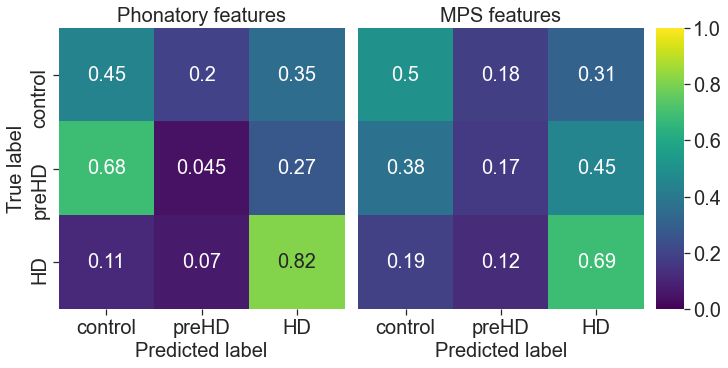
- 与仅使用发声特征相比,MPS特征使preHD的误分类率降低三倍,显著提升了preHD的检测能力。
- HD患者分类最可靠,而preHD与对照组及HD之间存在较高混淆,表明早期阶段边界模糊。
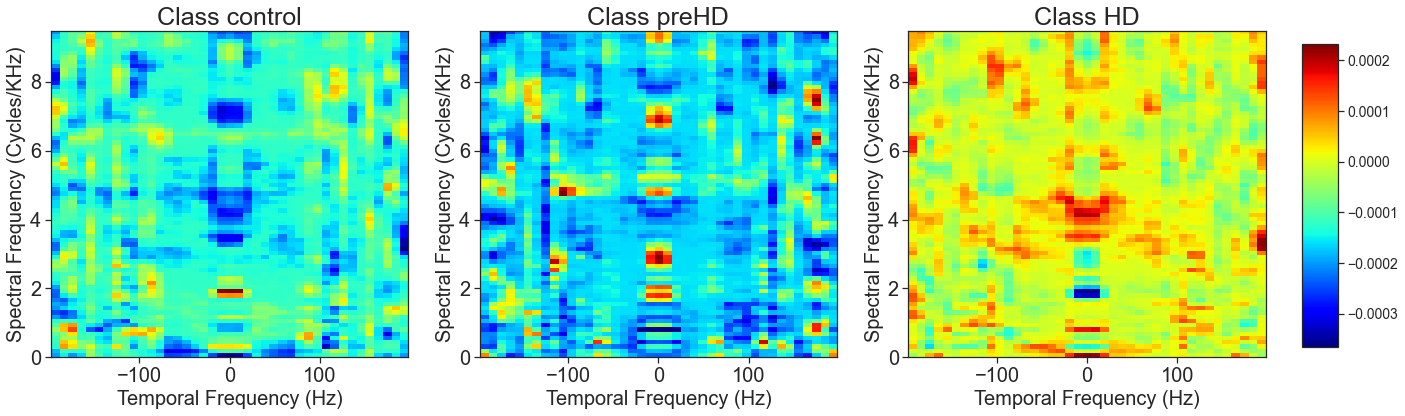
- 基于MPS特征训练的逻辑回归模型揭示了可解释的激活模式,包括在0.0 Hz时域频率(发声中断)的强烈响应,以及在preHD中特定的2.5和7 cycles/kHz频谱调制。
- 尽管总体分类性能较低,MPS特征在识别preHD方面表现出更高的敏感性,表明其在早期检测中的潜力。
更好的研究,从现在开始
从阅读论文到最终审阅,大幅缩短您的研究时间。
无需绑定信用卡
本解读由 AI 生成,并经人工编辑审核。