
[论文解读] Why Charge Added Using Transition Metals To Some Insulators -- Including LK-99 -- Localizes and Does Not Yield a Metal
本研究解释了为何在绝缘体如铜掺杂的Pb10(PO4)6O(LK-99)和钒掺杂的SrTiO3中,过渡金属掺杂会导致电荷局域化和绝缘行为,而非金属导电。通过从头算DFT+U计算,研究显示电子-晶格对称性破缺和类似Jahn-Teller的畸变会将d电子局域化为自旋和轨道极化的杂质能级,位于带隙内,从而阻止金属或超导行为的发生。
While adding charge to semiconductors via dopants is a well-established method for tuning electronic properties, we demonstrate that introducing transition metal impurities into certain insulators can lead to localized charge, assisted by a Jahn-Teller distortion. This leads to isolated charge, and an insulating material as opposed to emergent states - including superconductivity. We focus on Cu impurities added to Pb$_{10}$(PO$_4$)$_6$O ('LK-99'), replacing 10% of Cu ions, as discussed in recent literature. Our calculations show that the material remains a wide bandgap insulator with isolated, S=1/2 localized charges on the Cu ions-similar to color centers-even within standard DFT, without the need for electron correlation corrections to the Cu d-orbitals. Superconductivity is excluded by known mechanisms that require the material to be metallic. We resolve previously observed inconsistencies between density functional theory results and experimental findings related to doping site energetics, crystal structure, and transparency. We find that Cu doping either Pb site leads to CuO$_4$ coordination and a similar unit cell volume contraction. Engineering materials with dopant sites that have different local symmetries can induce non-relativistic spin splitting-often referred to as altermagnetism. However, in the case of localized charges, this may enable spins to be individually controlled.
研究动机与目标
- 解决DFT预测与铜掺杂Pb10(PO4)6O(LK-99)实验观测之间的不一致,特别是关于掺杂位点能量和透明度的问题。
- 阐明过渡金属掺杂剂在绝缘体中导致电荷局域化而非金属导电的机制。
- 研究电子-晶格对称性协同降低在稳定具有局域d轨道态的绝缘态中的作用。
- 评估这些掺杂体系中新型量子现象(如反磁性)的潜力。
- 为理解过渡金属掺杂绝缘体中局域d轨道对称性和电子-晶格耦合提供框架。
提出的方法
- 使用杜达列夫近似法的从头算密度泛函理论(DFT)结合Hubbard U校正(DFT+U)。
- 采用超软赝势和4×4×4 k点网格进行电子结构计算。
- 通过力收敛阈值为10−4 eV/Å的结构弛豫,模拟掺杂引起的晶格畸变。
- 应用4 eV的U参数,与近期研究一致,但指出该值可能低估了高度局域化的Cu 3d态。
- 分析d轨道中的自旋和轨道极化,以识别对称性破缺和电荷局域化。
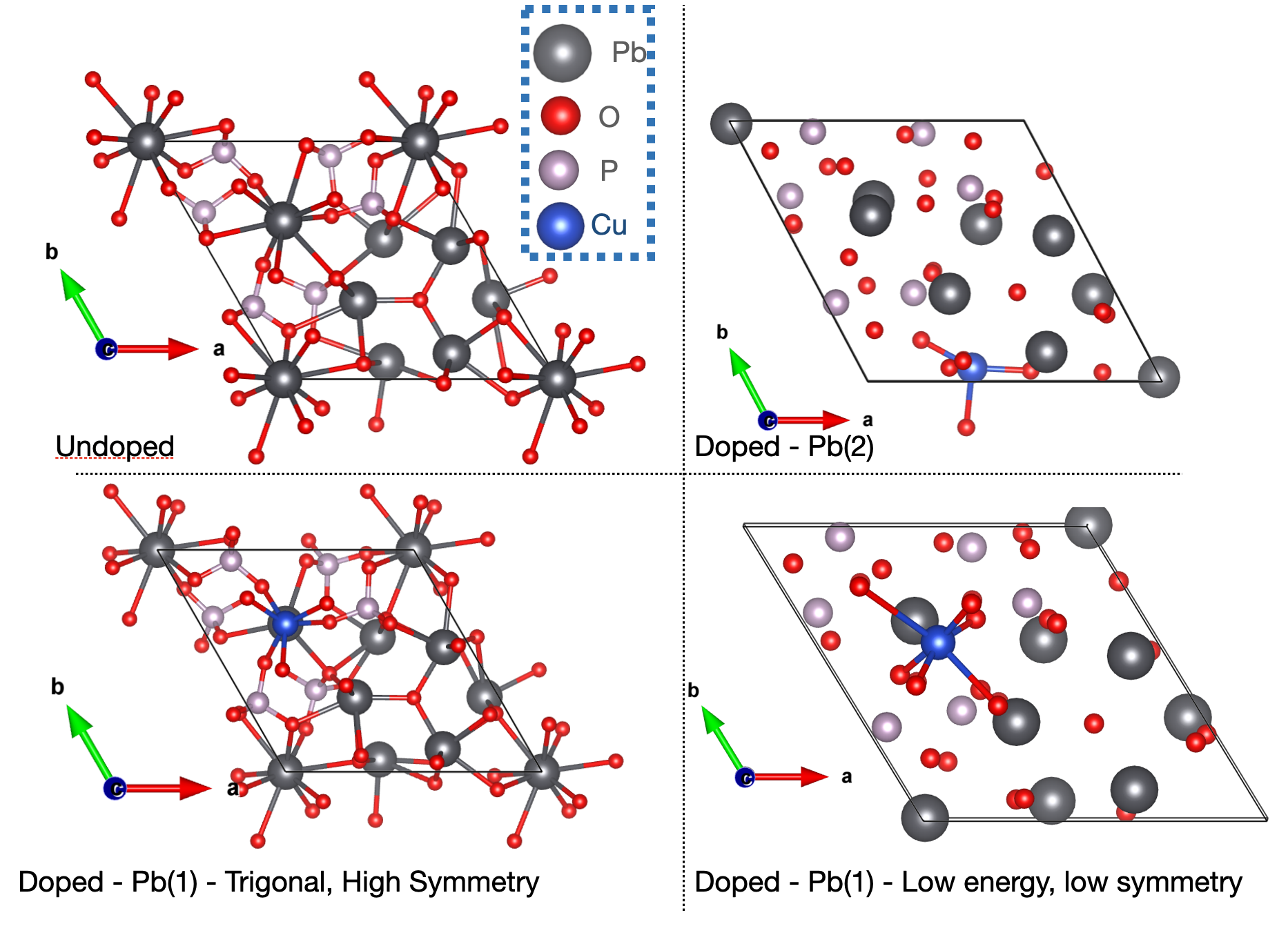
- 研究晶胞中两种不同的铜掺杂位点(四面体与平面正方形配位),以探测反磁性的可能性。
实验结果
研究问题
- RQ1为何铜掺杂Pb10(PO4)6O(LK-99)会导致电荷局域化和绝缘行为,而非金属导电?
- RQ2电子-晶格对称性破缺和类似Jahn-Teller的畸变如何在过渡金属掺杂绝缘体中稳定局域d电子态?
- RQ3DFT预测与实验观测在LK-99中掺杂位点稳定性与透明度方面存在差异的原因是什么?
- RQ4同一晶胞中存在两个不等价的铜位点是否会导致反磁性行为?
- RQ5过渡金属掺杂绝缘体在作为色心或量子信息应用平台方面具有多大潜力?
主要发现
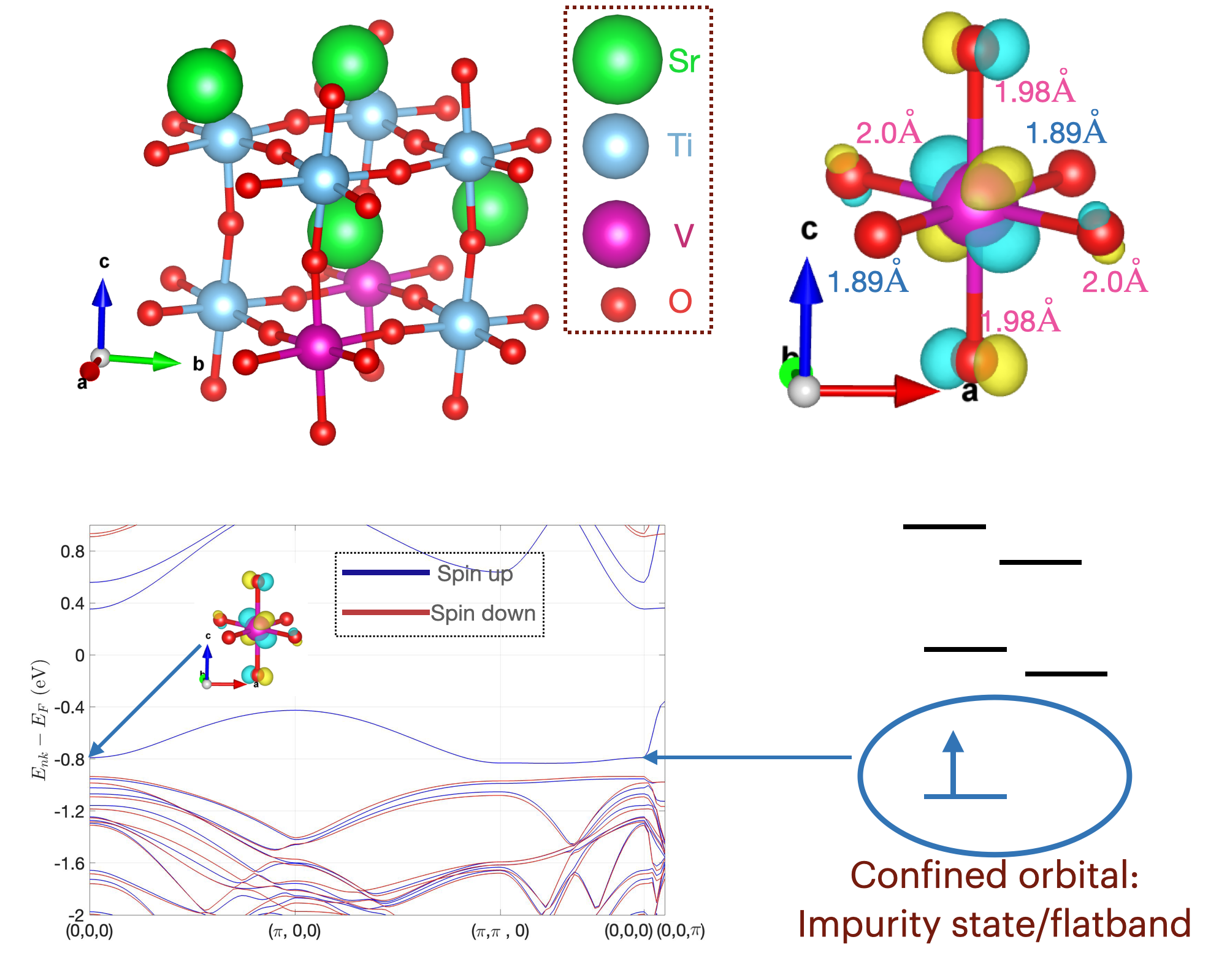
- 掺杂引起强烈的电子-晶格对称性降低,铜环境发生约1Å的畸变,破坏轨道简并性,导致电子局域化。
- 体系在带隙内形成两个自旋极化、磁性和轨道有序的杂质能级,与价带和导带明显分离。
- 掺杂后带隙略有减小,表明在光催化等应用中具有带隙调控潜力。
- 预测该材料在室温下为透明,但在低温下可能因局域化的Cu2+离子而出现色心。
- 尽管铜位点几何不等价,但由于态的局域特性,未发现强能带分裂或反磁性,表明反磁性不成立。
- 结果排除了通过常规机制实现超导的可能性,因为体系保持强绝缘性且电荷局域。
更好的研究,从现在开始
从阅读论文到最终审阅,大幅缩短您的研究时间。
无需绑定信用卡
本解读由 AI 生成,并经人工编辑审核。