
[Paper Review] Incentive Contracts and Peer Effects in the Workplace
This paper studies optimal linear incentive contracts in teams with peer effects, modeling productivity spillovers via a network structure. It shows that optimal incentives concentrate on workers with higher network centrality—specifically, those closest to others in path-length terms—balancing risk and incentives, with firm profits linked to spectral properties of the network.
We analyze how firms should design wage contracts when workers collaborate in teams and effort costs depend on colleagues through a peer network. Performance-based compensation generates incentives that cascade through the organization, which firms target to boost profits. We analyze optimal incentive design if firms can -- and can't -- fully discriminate across workers, and when the production technology is separable or complementary across divisions. When workers' effort is substitutable, the most central workers -- those who influence most colleagues directly and indirectly -- receive the steepest incentives only when output risk is sufficiently large; otherwise firms prioritize workers that are closer to those they influence. We derive a sufficient network statistic that measures the surplus loss when firms must compensate workers of varying centrality equally. Finally, when production technology exhibits complementarity across teams, stronger incentives are assigned to workers who influence colleagues in small teams that receive little influence from others. We apply our findings to organizational design questions, such as optimal firm structure and workforce investments.
Motivation & Objective
- To analyze how risk-averse workers in networked teams affect the design of optimal linear wage contracts.
- To determine how network structure—specifically peer-effect spillovers—affects the distribution of incentives and insurance in team production.
- To derive optimal contracts when firms can personalize wages versus when they are constrained to offer coarse contracts by group.
- To link firm profits to the spectral properties of the underlying network, showing how network structure shapes organizational efficiency.
- To investigate how modular production structures influence the distribution of incentives across peer networks.
Proposed method
- Model team production with joint output generated by individual effort, where each worker's output is amplified by productivity spillovers through a weighted network.
- Formulate the principal's profit maximization problem under moral hazard, incorporating risk aversion and endogenous effort decisions.
- Use matrix algebra to derive the optimal linear contract vector α* by solving a constrained optimization problem involving the network adjacency matrix Λ, effort costs V, and risk exposure σ².
- Define a 'wage-risk wedge' that captures the trade-off between incentives and insurance, linking optimal contracts to network centrality via path-length aggregation.
- Apply a group-constrained contract model using a projection matrix T to represent coarse contracts across worker types, solving for group-level incentives via least-squares projection.
- Express firm profits in terms of the network's spectral radius and eigenvectors, enabling structural analysis of organizational design.
Experimental results
Research questions
- RQ1How should a risk-neutral principal design linear incentive contracts when workers are risk-averse and productivity is subject to peer effects?
- RQ2Which workers should receive stronger incentives in a networked team, and how is this determined by network structure?
- RQ3How does the principal’s ability to personalize contracts affect firm profits and rent extraction by better-connected workers?
- RQ4What is the role of network spectral properties in determining optimal contract design and organizational efficiency?
- RQ5How do modular production structures and group-level contracting constraints alter the distribution of incentives across peer networks?
Key findings
- Optimal incentives are concentrated on workers who are most central in terms of average path length to others, not on those with highest degree or eigenvector centrality.
- The optimal contract structure features a 'wage-risk wedge' that balances incentive intensity and risk exposure, with the optimal α* derived from a matrix equation involving the network's adjacency and cost matrices.
- Firm profits are directly linked to the spectral radius of the network's adjacency matrix, implying that more cohesive or centralized networks yield higher expected profits.
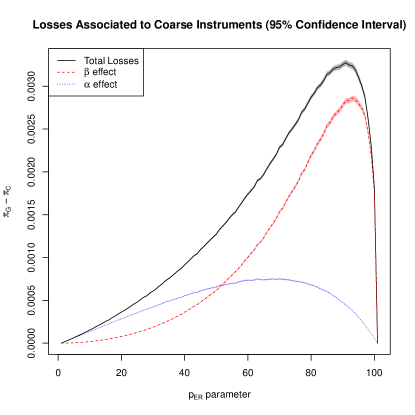
- When contracts are coarsened (e.g., by job category), workers in groups with high internal differences in centrality experience reduced firm profits due to inefficient rent extraction.
- In the coarse contract setting, group-level incentives are derived via a projection of individual-level optimal contracts, with fixed payments adjusted to ensure individual rationality.
- The optimal fixed payment β_i for each worker depends on their induced effort, risk exposure, and the network’s spillover structure, with explicit formulas provided in vector and matrix forms.
Better researchstarts right now
From reading papers to final review, dramatically reduce your research time.
No credit card · Free plan available
This review was created by AI and reviewed by human editors.