
[Paper Review] The future search for low-frequency axions and new physics with the FLASH resonant cavity experiment at Frascati National Laboratories
The FLASH experiment proposes a large resonant cavity haloscope at INFN Frascati National Laboratories, utilizing the existing FINUDA magnet and cryogenic infrastructure to search for low-mass axions (0.49–1.49 μeV), scalar fields, chameleons, hidden photons, and high-frequency gravitational waves (100–300 MHz). It employs a microstrip SQUID amplifier at ultra-cryogenic temperatures to achieve high sensitivity, filling a critical gap in the axion mass window and enabling multi-messenger searches for new physics beyond the Standard Model.
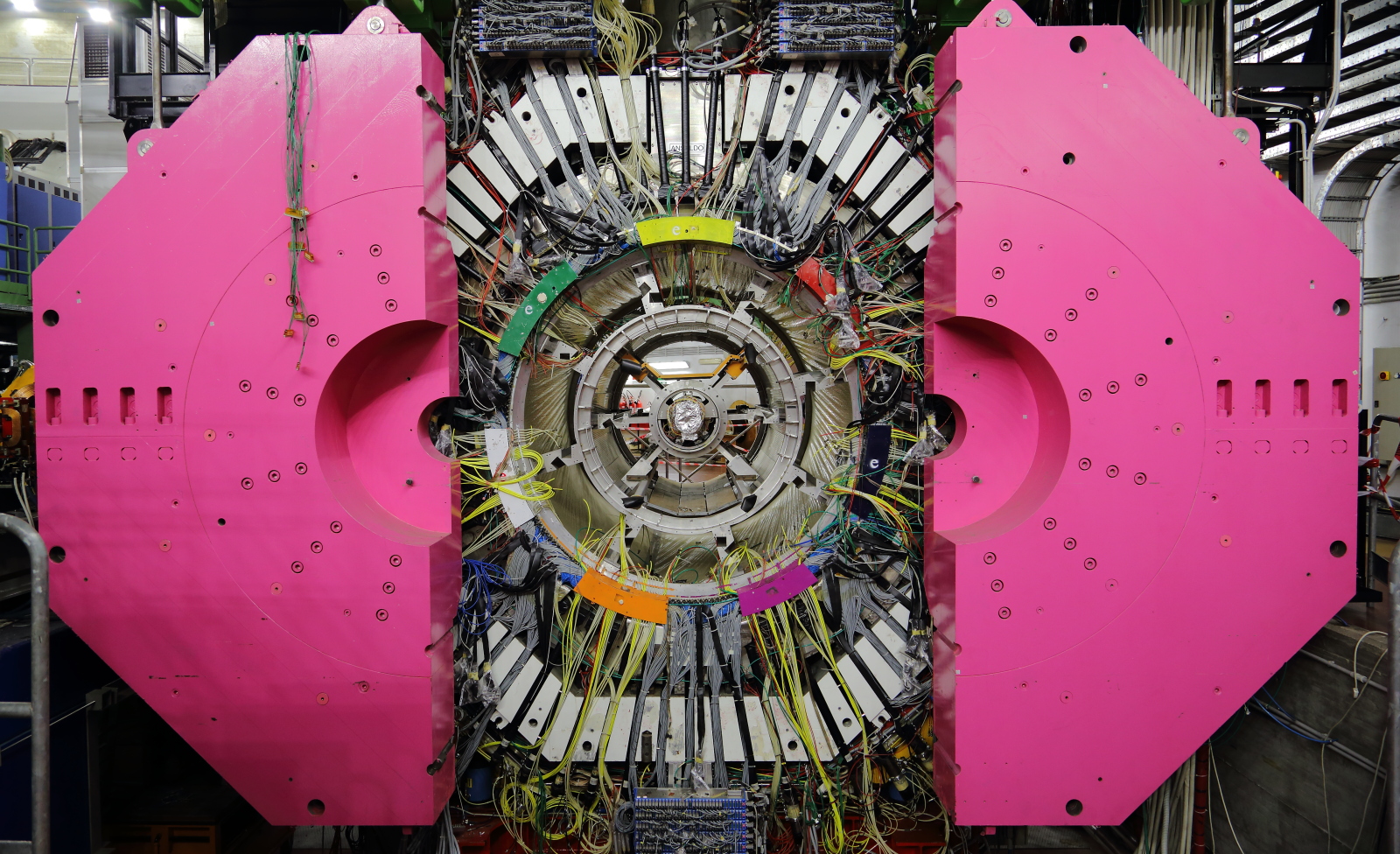
We present a proposal for a new experiment, the FINUDA magnet for Light Axion SearcH (FLASH), a large resonant-cavity haloscope in a high static magnetic field which is planned to probe new physics in the form of dark matter (DM) axions, scalar fields, chameleons, hidden photons, as well as high frequency gravitational waves (GWs). Concerning the QCD axion, FLASH will search for these particles as the DM in the mass range (0.49-1.49) ueV, thus filling the mass gap between the ranges covered by other planned searches. A dedicated Microstrip SQUID operating at ultra-cryogenic temperatures will amplify the signal. The frequency range accessible overlaps with the Very High Frequency (VHF) range of the radio wave spectrum and allows for a search in GWs in the frequency range (100-300) MHz. The experiment will make use of the cryogenic plant and magnet of the FINUDA experiment at INFN Frascati National Laboratories near Rome (Italy); the operations needed to restore the functionalities of the apparatus are currently underway. We present the setup of the experiment and the sensitivity forecasts for the detection of axions, scalar fields, chameleons, hidden photons, and GWs.
Motivation & Objective
- To search for QCD axion dark matter in the previously unexplored mass range of 0.49–1.49 μeV, bridging the gap between existing experiments.
- To probe new physics beyond the Standard Model, including scalar fields, chameleons, hidden photons, and high-frequency gravitational waves.
- To repurpose the existing FINUDA magnet and cryogenic infrastructure at INFN Frascati to enable a cost-effective, high-sensitivity haloscope experiment.
- To achieve high signal-to-noise ratio detection using a microstrip SQUID amplifier operating at ultra-cryogenic temperatures.
- To forecast sensitivity limits for axion, scalar, and chameleon fields, as well as for hidden photons and gravitational waves, across the VHF radio band.
Proposed method
- The experiment uses a large cylindrical resonant cavity (R = 1050 mm, L = 1200 mm) operating in the TE111 and TE011 modes to enhance coupling to weakly interacting particles.
- A high static magnetic field (from the FINUDA magnet) enables the conversion of axions and other pseudoscalars into detectable microwave photons via the Primakoff effect.
- The signal is amplified using a microstrip SQUID operating at ultra-low temperatures (mK range), minimizing thermal noise and maximizing detection sensitivity.
- The cavity’s electromagnetic field profile is modeled using Bessel functions, with mode-specific field components (E and B) derived from solutions to Maxwell’s equations in cylindrical coordinates.
- The coupling efficiency is quantified via the overlap integral $ C_{nlm} $, which depends on the momentum of the incoming particle and the cavity’s field distribution, with $ C_{011} \approx 0.005 $ for chameleons and $ C_{111} \approx 3 \times 10^{-7} $ for the TE111 mode.
- Sensitivity forecasts are derived from the signal-to-noise ratio, incorporating cavity Q-factor, bandwidth, and thermal noise, with projections for axion coupling $ g_{a\gamma\gamma} $, scalar field coupling, and gravitational wave amplitude.
Experimental results
Research questions
- RQ1Can the FLASH experiment achieve competitive sensitivity to QCD axion dark matter in the 0.49–1.49 μeV mass range, where no current experiment covers this window?
- RQ2What is the expected sensitivity of the FLASH setup to scalar fields and chameleons, given their momentum-dependent coupling to the cavity mode?
- RQ3Can the same cavity and magnetic field setup be used to detect high-frequency gravitational waves in the 100–300 MHz band?
- RQ4How does the microstrip SQUID amplifier performance at ultra-cryogenic temperatures impact the overall detection threshold for weakly interacting particles?
- RQ5What is the role of cavity geometry and field mode structure (e.g., TE111 vs. TE011) in optimizing the coupling to different new physics candidates?
Key findings
- The FLASH experiment is projected to probe the QCD axion parameter space in the 0.49–1.49 μeV mass range, filling a critical gap between existing and planned haloscope experiments.
- For chameleon fields with a Compton wavelength of ~0.2 m, the coupling efficiency is estimated at $ C_{011} \approx 0.005 $, indicating strong resonant enhancement.
- For bosonic dark matter with a velocity of 200 km/s, the coupling efficiency drops to $ C_{011} \approx 5 \times 10^{-13} $, reflecting the sensitivity dependence on de Broglie wavelength.
- The TE111 mode exhibits a coupling efficiency of $ C_{111} \approx 3 \times 10^{-7} $, consistent with prior theoretical estimates and suitable for high-frequency gravitational wave detection.
- The use of a microstrip SQUID amplifier at ultra-cryogenic temperatures enables near-quantum-limited noise performance, crucial for detecting sub-μeV scale axion signals.
- The experiment leverages existing infrastructure at INFN Frascati (FINUDA magnet and cryoplant), reducing cost and accelerating deployment while maintaining high sensitivity.
![Figure 2: The FLASH discovery potential (90% confidence level or c.l.) compared to existing experimental limits. The brown lines with yellow error-band show the theoretical predictions for the KSVZ and DFSZ axions [ 25 , 26 , 28 , 27 ] . The forecast reach of FLASH is compared with experimental limi](https://ar5iv.labs.arxiv.org/html/2309.00351/assets/x1.png)
Better researchstarts right now
From reading papers to final review, dramatically reduce your research time.
No credit card · Free plan available
This review was created by AI and reviewed by human editors.