
[论文解读] Empathetic AI for Empowering Resilience in Games
本文提出了一种数据驱动的六阶段框架,用于检测和建模团队合作类游戏聊天记录中的情绪调节策略,从而支持开发能够提升玩家心理韧性的共情型人工智能(EAI)助手。通过分析一款合作型替代现实游戏(LUX)中去标识化的聊天数据,该方法识别出情绪状态、序列及调节模式,为未来在严肃游戏与竞技游戏中实现提升情绪应对能力与团队韧性的AI干预奠定基础。
Failure and resilience are important aspects of gameplay. This is especially important for serious and competitive games, where players need to adapt and cope with failure frequently. In such situations, emotion regulation -- the active process of modulating ones' emotions to cope and adapt to challenging situations -- becomes essential. It is one of the prominent aspects of human intelligence and promotes mental health and well-being. While there has been work on developing artificial emotional regulation assistants to help users cope with emotion regulation in the field of Intelligent Tutoring systems, little is done to incorporate such systems or ideas into (serious) video games. In this paper, we introduce a data-driven 6-phase approach to establish empathetic artificial intelligence (EAI), which operates on raw chat log data to detect key affective states, identify common sequences and emotion regulation strategies and generalizes these to make them applicable for intervention systems.
研究动机与目标
- 为解决当前缺乏支持团队游戏中文情绪调节的AI系统的问题,特别是在严肃游戏与竞技游戏场景中。
- 从玩家在失败或压力事件期间的原始聊天数据中,识别并建模集体情绪调节策略。
- 开发一种可扩展的数据驱动框架,用于检测多人游戏互动中的情绪状态与调节行为。
- 为未来能够实时介入以支持心理健康与心理韧性的共情型AI助手奠定基础。
- 将单一游戏(LUX)的研究发现推广至电子竞技、教育类游戏及协作性环境中的更广泛应用。
提出的方法
- 收集一款旨在诱发压力与失败感的团队合作型替代现实游戏(LUX)中玩家的去标识化聊天日志。
- 采用人工标注对关键情绪状态(如挫败感、鼓励)及特定情境事件进行识别。
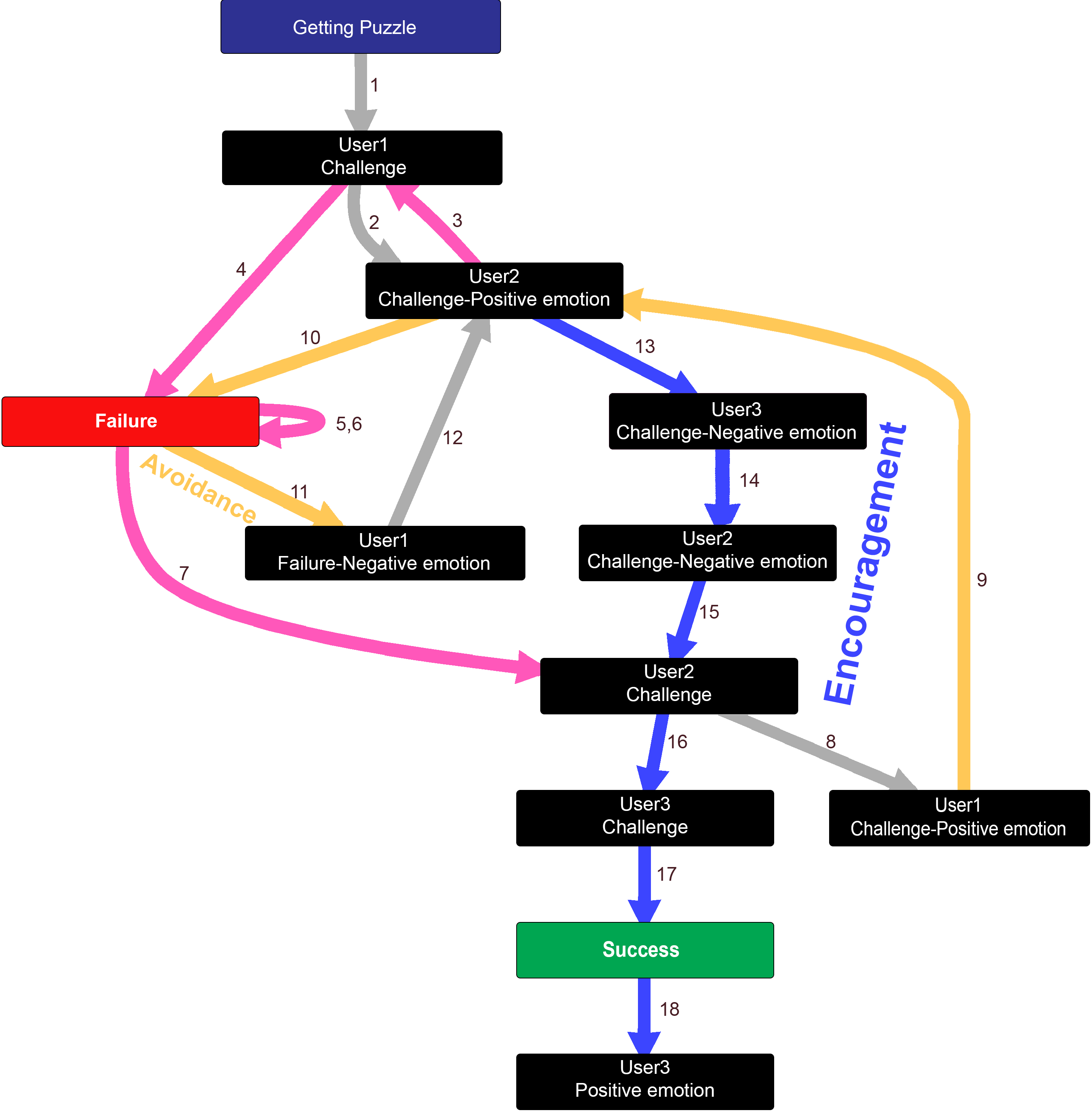
- 从标注序列构建依赖图,以建模情绪状态与调节行为之间的时序关系。
- 利用流程挖掘与模糊逻辑技术,从少量标注数据中泛化出抽象化的调节行为序列。
- 在后续阶段引入机器学习模型(如ATTBLSTM)与半监督学习方法(如GAM),以实现从大规模数据中自动检测调节策略。
- 将研究成果整合至可部署的处理管道中,用于潜在的干预系统,包括动态难度调整或AI聊天机器人。

实验结果
研究问题
- RQ1如何从多人游戏的原始团队聊天日志中识别情绪调节策略?
- RQ2在游戏失败或压力事件期间,哪些重复出现的情绪状态与调节行为模式会显现?
- RQ3如何将这些检测到的模式抽象为可推广的AI干预模型?
- RQ4社会性、集体性情绪调节在团队应对游戏挑战时对团队韧性起到何种作用?
- RQ5此类系统如何扩展以支持严肃游戏与竞技游戏中长期的心理健康与表现提升?
主要发现
- 研究成功识别出团队聊天日志中重复出现的情绪调节模式,包括支持性信息、对失败的重新定义,以及在挫折后提供鼓励。
- 人工标注结果显示,玩家频繁使用言语策略,如积极倾听、情绪确认与建设性反馈,以调节队友的情绪。
- 对情绪序列的依赖图可视化揭示了从负面情绪向积极情绪的转变,表明调节过程有效。
- 该框架在不依赖符号化规则系统的情况下,成功实现了情绪调节的检测,而是通过从真实玩家互动中提取数据驱动的模式。
- 初步结果支持在大规模聊天数据上训练通用模型(如ATTBLSTM、GAM)以实现情绪调节检测的自动化。
- 该方法可推广至其他以文本通信为核心团队动态的团队合作类游戏及平台。
更好的研究,从现在开始
从阅读论文到最终审阅,大幅缩短您的研究时间。
无需绑定信用卡
本解读由 AI 生成,并经人工编辑审核。