
[论文解读] ESO Imaging Survey. Deep Public Survey: Multi-Color Optical Data for the Chandra Deep Field South
本论文利用欧洲南方天文台/马普学会2.2米望远镜及广域相机,对哈勃深空南天场(CDF-S)进行了深度多波段光学成像,六种滤波器的5σ极限星等分别为U′_AB=26.0至I_AB=24.7。数据通过自动化的多分辨率管道技术处理,天体测量精度达到亚0.1角秒,已作为校准后的像素图和源列表公开发布,是多波段宇宙学研究的关键资源。
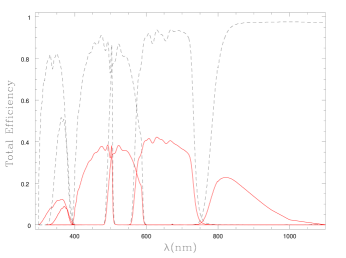
This paper presents multi-passband optical data obtained from observations of the Chandra Deep Field South (CDF-S), located at alpha ~ 3h 32m, delta ~ -27d 48m. The observations were conducted at the ESO/MPG 2.2m telescope at La Silla using the 8kx8k Wide-Field Imager (WFI). This data set, taken over a period of one year, represents the first field to be completed by the ongoing Deep Public Survey (DPS) being carried out by the ESO Imaging Survey (EIS) project. This paper describes the optical observations, the techniques employed for un-supervised pipeline processing and the general characteristics of the final data set. The paper includes data taken in six different filters U'UBVRI. The data cover an area of about 0.25 square degrees reaching 5 sigma limiting magnitudes of U'_AB=26.0, U_AB=25.7, B_AB=26.4$, V_AB=25.4, R_AB=25.5 and I_AB= 24.7 mag, as measured within a 2xFWHM aperture. The optical data covers the area of ~ 0.1
研究动机与目标
- 为支持高红移星系研究,生成哈勃深空南天场(CDF-S)的深度多波段光学调查。
- 开发并验证适用于大规模调查数据的自动化、无监督图像处理管道。
- 提供公开可访问、完全校准的光学数据,具备高精度天体测量与测光精度,用于多波段科学研究。
- 补充CDF-S区域现有的X射线与近红外数据,实现全面的宇宙学分析。
- 利用深度多波段测光,实现光谱红移研究及高红移星系候选者的预选。
提出的方法
- 在为期一年的时间内,利用欧洲南方天文台/马普学会2.2米望远镜及8k×8k广域相机(WFI)进行观测。
- 在管道中应用多分辨率图像分解技术,以高效去除宇宙射线和缺陷。
- 自动化处理流程包括偏置校正、平场校准、卫星轨迹去除、去条纹处理、背景减除及图像堆叠。
- 在图像堆叠中采用基于像素的天体测量方法,实现亚角秒精度,提升动态范围。
- 利用Guide Star Catalog II的预发布版本对最终天体测量进行校准,实现约0.10角秒的精度。
- 在六种滤波器(U′, U, B, V, R, I)中进行测光校准,报告5σ极限的AB星等。
实验结果
研究问题
- RQ1本深度光学调查在CDF-S场的测光深度与动态范围如何?
- RQ2处理后的光学图像在所有滤波器中的天体测量解精度如何?
- RQ3自动化、无监督的图像处理技术能否有效处理宇宙射线和卫星轨迹等复杂伪影?
- RQ4本调查的极限星等与此前同一区域调查相比如何?
- RQ5光学数据在多波段研究中,对现有X射线与近红外数据集的补充程度如何?
主要发现
- 调查覆盖CDF-S区域约0.25平方度,5σ极限星等在2×FWHM孔径内为U′_AB=26.0、U_AB=25.7、B_AB=26.4、V_AB=25.4、R_AB=25.5和I_AB=24.7。
- 最终天体测量解的内在精度估计为约0.10角秒,所有滤波器共用同一套解。
- 采用基于像素的天体测量进行图像堆叠,能有效去除宇宙射线和图像缺陷,生成极为清晰的最终图像。
- 光学数据完全覆盖深空钱德拉X射线观测区域,支持多波段分析。
- 数据已通过欧洲南方天文台EIS门户公开发布,包含校准后的像素图、权重图和源列表。
- 本调查的极限星等与早期EIS-DEEP调查相当或更优,支持高红移莱曼断裂星系候选者的探测。
更好的研究,从现在开始
从阅读论文到最终审阅,大幅缩短您的研究时间。
无需绑定信用卡
本解读由 AI 生成,并经人工编辑审核。