
[论文解读] Friction Interventions to Curb the Spread of Misinformation on Social Media
该论文提出一种嵌入社区规范学习的摩擦干预机制,以减少社交媒体上低质量内容的传播。基于代理的模拟显示,仅施加摩擦虽能减少发帖量但无法提升内容质量,而适度摩擦(f = 0.01–0.05)与学习(ℓ = 0.1–0.3)相结合可显著提高平均发帖质量,提供一种可扩展、非侵入性的方法,在不损害用户参与度的前提下提升信息质量。
Social media has enabled the spread of information at unprecedented speeds and scales, and with it the proliferation of high-engagement, low-quality content. *Friction* -- behavioral design measures that make the sharing of content more cumbersome -- might be a way to raise the quality of what is spread online. Here, we study the effects of friction with and without quality-recognition learning. Experiments from an agent-based model suggest that friction alone decreases the number of posts without improving their quality. A small amount of friction combined with learning, however, increases the average quality of posts significantly. Based on this preliminary evidence, we propose a friction intervention with a learning component about the platform's community standards, to be tested via a field experiment. The proposed intervention would have minimal effects on engagement and may easily be deployed at scale.
研究动机与目标
- 探究内容分享中的摩擦是否能减少社交媒体平台上低质量及误导性内容的传播。
- 评估将摩擦与平台规范学习相结合对共享内容质量的影响。
- 设计一种可扩展、非侵入性的干预措施,在最小化影响用户参与度的同时提升信息质量。
- 检验摩擦是否能抵消认知偏见及算法对高参与度、低质量内容的放大效应。
- 提供一个可实地测试的原型干预方案,基于行为科学与基于代理的建模。
提出的方法
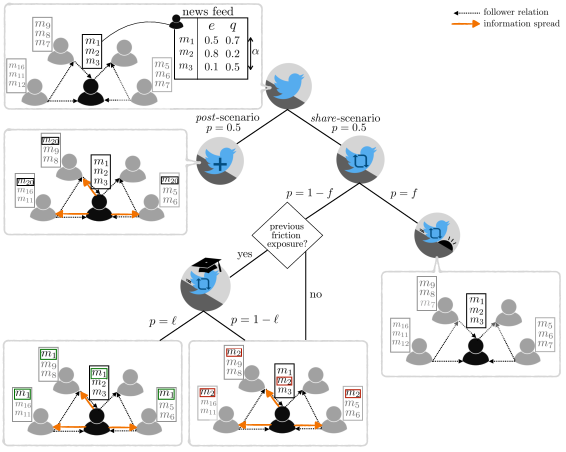
- 基于代理的模型模拟社交媒体互动,代理根据参与度(e-distance)或在施加摩擦后根据感知质量来分享内容。
- 摩擦被建模为一个概率(f ∈ [0,1]),表示代理因强制测验或反思提示而无法分享。
- 学习被建模为一个概率(ℓ ∈ [0,1]),即代理在经历摩擦后,会从基于参与度的分享行为转向基于质量的选择。
- 内容质量(q)与参与度(e)从线性概率密度函数 P(x) = 2(1−x) 中抽取,反映高质量与高参与度内容均属罕见。
- 系统通过指数加权移动平均质量(ρ = 0.99)判断是否达到稳定状态,当变化量低于 ε = 10⁻⁵ 时停止模拟。
- 模拟测试了 813 种摩擦(f)与学习(ℓ)的组合,每组在五个采样网络中各运行 10 次,结果取平均以确保稳健性。
实验结果
研究问题
- RQ1仅施加摩擦是否能减少低质量内容的传播,而不会提升其质量?
- RQ2将摩擦与社区规范学习相结合,是否能显著提高共享内容的平均质量?
- RQ3在保持参与度的前提下,摩擦强度与学习概率之间应如何平衡,以最大化内容质量?
- RQ4由于重复分享导致的重复内容存在,如何影响信息生态系统的长期质量?
- RQ5认知偏见及算法对热门内容的放大效应在多大程度上会削弱摩擦干预的有效性?
主要发现
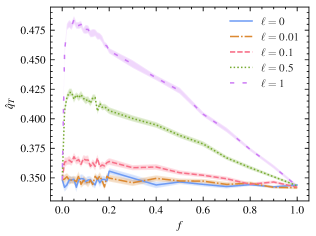
- 仅施加摩擦可减少发帖数量,但无法提升内容的平均质量,因为代理仍优先选择参与度高的内容。
- 少量摩擦(f = 0.01–0.05)与适度学习(ℓ = 0.1–0.3)相结合,可在所有模拟中显著提升平均发帖质量。
- 在低摩擦与中等学习水平下可实现最高平均质量,表明存在一个理想平衡点:认知投入足以促进审慎思考,又不会过度抑制分享行为。
- 该干预使系统稳定在高于基线的高质量水平,指数加权移动平均质量在足够长的模拟时间后收敛至新平衡态。
- 模型表明,学习使代理即使仅经历一次摩擦提示,也能实现从基于参与度到基于质量的分享行为转变。
- 所提出的干预措施具备可扩展性且干扰极小,因其未显著降低用户参与度,也无需平台进行大规模重构。
更好的研究,从现在开始
从阅读论文到最终审阅,大幅缩短您的研究时间。
无需绑定信用卡
本解读由 AI 生成,并经人工编辑审核。