
[论文解读] MindShift: Leveraging Large Language Models for Mental-States-Based Problematic Smartphone Use Intervention
MindShift 提出了一种基于大语言模型(LLM)的、具备心理状态感知能力的干预方法,用于应对有害的智能手机使用行为。该方法能够根据用户的实时情境、心理状态(如无聊、压力、惰性)、目标和习惯,动态生成个性化的说服性信息。在为期五周的实地研究中(N=25),与基线相比,MindShift 显著提升了干预接受率 17.8–22.5%,减少了 12.1–14.4% 的智能手机使用频率,并降低了成瘾评分,同时提升了自我效能感。
Problematic smartphone use negatively affects physical and mental health. Despite the wide range of prior research, existing persuasive techniques are not flexible enough to provide dynamic persuasion content based on users' physical contexts and mental states. We first conducted a Wizard-of-Oz study (N=12) and an interview study (N=10) to summarize the mental states behind problematic smartphone use: boredom, stress, and inertia. This informs our design of four persuasion strategies: understanding, comforting, evoking, and scaffolding habits. We leveraged large language models (LLMs) to enable the automatic and dynamic generation of effective persuasion content. We developed MindShift, a novel LLM-powered problematic smartphone use intervention technique. MindShift takes users' in-the-moment app usage behaviors, physical contexts, mental states, goals \& habits as input, and generates personalized and dynamic persuasive content with appropriate persuasion strategies. We conducted a 5-week field experiment (N=25) to compare MindShift with its simplified version (remove mental states) and baseline techniques (fixed reminder). The results show that MindShift improves intervention acceptance rates by 4.7-22.5% and reduces smartphone usage duration by 7.4-9.8%. Moreover, users have a significant drop in smartphone addiction scale scores and a rise in self-efficacy scale scores. Our study sheds light on the potential of leveraging LLMs for context-aware persuasion in other behavior change domains.
研究动机与目标
- 识别驱动有害智能手机使用行为(尤其是习惯性使用)的潜在心理状态——无聊、压力和惰性。
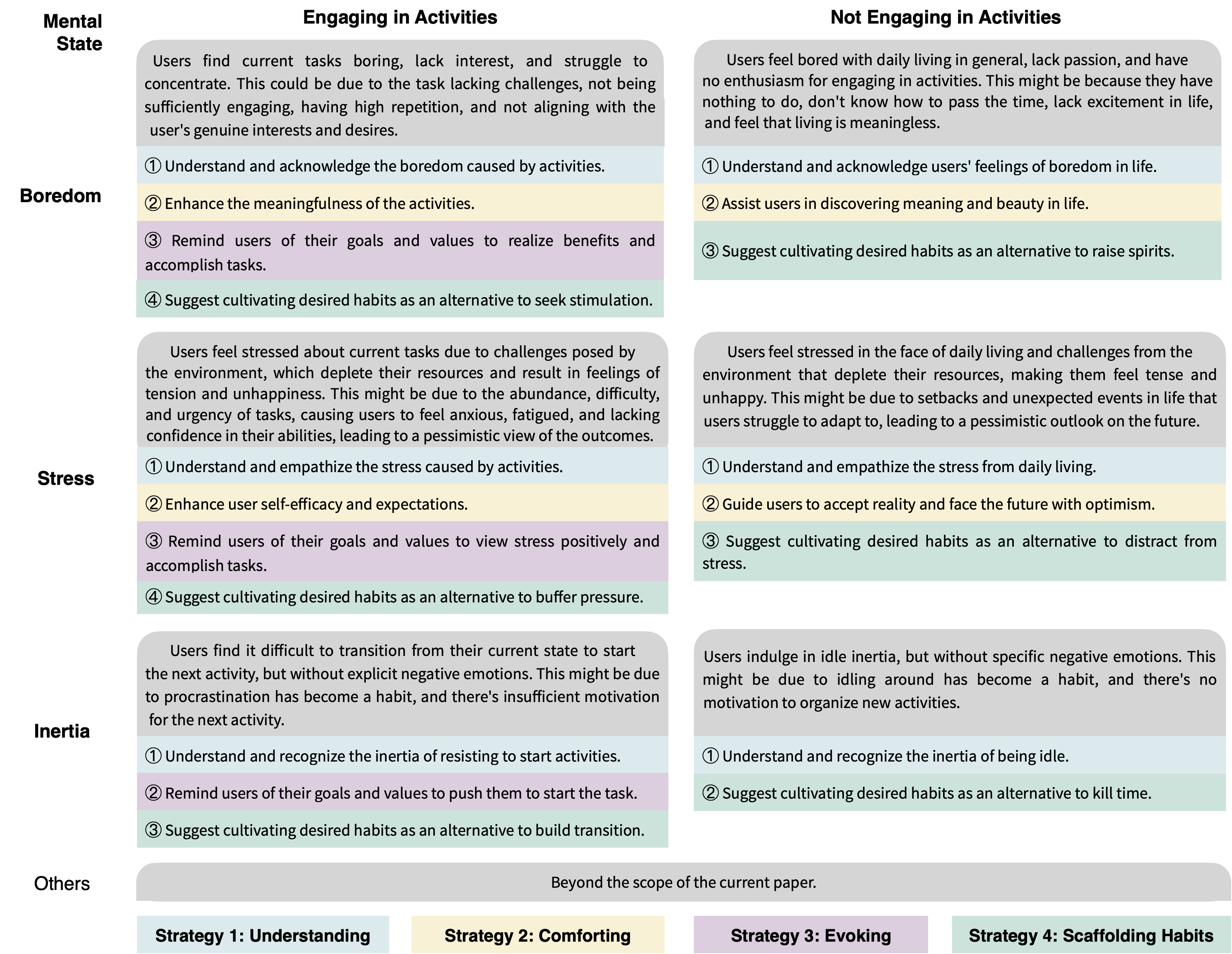
- 基于这些心理状态,设计四种针对性的说服策略——共情理解、情感支持、目标激发和行为引导(习惯搭建)。
- 开发一个基于大语言模型(LLM)的系统——MindShift,实现实时、情境感知且个性化的动态说服信息生成。
- 评估 MindShift 在降低智能手机使用频率、提高干预接受度以及增强自我效能感和心理健康方面的有效性。
提出的方法
- 通过‘巫师之奥兹’研究(N=12)和半结构化访谈(N=10)识别有害智能手机使用行为背后的核心心理状态。
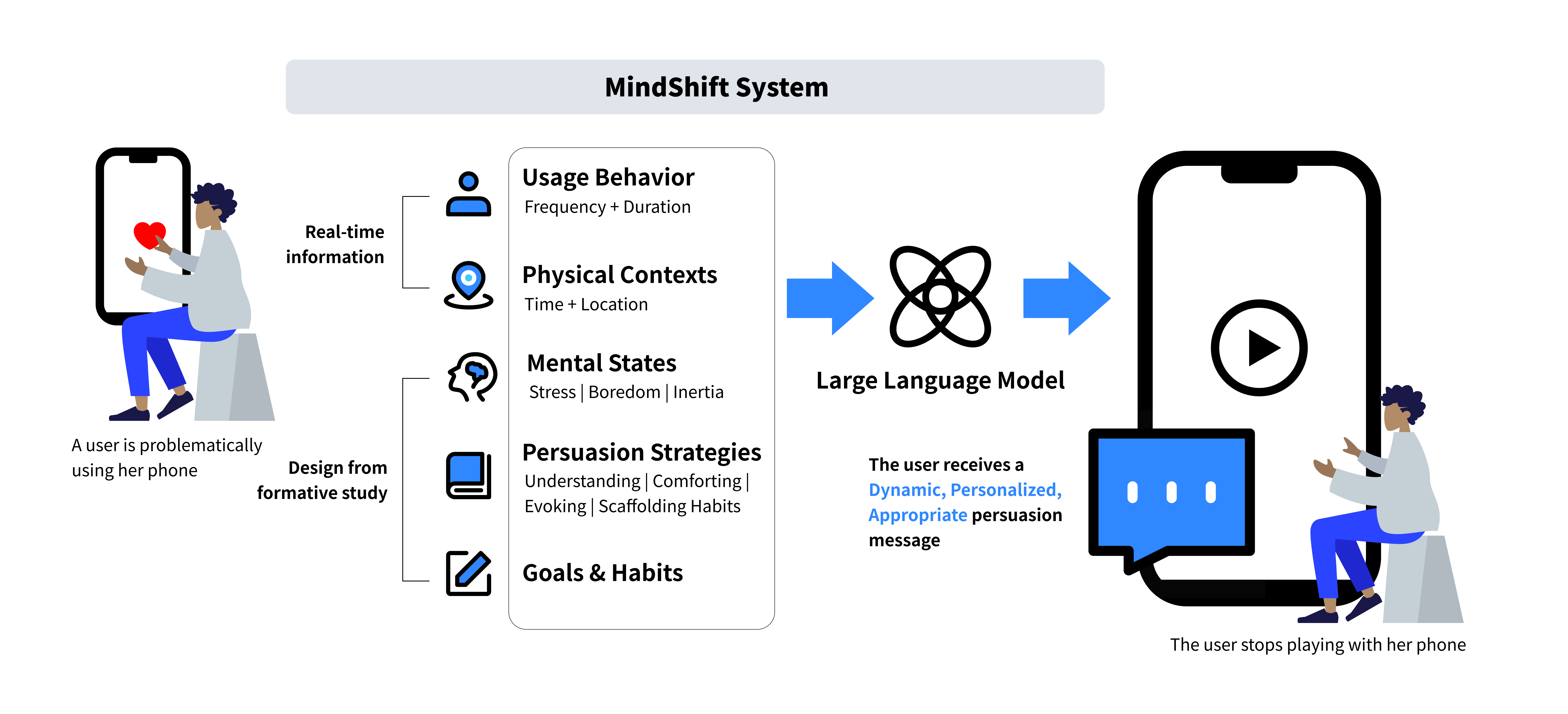
- 设计四种说服策略——共情理解(同理心)、情感支持(情绪安慰)、目标激发(目标激活)和习惯搭建(行为指导),分别针对无聊、压力和惰性状态。
- 构建 MindShift 作为基于大语言模型的干预系统,实时接收输入信息:应用使用行为、身体情境、心理状态、用户目标和习惯。
- 采用 GPT-3.5 通过提示工程生成个性化、自适应的说服信息,确保其与所选策略和上下文保持一致。
- 实施一项被试内实地实验(N=25),为期五周,将 MindShift 与简化版本(MindShift-Simple)及基线条件进行对比。
- 收集定量使用数据(频率、时长),并使用标准化量表验证结果:智能手机成瘾量表(SAS)和自我效能问卷。
实验结果
研究问题
- RQ1驱动有害智能手机使用行为(尤其是习惯性使用)的主要心理状态——无聊、压力和惰性——是什么?
- RQ2当不同说服策略(共情理解、情感支持、目标激发、习惯搭建)根据用户实时心理状态和情境动态调整时,其表现如何?
- RQ3基于大语言模型(LLM)的、情境感知的干预方法(如 MindShift)在干预接受度方面,相较于静态或基于规则的方法,提升程度如何?
- RQ4MindShift 是否显著降低了智能手机使用频率和时长,尤其是在习惯性使用时段?
- RQ5MindShift 是否能带来用户心理健康(如成瘾评分降低)和自我效能感的可测量改善?
主要发现
- 与基线相比,MindShift 显著提升了 17.8–22.5% 的干预接受率,与简化版本相比提升了 8.1%。
- 在为期五周的研究期间,干预组的智能手机使用频率降低了 12.1–14.4%,使用时长减少了 2.4–9.8%。
- MindShift 的两个版本均导致智能手机成瘾量表(SAS)评分显著下降,降幅达 25.8–34.7%。
- 用户自我效能感评分提升了 10.4–10.7%,表明其在管理智能手机使用方面自信心增强。
- 定性反馈表明,用户感知到对智能手机的依赖程度降低,并表达了继续使用 MindShift 的意愿。
- 该系统证明了利用大语言模型(LLM)实时生成情境化、心理适应性说服内容的可行性。
更好的研究,从现在开始
从阅读论文到最终审阅,大幅缩短您的研究时间。
无需绑定信用卡
本解读由 AI 生成,并经人工编辑审核。