
[论文解读] On the measurement of the dispersion relation by a radar and the implication on the current retrieval
本研究利用模拟的X波段雷达图像,量化了从雷达测得的相位关系反演海洋剪切流速廓线时的误差。结果表明,45米高垂直极化雷达可将误差降至最低(RMS ≤ 0.05 m/s),5–10分钟观测窗口在时间分辨率与精度之间取得良好平衡,尽管由于成像伪影和波数相关的偏差,重建不确定性在不同实现之间差异显著。
The work analyses the error in current retrievals from images of marine radars. The study is based on simulations of waves interacting with a shear current. The measured dispersion is related to the underlying wavenumber-dependent effective current. The highest tested radar antenna (H=45 m) with vertical polarization performed the best. For that case the root mean square error was at most 0.05 m/s above the one for the simulated wave field without imaging mechanism. The observation time of 20 minutes was compared to shorter windows. Depending on the needed accuracy, the time may be reduced to five minutes, associated with an loss of accuracy below 12%. The study shows the error of the current reconstruction depends on the shape of the profile and varies considerably from realization to realization
研究动机与目标
- 量化由于相位关系测量与反演导致的从海洋X波段雷达图像中反演流速廓线的误差。
- 评估雷达配置(天线高度、极化方式)和观测窗口长度对反演精度的影响。
- 评估成像机制如何在不同波数范围内放大流速重建结果的偏差与变异性。
- 研究在真实波流相互作用中,多普勒估计选择与谱泄漏对流速反演敏感性的影响。
- 通过识别最小化上层海洋剪切流速估计反演误差的最优设置,为未来雷达观测提供指导。
提出的方法
- 利用线性波理论和波流相互作用的Rayleigh方程,生成具有方向性JONSWAP谱和剪切流速(例如U(z) = exp(0.5z) + 0.05)的模拟波场。
- 通过建模剪切流上波浪运动引起的多普勒频移,合成雷达图像,假设为欧拉参考系测量而非拉格朗日参考系。
- 从雷达图像中提取相位关系,并与理论关系比较,以推断有效波数依赖的流速。
- 应用Smeltzer等人(2019)提出的流速反演方法,从测量的相位关系重建剪切廓线,并以真实模拟流速廓线为基准量化误差。
- 误差分析包括RMS偏差、置信区间,以及对噪声和窗口大小的敏感性分析,共使用1000次实现以评估统计离散程度。
- 本研究将雷达测量误差(相位估计)与流速重建误差(反演)分离,并利用已知的真实基准廓线进行验证。
实验结果
研究问题
- RQ1雷达天线高度与极化方式如何影响相位关系测量精度及后续流速反演的准确性?
- RQ2在剪切流速估计中,何种观测窗口长度可在时间分辨率与反演精度之间实现最佳平衡?
- RQ3成像机制与谱泄漏如何影响不同波数范围内重建流速廓线的离散度与偏差?
- RQ4流速廓线的形状在多大程度上影响基于雷达的流速反演误差?
- RQ5雷达测量中的随机噪声在多大程度上影响流速反演结果的可靠性与偏差?
主要发现
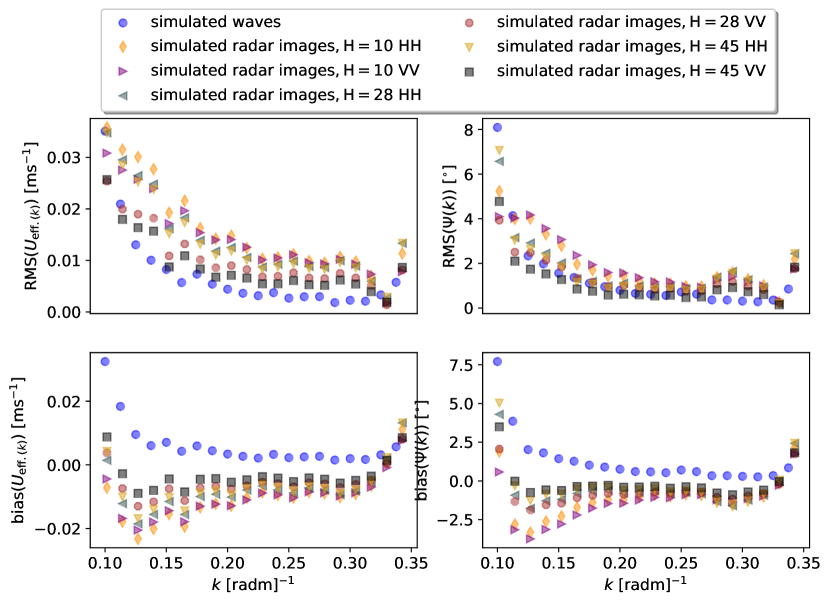
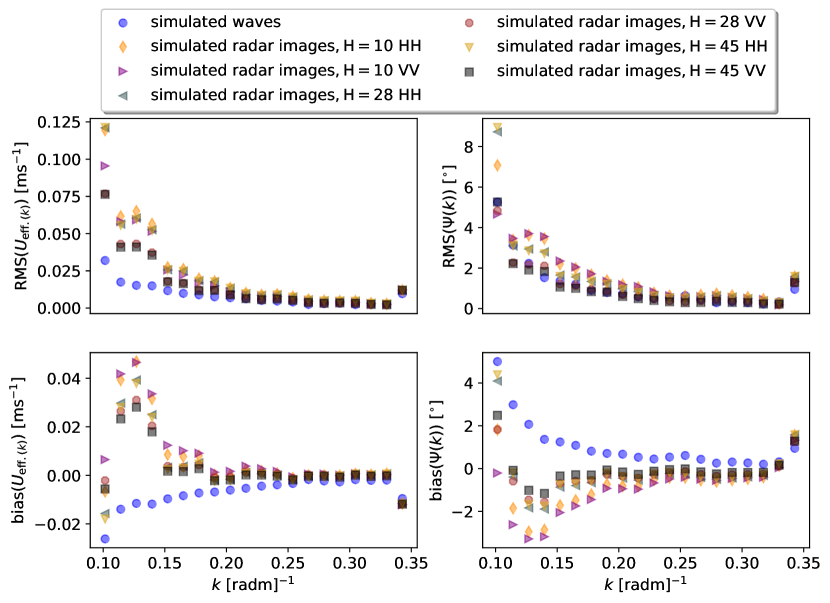
- 45米高的雷达天线配合垂直极化可实现最低的均方根误差(RMS ≤ 0.05 m/s),反演误差接近于不考虑成像效应的模拟波场误差水平。
- 5–10分钟的观测窗口在时间分辨率与精度之间提供了实用的折衷方案,与20分钟窗口相比,精度损失小于12%。
- 由于成像机制对偏差的放大作用,尤其在剪切较弱的流速廓线中,不同实现之间的流速重建误差存在显著差异。
- 流速估计的置信区间在10米深度可达3 cm/s,水平极化及低剪切廓线的离散度更大。
- 反演误差强烈依赖于输入流速廓线,相同反演方法下,某些示例廓线的误差可翻倍。
- 雷达测量中的随机噪声随深度增加而提升误差,但不会引入系统性偏差,该结论经1000次实现模拟验证。
更好的研究,从现在开始
从阅读论文到最终审阅,大幅缩短您的研究时间。
无需绑定信用卡
本解读由 AI 生成,并经人工编辑审核。