
[论文解读] The future search for low-frequency axions and new physics with the FLASH resonant cavity experiment at Frascati National Laboratories
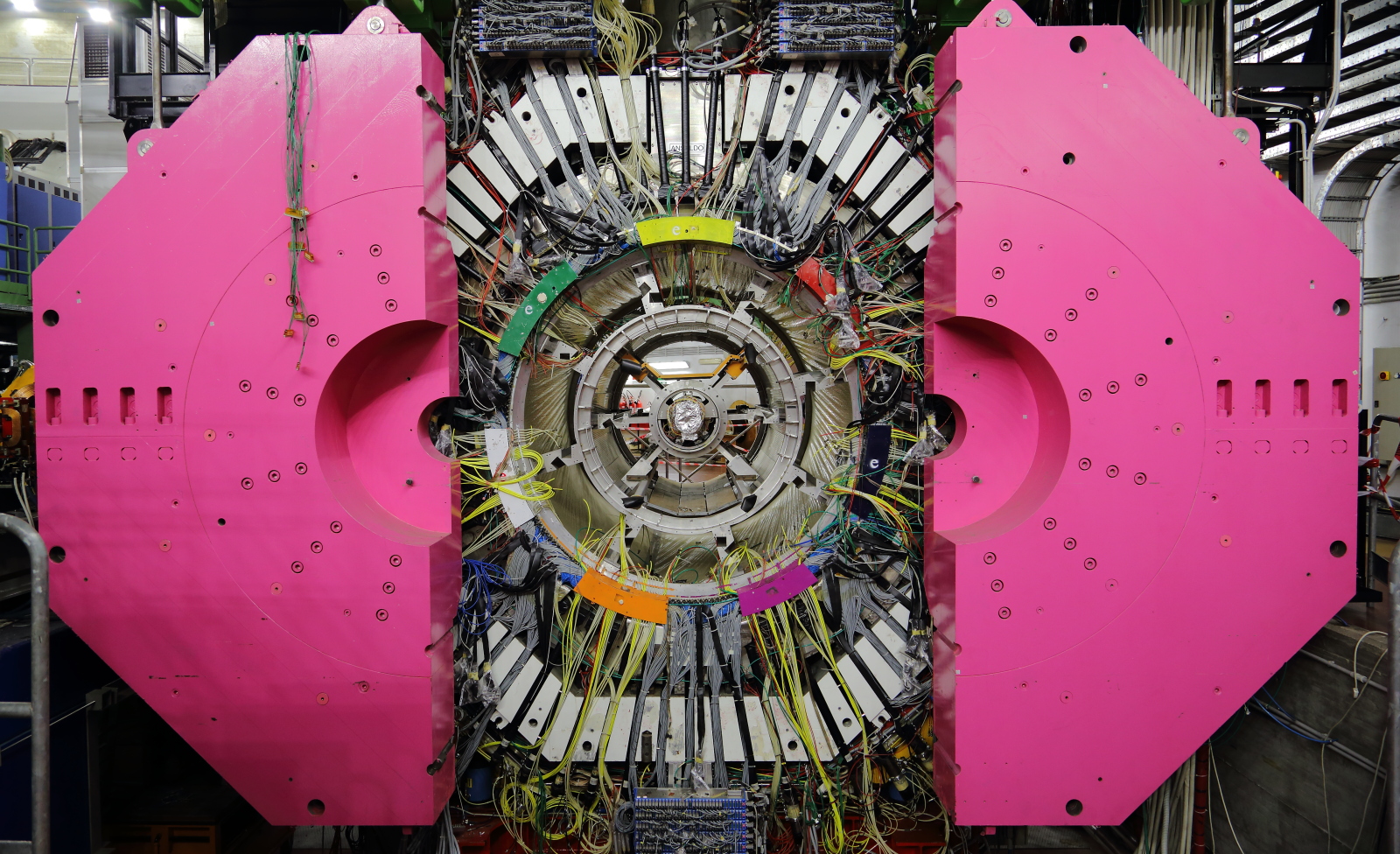
FLASH 实验在 INFN 拉齐奥国家实验室提出了一种大型谐振腔式轴子探测器,利用现有的 FINUDA 电磁铁和低温基础设施,探测低质量轴子(0.49–1.49 μeV)、标量场、变色龙粒子、隐光子以及高频引力波(100–300 MHz)。该实验采用超低温环境下的微带 SQUID 放大器,实现高灵敏度,填补了轴子质量窗口中的关键空白,并实现了对标准模型之外新物理的多信使探测。
We present a proposal for a new experiment, the FINUDA magnet for Light Axion SearcH (FLASH), a large resonant-cavity haloscope in a high static magnetic field which is planned to probe new physics in the form of dark matter (DM) axions, scalar fields, chameleons, hidden photons, as well as high frequency gravitational waves (GWs). Concerning the QCD axion, FLASH will search for these particles as the DM in the mass range (0.49-1.49) ueV, thus filling the mass gap between the ranges covered by other planned searches. A dedicated Microstrip SQUID operating at ultra-cryogenic temperatures will amplify the signal. The frequency range accessible overlaps with the Very High Frequency (VHF) range of the radio wave spectrum and allows for a search in GWs in the frequency range (100-300) MHz. The experiment will make use of the cryogenic plant and magnet of the FINUDA experiment at INFN Frascati National Laboratories near Rome (Italy); the operations needed to restore the functionalities of the apparatus are currently underway. We present the setup of the experiment and the sensitivity forecasts for the detection of axions, scalar fields, chameleons, hidden photons, and GWs.
研究动机与目标
- 在现有实验尚未覆盖的 0.49–1.49 μeV 轴子质量范围内,探测 QCD 轴子暗物质,填补现有实验之间的空白。
- 探测标准模型之外的新物理,包括标量场、变色龙粒子、隐光子以及高频引力波。
- 重新利用 INFN 拉齐奥现有的 FINUDA 电磁铁和低温基础设施,实现成本效益高、灵敏度高的轴子探测实验。
- 通过在超低温环境下运行的微带 SQUID 放大器,实现高信噪比探测。
- 对轴子、标量场和变色龙场,以及隐光子和引力波,在 VHF 无线电频段内的灵敏度极限进行预测。
提出的方法
- 实验采用一个大尺寸圆柱形谐振腔(R = 1050 mm,L = 1200 mm),在 TE111 和 TE011 模式下运行,以增强与弱相互作用粒子的耦合。
- 利用 FINUDA 电磁铁提供的强静态磁场,通过 Primakoff 效应将轴子和其他赝标量粒子转换为可探测的微波光子。
- 信号通过在超低温环境(mK 量级)下工作的微带 SQUID 放大,最大限度降低热噪声,提升探测灵敏度。
- 谐振腔的电磁场分布通过贝塞尔函数建模,场分量(E 和 B)通过柱坐标系中麦克斯韦方程的解获得。
- 耦合效率通过重叠积分 $ C_{nlm} $ 量化,其取决于入射粒子的动量和谐振腔的场分布,其中变色龙粒子的 $ C_{011} \approx 0.005 $,TE111 模式的 $ C_{111} \approx 3 \times 10^{-7} $。
- 灵敏度预测基于信噪比,结合谐振腔 Q 因子、带宽和热噪声,对轴子耦合 $ g_{a\gamma\gamma} $、标量场耦合以及引力波振幅进行预测。
实验结果
研究问题
- RQ1FLASH 实验是否能在 0.49–1.49 μeV 轴子质量范围内实现对 QCD 轴子暗物质的竞争力灵敏度,而当前实验尚未覆盖此窗口?
- RQ2在动量依赖性耦合条件下,FLASH 设置对标量场和变色龙粒子的预期灵敏度如何?
- RQ3相同的谐振腔和磁场设置是否可用于探测 100–300 MHz 频段的高频引力波?
- RQ4在超低温环境下,微带 SQUID 放大器的性能如何影响对弱相互作用粒子的总体探测阈值?
- RQ5谐振腔几何形状和场模结构(如 TE111 与 TE011)在优化与不同新物理候选者耦合方面起到什么作用?
主要发现
- FLASH 实验预计可探测 0.49–1.49 μeV 轴子质量范围内的 QCD 轴子参数空间,填补了现有和计划中轴子探测实验之间的关键空白。
- 对于德布罗意波长约 0.2 m 的变色龙场,耦合效率估计为 $ C_{011} \approx 0.005 $,表明存在强烈的共振增强。
- 对于速度为 200 km/s 的玻色子暗物质,耦合效率降至 $ C_{011} \approx 5 \times 10^{-13} $,反映出其对德布罗意波长的敏感性。
- TE111 模式的耦合效率为 $ C_{111} \approx 3 \times 10^{-7} $,与先前理论估算一致,适用于高频引力波探测。
- 在超低温环境下使用微带 SQUID 放大器可实现接近量子极限的噪声性能,这对探测亚 μeV 量级的轴子信号至关重要。
- 该实验利用 INFN 拉齐奥现有的基础设施(FINUDA 电磁铁和低温站),降低了成本并加速了部署,同时保持了高灵敏度。
![Figure 2: The FLASH discovery potential (90% confidence level or c.l.) compared to existing experimental limits. The brown lines with yellow error-band show the theoretical predictions for the KSVZ and DFSZ axions [ 25 , 26 , 28 , 27 ] . The forecast reach of FLASH is compared with experimental limi](https://ar5iv.labs.arxiv.org/html/2309.00351/assets/x1.png)
更好的研究,从现在开始
从阅读论文到最终审阅,大幅缩短您的研究时间。
无需绑定信用卡
本解读由 AI 生成,并经人工编辑审核。