
[논문 리뷰] A Machine Learning-oriented Survey on Tiny Machine Learning
이 종합 검토는 2018년에서 2023년까지의 틴리 머신 러닝(TinyML)에 대해 기계학습(ML) 중심의 분석을 제공하며, ML 중심, 하드웨어(HW) 중심, 공동 설계(co-design)의 세 가지 구현 워크플로우를 체계적으로 검토한다. 또한 모델 최적화 기법과 학습 알고리즘의 분류 체계를 제안한다. 공동 설계가 향후 가장 유망한 길로 지목되며, 벤치마킹, 메모리 제약, 데이터 품질, 표준 모델 및 공개 데이터셋의 부족이 핵심 해결되지 않은 과제로 지적된다.
The emergence of Tiny Machine Learning (TinyML) has positively revolutionized the field of Artificial Intelligence by promoting the joint design of resource-constrained IoT hardware devices and their learning-based software architectures. TinyML carries an essential role within the fourth and fifth industrial revolutions in helping societies, economies, and individuals employ effective AI-infused computing technologies (e.g., smart cities, automotive, and medical robotics). Given its multidisciplinary nature, the field of TinyML has been approached from many different angles: this comprehensive survey wishes to provide an up-to-date overview focused on all the learning algorithms within TinyML-based solutions. The survey is based on the Preferred Reporting Items for Systematic Reviews and Meta-Analyses (PRISMA) methodological flow, allowing for a systematic and complete literature survey. In particular, firstly we will examine the three different workflows for implementing a TinyML-based system, i.e., ML-oriented, HW-oriented, and co-design. Secondly, we propose a taxonomy that covers the learning panorama under the TinyML lens, examining in detail the different families of model optimization and design, as well as the state-of-the-art learning techniques. Thirdly, this survey will present the distinct features of hardware devices and software tools that represent the current state-of-the-art for TinyML intelligent edge applications. Finally, we discuss the challenges and future directions.
연구 동기 및 목표
- 2018년에서 2023년까지의 틴리 머신 러닝(TinyML) 연구에 대해 체계적이고 기계학습(ML) 중심의 개요를 제공하여 분야의 다학제적 복잡성을 다루는 것.
- 세 가지 주요 구현 워크플로우인 ML 중심, 하드웨어(HW) 중심, 공동 설계(co-design)를 공식화하고 비교하는 것.
- 틴리 머신 러닝(TinyML)에 특화된 모델 최적화 및 학습 기법의 포괄적인 분류 체계를 제시하는 것.
- 틴리 머신 러닝(TinyML) 구현을 위한 현재의 하드웨어 플랫폼과 소프트웨어 도구를 평가하는 것.
- 벤치마킹, 메모리 제약, 데이터 품질, 표준 모델 및 공개 데이터셋의 부족과 같은 해결되지 않은 과제를 식별하는 것.
제안 방법
- 체계적인 문헌 검토를 위해 PRISMA 방법론을 활용하여 완전성과 재현 가능성을 확보한다.
- 기계학습(ML) 중심, 하드웨어(HW) 중심, 공동 설계(co-design)의 세 가지 별도의 설계 워크플로우 기반으로 틴리 머신 러닝 시스템을 분류하며, 협업 설계에 중점을 둔다.
- 학습 기법을 최적화 가족(예: 양자화, 지식 증류, 신경망 아키텍처 탐색 등)과 모델 설계 기반으로 분류하는 상세한 분류 체계를 제안한다.
- 최신 틴리 머신 러닝 프레임워크 및 도구를 평가하며, 임베디드 마이크로컨트롤러(MCU) 및 저전력 제약 조건과의 호환성을 분석한다.
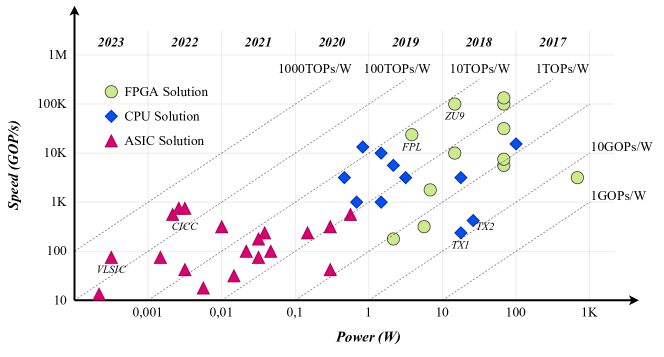
- 성능, 메모리, 에너지 효율성 기반으로 하드웨어 플랫폼을 분석하며, 표 IV에서 비교 분석을 수행한다.
- 기존 문헌의 철저한 통합 분석을 통해 해결되지 않은 문제를 식별하며, 벤치마킹, 메모리, 데이터 품질, 모델 표준화에 초점을 맞춘다.
실험 결과
연구 질문
- RQ1틴리 머신 러닝(TinyML) 시스템을 구현하기 위한 세 가지 주요 설계 워크플로우는 무엇이며, 실무적 구현과 성능에서 어떻게 다릅니까?
- RQ2자원 제약이 있는 엣지 디바이스에 적합한 틴리 머신 러닝(TinyML)의 모델 최적화 및 학습 기법 중 가장 효과적인 것은 무엇입니까?
- RQ3현재의 하드웨어 플랫폼(MCU, FPGA, TPU)은 틴리 머신 러닝 응용 분야에서 에너지 효율성, 메모리 사용량, 추론 속도 측면에서 어떻게 비교될 수 있습니까?
- RQ4실제 응용 환경에서 틴리 머신 러닝(TinyML) 시스템의 발전과 구현을 저해하는 주요 해결되지 않은 과제는 무엇입니까?
- RQ5왜 틴리 머신 러닝 생태계에는 표준 벤치마킹, 공개 데이터셋, 널리 인정된 모델이 부족한가요?
주요 결과
- 기계학습(ML) 및 하드웨어(HW) 엔지니어가 초기 단계부터 협업하는 공동 설계 워크플로우가 향후 틴리 머신 러닝(TinyML) 발전에 가장 유망한 길로 나타났다.
- growing 관심에도 불구하고 마이크로컨트롤러(MCU)에서 틴리 머신 러닝(TinyML)을 위한 널리 인정된 기준 모델이 존재하지 않으며, 이는 모바일 엣지 AI에서의 MobileNet과는 다릅니다.
- 학습, 추론, 시스템 수준 성능에 대한 표준화된 벤치마킹이 부족하여 공정한 비교 및 발전을 저해하는 주요 장벽으로 남아 있다.
- 특히 딥 러닝 모델의 경우 제한된 SRAM 및 플래시 메모리로 인한 메모리 제약이 여전히 핵심 과제로 남아 있다.
- 데이터 품질은 핵심적이지만 자주 간과되는 요소이며, 실제 데이터 부족과 열악한 품질은 모델 평가 및 구현을 잘못 이끌 수 있다.
- 딥 러닝이 틴리 머신 러닝(TinyML) 응용 분야를 지배하고 있지만, TEDA와 같은 비딥 러닝 방법은 특정 니치 외에는 거의 사용되지 않아 보급 수준이 낮다.

더 나은 연구,지금 바로 시작하세요
논문 읽기부터 검토까지, 연구 시간을 획기적으로 줄여보세요.
카드 등록 없음 · 무료 플랜 제공
이 리뷰는 AI가 만들고, 인간 에디터가 검토했습니다.