
[논문 리뷰] AI Ethics: An Empirical Study on the Views of Practitioners and Lawmakers
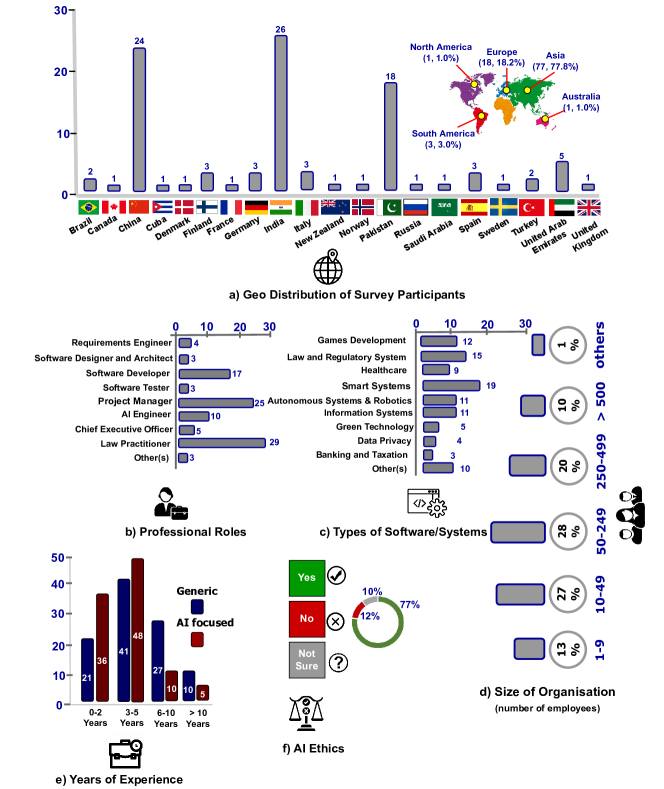
이 사례 기반 연구는 20개국에서 온 99명의 전문가 및 정책 입안자들을 대상으로 한 글로벌 설문 조사로, 인공지능 윤리 원칙과 과제를 탐구한다. 연구는 투명성, 책임성, 개인정보 보호를 가장 중요한 윤리 원칙으로 규명하였으며, 윤리적 지식 부족, 법적 프레임워크 부재, 모니터링 기구의 약화를 주요 과제로 지적한다. 이는 윤리적 고려를 반영한 인공지능 개발 및 성숙도 모델링의 기초를 제공한다.
Artificial Intelligence (AI) solutions and technologies are being increasingly adopted in smart systems context, however, such technologies are continuously concerned with ethical uncertainties. Various guidelines, principles, and regulatory frameworks are designed to ensure that AI technologies bring ethical well-being. However, the implications of AI ethics principles and guidelines are still being debated. To further explore the significance of AI ethics principles and relevant challenges, we conducted a survey of 99 representative AI practitioners and lawmakers (e.g., AI engineers, lawyers) from twenty countries across five continents. To the best of our knowledge, this is the first empirical study that encapsulates the perceptions of two different types of population (AI practitioners and lawmakers) and the study findings confirm that transparency, accountability, and privacy are the most critical AI ethics principles. On the other hand, lack of ethical knowledge, no legal frameworks, and lacking monitoring bodies are found the most common AI ethics challenges. The impact analysis of the challenges across AI ethics principles reveals that conflict in practice is a highly severe challenge. Moreover, the perceptions of practitioners and lawmakers are statistically correlated with significant differences for particular principles (e.g. fairness, freedom) and challenges (e.g. lacking monitoring bodies, machine distortion). Our findings stimulate further research, especially empowering existing capability maturity models to support the development and quality assessment of ethics-aware AI systems.
연구 동기 및 목표
- 인공지능 전문가 및 정책 입안자들이 핵심 인공지능 윤리 원칙과 과제에 대해 어떻게 인식하고 있는지 실증적으로 분석하는 것.
- 식별된 과제들이 다양한 인공지능 윤리 원칙에 미치는 심각도 영향을 평가하는 것.
- 전문가들과 정책 입안자들이 윤리 원칙과 과제에 대해 서로 다른 인식을 어떻게 갖는지 비교 및 분석하는 것.
- 증거 기반 가이드라인을 통해 견고하고 합법적이며 윤리적으로 일치하는 인공지능 시스템을 개발하기 위한 실질적 통찰을 제공하는 것.
- 실제 현장의 이해관계자 관점에서 핵심 원칙과 과제를 식별함으로써 인공지능 윤리 능력 성숙도 모델 개발을 지원하는 것.
제안 방법
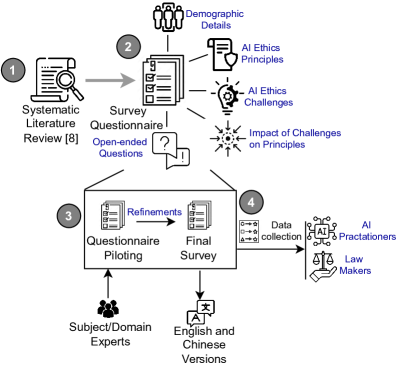
- 20개국의 인공지능 엔지니어, 변호사, 정책 입안자 포함 총 99명의 응답자를 대상으로 횡단적 설문 조사를 실시함.
- 구조화된 설문지를 통해 15개의 인공지능 윤리 원칙과 12개의 주요 과제에 대한 인식을 수집함.
- 전문가와 정책 입안자 간의 인식을 비교하기 위해 통계 분석(예: 상관관계 및 유의성 검정)을 적용함.
- 과제들이 다양한 윤리 원칙에 미치는 장기적 영향을 평가하기 위해 심각도 영향 분석을 수행함.
- 기존의 체계적 문헌 고찰(SLR)과의 일치성을 확보하기 위해 연구 결과를 검증함.
- 향후 인공지능 윤리 성숙도 모델링 및 산업 적용을 위해 사용할 수 있는 원칙과 과제의 최종 카탈로그를 개발함.
실험 결과
연구 질문
- RQ1전문가들과 정책 입안자들은 인공지능 윤리 원칙과 과제에 대해 어떤 통찰을 갖고 있는가?
- RQ2식별된 과제들이 인공지능 윤리 원칙 전반에 걸쳐 어떤 심각도 영향을 미치는가?
- RQ3전문가들과 정책 입안자들은 과제와 원칙을 어떻게 다르게 인식하고 있는가?
주요 결과
- 전문가와 정책 입안자 모두 투명성, 책임성, 개인정보 보호를 가장 중요한 인공지능 윤리 원칙으로 평가함.
- 가장 심각한 과제로는 윤리적 지식 부족, 법적 프레임워크 부재, 모니터링 기구 부재가 지목됨.
- 실제 적용에서의 갈등은 특히 공정성 및 자유 원칙에 가장 심각한 영향을 미치는 높은 심각도의 과제로 확인됨.
- 전문가와 정책 입안자 간의 인식 간 유의미한 통계적 상관관계가 발견되었지만, 공정성 및 자유 원칙에 대해서는 뚜렷한 차이가 나타남.
- 정책 입안자들은 전문가들보다 모니터링 기구 부재와 기계 왜곡을 더 심각한 과제로 인식함.
- 본 연구의 최종 원칙 및 과제 카탈로그는 향후 인공지능 윤리 성숙도 모델 개발을 위한 검증된 기초 자료를 제공함.
더 나은 연구,지금 바로 시작하세요
논문 읽기부터 검토까지, 연구 시간을 획기적으로 줄여보세요.
카드 등록 없음 · 무료 플랜 제공
이 리뷰는 AI가 만들고, 인간 에디터가 검토했습니다.