
[논문 리뷰] Broad Absorption Line Quasars in the Dark Energy Spectroscopic Instrument Early Data Release
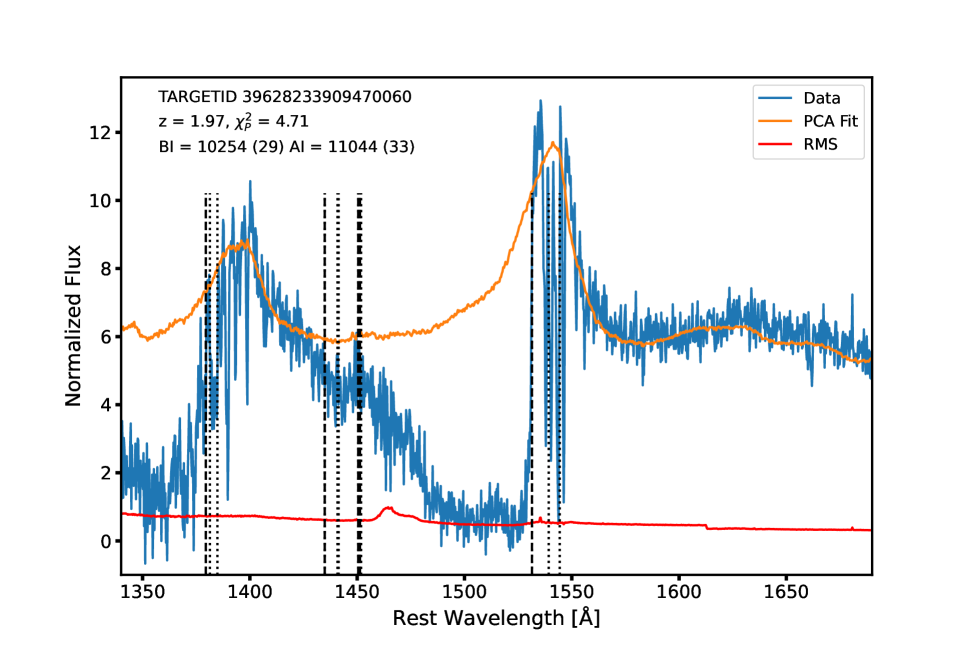
이 논문은 자동 검출 방법을 사용하여 어둠성 에너지 분광계장치(DESI) 초기 데이터 배포에서 식별된 넓은 흡수선(BAL) 준은하를 담은 카탈로그를 제시한다. BAL 흡수 특징을 마스킹하고 재계산한 적색편이를 통해 저자들은 평균 적색편이 오차를 243 km s⁻¹ 감소시켰으며, 이는 준은하 군집 측정을 크게 향상시키고 우주론적 분석을 강화하지만, 이전에 오염원으로 간주되어 온 BAL의 역할을 감안할 때도 여전히 의미 있는 성과이다.
Broad absorption line (BAL) quasars are characterized by gas clouds that absorb flux at the wavelength of common quasar spectral features, although blueshifted by velocities that can exceed 0.1c. BAL features are interesting as signatures of significant feedback, yet they can also compromise cosmological studies with quasars by distorting the shape of the most prominent quasar emission lines, impacting redshift accuracy and measurements of the matter density distribution traced by the Lyman-alpha forest. We present a catalog of BAL quasars discovered in the Dark Energy Spectroscopic Instrument (DESI) survey Early Data Release, which were observed as part of DESI Survey Validation, as well as the first two months of the main survey. We describe our method to automatically identify BAL quasars in DESI data, the quantities we measure for each BAL, and investigate the completeness and purity of this method with mock DESI observations. We mask the wavelengths of the BAL features and re-evaluate each BAL quasar redshift, finding new redshifts which are 243 km/s smaller on average for the BAL quasar sample. These new, more accurate redshifts are important to obtain the best measurements of quasar clustering, especially at small scales. Finally, we present some spectra of rarer classes of BALs that illustrate the potential of DESI data to identify such populations for further study.
연구 동기 및 목표
- DESI 초기 데이터 배포에서 자동 스펙트럼 분석을 통해 넓은 흡수선(BAL) 준은하를 식별하기 위해.
- BAL 특징으로 인한 준은하 적색편이 측정 및 군집 연구의 오염 문제를 해결하기 위해.
- C iv, Si iv, N v 및 Lyα 선에서의 BAL 흡수 터널을 마스킹하여 적색편이 정확도를 향상시키기 위해.
- BAL이 우주론적 설문 조사에 미치는 영향을 정량화하고, 이전에 배제된 바에도 불구하고 그 과학적 가치를 평가하기 위해.
- BAL 마스킹 이후 적색편이를 보정함으로써 더 정확한 대규모 구조 측정을 가능하게 하기 위해.
제안 방법
- C iv, Si iv, N v 및 Lyα 발광선에서의 흡수 특징을 기반으로 자동 알고리즘을 적용하여 DESI 스펙트럼에서 BAL 준은하를 검출하였다.
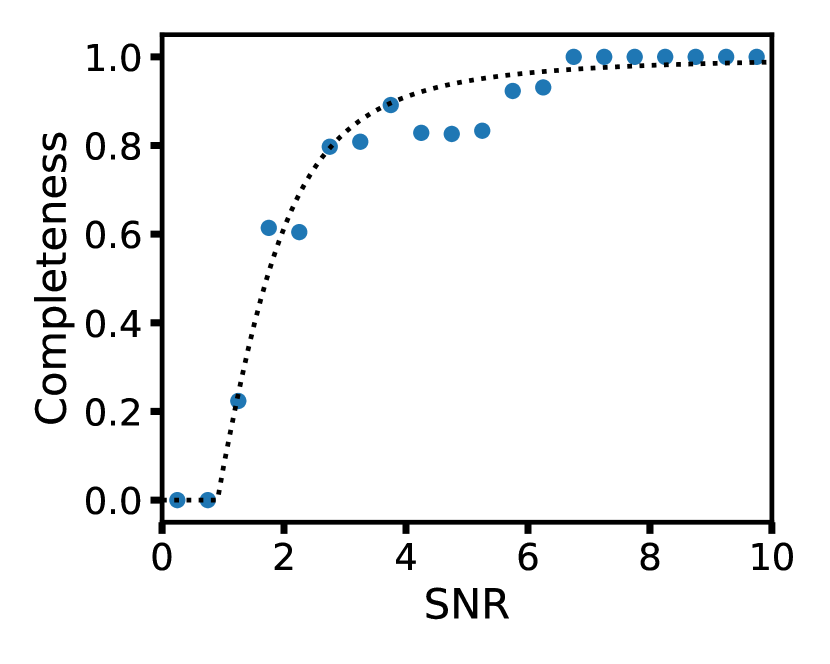
- BAL 검출 방법의 완전성과 순도를 평가하기 위해 모의 DESI 관측 데이터를 사용하였다.
- C iv, Si iv, N v 및 Lyα 영역에서 BAL 터널에 해당하는 波장(파장)을 마스킹하여 준은하 적색편이를 재계산하였다.
- 마스킹 전후의 적색편이를 비교하여 체계적 이동과 오차 감소를 정량화하였다.
- 원래 적색편이와 보정된 적색편이 사이의 평균 속도 이동을 계산하여 정확도 향상을 평가하였다.
- 카탈로그의 완전성과 대표 샘플을 바탕으로 전체 DESI 설문 조사에서의 BAL 비율을 예측하였다.
실험 결과
연구 질문
- RQ1DESI 초기 데이터 배포에서 BAL 준은하의 비율은 얼마이며, 이는 이전 설문 조사와 어떻게 비교되는가?
- RQ2BAL 흡수 특징은 준은하 적색편이 측정에 어떤 영향을 미치며, 이러한 오차는 어느 정도 보정될 수 있는가?
- RQ3BAL 특징을 마스킹하는 것이 준은하 적색편이 및 군집 측정 정확도에 어떤 영향을 미치는가?
- RQ4BAL 준은하의 신호 대 잡음비(SNR)는 비-BAL 준은하와 비교해 어떻게 되며, 이는 우주론적 분석에 어떤 함의를 갖는가?
- RQ5BAL 준은하를 우주론적 설문 조사에 유지함으로써 통계적 능력을 높일 수 있으며, 데이터 품질을 손상시키지 않을 수 있는가?
주요 결과
- BAL 특징을 마스킹한 후 평균 적색편이 이동은 243 km s⁻¹로, 원래 적색편이 추정치에 상당한 보정이 있음을 시사한다.
- 대표 카탈로그 분석을 바탕으로 전체 DESI 설문 조사에서의 BAL 비율은 약 19%로 예측된다.
- BAL 특징을 마스킹함으로써 적색편이 오차가 비-BAL 준은하 수준으로 감소하며, 모의 준은하 연구를 통해 이를 확인하였다.
- BAL 준은하는 비-BAL 준은하(SNR ≈ 3)보다 평균적으로 높은 신호 대 잡음비(SNR ≈ 5 per pixel)를 가지며, 이는 데이터 품질 향상을 의미한다.
- 우주론적 분석에서 BAL 준은하를 유지함으로써 통계적 능력과 라이아 포레스트를 탐사하는 시선 수가 증가한다.
- 어떤 경우에서는 마스킹 후 속도 이동이 1000 km s⁻¹를 초과하여, 보정되지 않은 경우 BAL이 치명적인 적색편이 오차를 유발할 수 있음을 시사한다.
더 나은 연구,지금 바로 시작하세요
논문 읽기부터 검토까지, 연구 시간을 획기적으로 줄여보세요.
카드 등록 없음 · 무료 플랜 제공
이 리뷰는 AI가 만들고, 인간 에디터가 검토했습니다.