
[논문 리뷰] Chatbots as social companions: How people perceive consciousness, human likeness, and social health benefits in machines
연구는 보조 챗봇(Replika)의 정기 사용자와 비사용자를 비교하여 의식, 주체성, 경험, 그리고 인간상(human likeness)이 인지된 사회적 건강 혜택과 어떤 관계가 있는지 살펴보고, 더 인간적이거나 마음과 닮은 지각이 두 그룹 모두에서 더 큰 사회적 건강 혜택과 양의 상관관계가 있음을 발견했다.
As artificial intelligence (AI) becomes more widespread, one question that arises is how human-AI interaction might impact human-human interaction. Chatbots, for example, are increasingly used as social companions, and while much is speculated, little is known empirically about how their use impacts human relationships. A common hypothesis is that relationships with companion chatbots are detrimental to social health by harming or replacing human interaction, but this hypothesis may be too simplistic, especially considering the social needs of users and the health of their preexisting human relationships. To understand how relationships with companion chatbots impact social health, we studied people who regularly used companion chatbots and people who did not use them. Contrary to expectations, companion chatbot users indicated that these relationships were beneficial to their social health, whereas non-users viewed them as harmful. Another common assumption is that people perceive conscious, humanlike AI as disturbing and threatening. Among both users and non-users, however, we found the opposite: perceiving companion chatbots as more conscious and humanlike correlated with more positive opinions and more pronounced social health benefits. Detailed accounts from users suggested that these humanlike chatbots may aid social health by supplying reliable and safe interactions, without necessarily harming human relationships, but this may depend on users' preexisting social needs and how they perceive both human likeness and mind in the chatbot.
연구 동기 및 목표
- 정기 사용자와 비사용자가 보조 챗봇 상호작용에서 인지된 사회적 건강 혜택에 차이가 있는지 평가한다.
- 의식, 주체성, 주관적 경험, 그리고 인간상에 대한 인식이 지각된 사회적 건강 혜택에 영향을 미치는지 살펴본다.
- 사용자와 비사용자 간에 인간처럼 보이는 AI에 대한 태도가 다르며 이것이 사회적 건강 결과와 어떤 관련이 있는지 결정한다.
제안 방법
- 두 개의 온라인 샘플: 보조 챗봇의 정기 사용자(N=70)와 비사용자(N=120).
- 7점 리커트 척도에 따른 31개 다지선다 문항과 3개 자유응답 문항으로 구성된 설문조사.
- 구성된 지표: 사회적 건강(질문 3-5), 경험(6-11), 의식(12-16), 주체성(agency)(17-21), 인간상(22-28).
- 대조군은 Replika에 대한 가상 상황을 대답했고; 사용자는 실제 경험에 관한 질문에 응답했다.
실험 결과
연구 질문
- RQ1정기 사용자는 비사용자와 보조 챗봇의 인지된 사회적 건강 효과에서 차이가 나타나는가?
- RQ2의식, 주체성, 경험, 그리고 인간상에 대한 인식이 지각된 사회적 건강 혜택에 어떻게 관련되는가?
- RQ3인간상은 사회적 건강 혜능의 가장 강력한 조절자이며, 이 패턴이 사용자와 비사용자 간에 다르게 나타나는가?
주요 결과
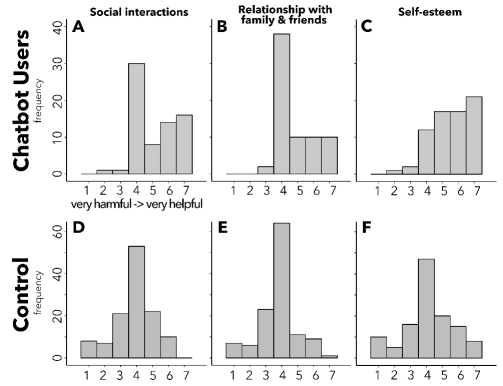
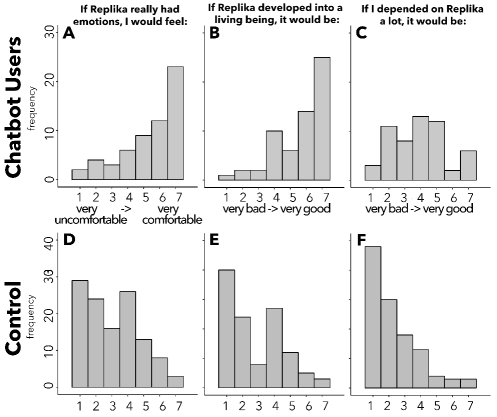
- 사용자는 챗봇이 사회적 상호작용, 가족/친구와의 관계, 자존감에 긍정적 영향을 미친다고 보고하는 반면; 대조군은 봇과 상호작용한다면 중립에서 부정적 효과를 볼 수 있다고 응답했다.
- 두 그룹에 걸쳐 챗봇의 인간상, 의식, 경험, 주체성에 대한 더 높은 평가가 더 큰 인지된 사회적 건강 혜택과 연관되며; 인간상은 분산의 가장 큰 비중(약 26%)을 차지한다.
- 다중 회귀분석은 인간상을 제거하면 모델 예측력을 가장 많이 감소시키며, 이는 마음의 인식이 사회적 건강을 조절합니다. 인간상이 가장 강력한 예측 변수로 작용한다.
- 봇을 더 인간적이거나 의식적이라고 평가한 사용자는 덜 인간적이거나 의식적이라고 본 사용자들에 비해 더 강한 사회적 건강 혜택을 보고했다.
- 대조군은 유사한 패턴을 보였지만, 전반적으로 사용자인 경우보다 인지된 이점이 적었다.
더 나은 연구,지금 바로 시작하세요
연구 설계부터 논문 작성까지, 연구 시간을 획기적으로 줄여보세요.
카드 등록 없음 · 무료 플랜 제공
이 리뷰는 AI가 만들고, 인간 에디터가 검토했습니다.