
[논문 리뷰] Collectively-modified inter-molecular electron correlations: The connection of polaritonic chemistry and spin glass physics
이 초점 리뷰는 dressed electronic-structure 문제를 collective vibrational strong coupling 하에서 Sherrington-Kirkpatrick spin-glass 모델에 매핑하여 편극 유리와 폴라리톤 화학을 스핀-글래스 물리와 연결하는 상실-상태-like 거동을 드러낸다.
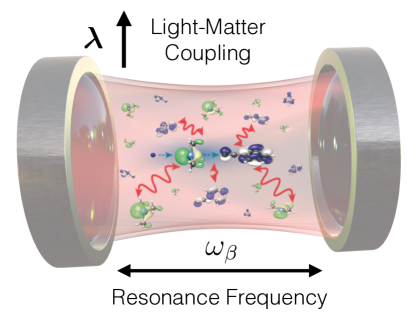
Polaritonic chemistry has garnered increasing attention in recent years due to pioneering experimental results, which show that site- and bond-selective chemistry at room temperature is achievable through strong collective coupling to field fluctuations in optical cavities. Despite these notable experimental strides, the underlying theoretical mechanisms remain unclear. In this focus review, we highlight a fundamental theoretical link between the seemingly unrelated fields of polaritonic chemistry and spin glasses, exploring its profound implications for the theoretical framework of polaritonic chemistry. Specifically, we present a mapping of the dressed many-molecules electronic-structure problem under collective vibrational strong coupling to the spherical Sherrington-Kirkpatrick (SSK) model of a spin glass. This mapping uncovers a collectively induced instability of the intermolecular electron correlations, which could provide the long sought-after seed for significant local chemical modifications in polaritonic chemistry. Overall, the qualitative predictions made from the SSK model (e.g., dispersion effects, phase transitions, differently modified bulk and rare event properties, heating,...) agree well with available experimental observations. Our connection paves the way to incorporate, adjust and probe numerous spin glass concepts in polaritonic chemistry, such as modified fluctuation-dissipation relations, (non-equilibrium) aging dynamics, time-reversal symmetry breaking or stochastic resonances. Ultimately, the connection also offers fresh insights into the applicability of spin glass theory beyond condensed matter systems suggesting novel theoretical directions such as spin glasses with explicitly time-dependent (random) interactions.
연구 동기 및 목표
- 광학 공동위상에서 빛-물질 결합이 분자 전자구조에 대해 집단적이고 비지역적인 효과를 유도할 수 있음을 동기 부여한다.
- Sherrington-Kirkpatrick 모델로의 매핑을 통해 폴라리톤 화학과 스핀-글래스 물리 사이의 이론적 연결을 제시한다.
- 집단 결합 하에서 좌절(frustration), 편극 패턴, 그리고 잠재적 위상 전이의 등장 가능성을 식별한다.
- 전자스핀-글래스 개념(좌절, 노화 역학, 확률적 공명 등)이 폴라리톤 화학 메커니즘을 밝히는 데 어떻게 조명할 수 있는지 논의한다.
제안 방법
- long-wavelength, few-mode 근사에서 Pauli-Fierz 첫 원리 이론을 사용해 앙상블-모드 공동 결합을 기술한다.
- 핵에 대한 Cav ity Born-Oppenheimer 근사 및 변位장(displacement field)을 사용하여 Cav ity 결합하에 dressed electronic 문제를 형성한다.
- X 및 x 쌍극자 결합으로부터 모든 대비 상호작용 항을 갖는 N 개의 결합된 cavity Hartree 방정식(cH)을 전자적 부분에 대해 유도한다.
- Shin-Metiu 모델을 1차원으로 사용하여 집단 강 결합과 자기 일관된 편극 패턴을 보여준다.
- cH 방정식을 Sherrington-Kirkpatrick 스핀-글래스 모델에 매핑하여 편극-글래스 불안정성과 그 함의를 밝힌다.
실험 결과
연구 질문
- RQ1광학 공동위상에서 집단적 진동 강 결합이 개별 분자에 피드백을 주는 집단 전자 효과를 이끌 수 있는가?
- RQ2VSC 하의 dressed electronic-structure 문제를 스핀-글래스 물리와 어떻게 연결할 수 있으며, 편극 배열 및 좌절에 대한 결과적 함의는 무엇인가?
- RQ3VSC 하의 편극 패턴이 replica symmetry breaking, aging, 또는 stochastic resonances 와 같은 스핀-글래스 현상과 닮아 있는가?
- RQ4편극-글래스 그림과 가능한 공동결정 위상전이를 지지하는 실험적 징후(예: NMR 관찰)는 무엇인가?
- RQ5스핀-글래스 개념을 폴라토닉 화학에 해석함으로써 도출되는 이론적 방향은 무엇인가?
주요 결과
- 집단 VSC 하에서 분자 편극은 2차식의 모든-대-모두 항을 통해 결합되어 개별 분자에 비지역적 피드백을 이끈다.
- 열역학 극한에서 국부적 분자 편극은 살아남고 거시적 편극은 소거되어 편극-글래스 순서를 나타낸다.
- Shin-Metiu 모델을 이용한 수치 시뮬레이션은 국부 편극 패턴 및 대략적으로 불연속에 가까운 편극 분포를 보여주며 좌절과 일치한다.
- 집단 결합이 높은 경우 자기 일관된 cavity-Hartree 해가 수렴하지 않는 위상 전이 유사 불안정성이 존재한다.
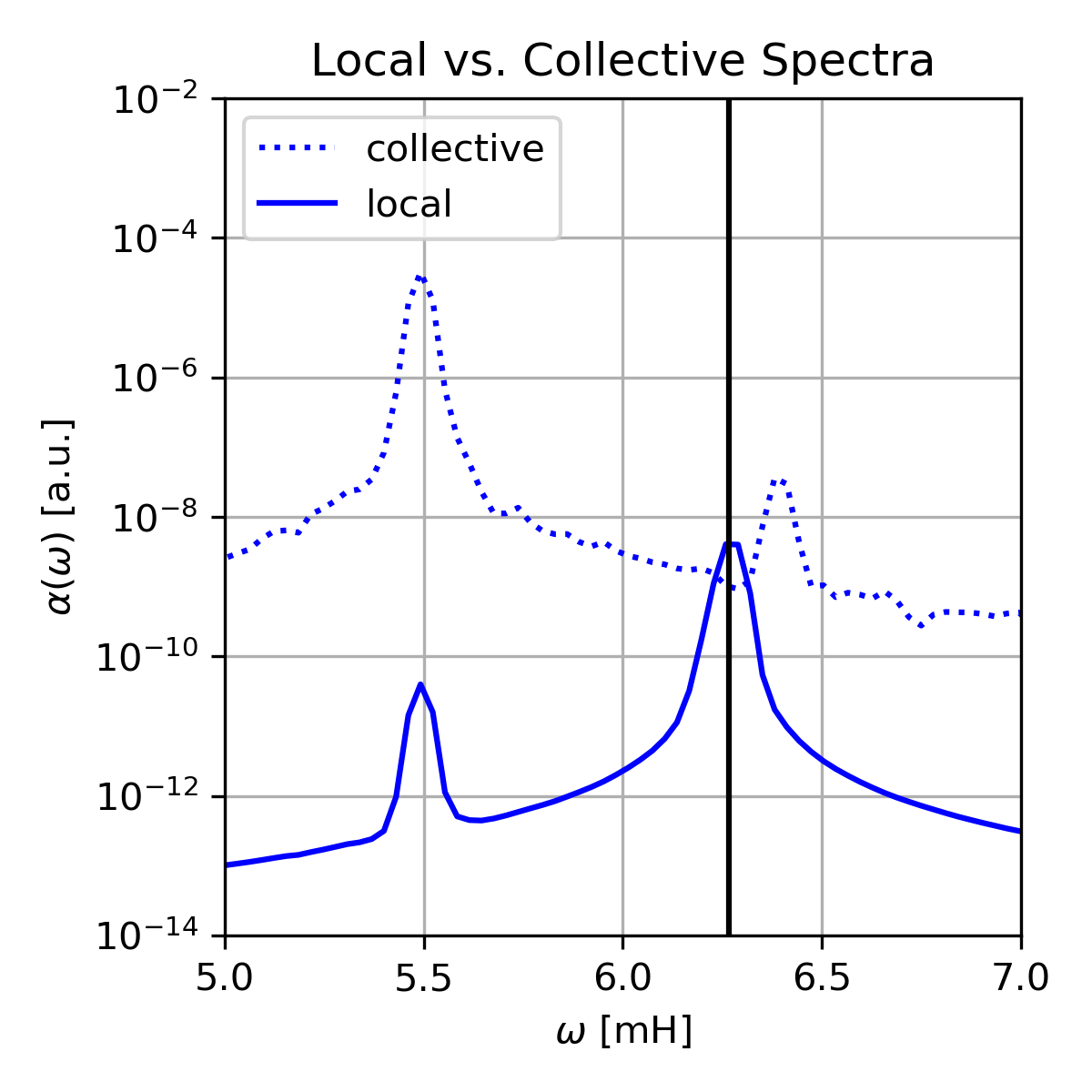
- VSC 하의 NMR 실험은 평균 화학적 이동의 부재와 달라진 선폭 및 공명 의존적 접합 상태의 변화가 편극-글래스 그림과 일치한다.
- SK 스핀-글래스 모델에 대한 명시적 매핑은 좌절, 노화, 확률적 공명과 같은 스핀-글래스 개념을 폴라토닉 화학에 적용할 수 있는 프레임워크를 제공한다.
- 이 연구는 시간 의존 순서 매개변수를 갖는 편극 글래스와 양자도메인 전체에 걸친 스핀-글래스 이론의 확장 가능성과 같은 새로운 이론적 방향을 시사한다.
더 나은 연구,지금 바로 시작하세요
연구 설계부터 논문 작성까지, 연구 시간을 획기적으로 줄여보세요.
카드 등록 없음 · 무료 플랜 제공
이 리뷰는 AI가 만들고, 인간 에디터가 검토했습니다.