
[논문 리뷰] Data-Centric Digital Agriculture: A Perspective
이 논문은 디지털 농업 분야에서 모델 최적화에서 데이터 품질 향상, 정제, 활용으로의 전환을 주장하는 데이터 중심 접근법을 제안한다. 다양한 데이터 원천—실험적 및 비실험적 데이터—과 함께 고급 센싱 및 머신러닝 기술을 활용함으로써 수확 예측, 병해충 탐지 등의 수확 관리 과제에서 더 정확하고 일반화 가능하며 지속 가능한 솔루션을 가능하게 한다.
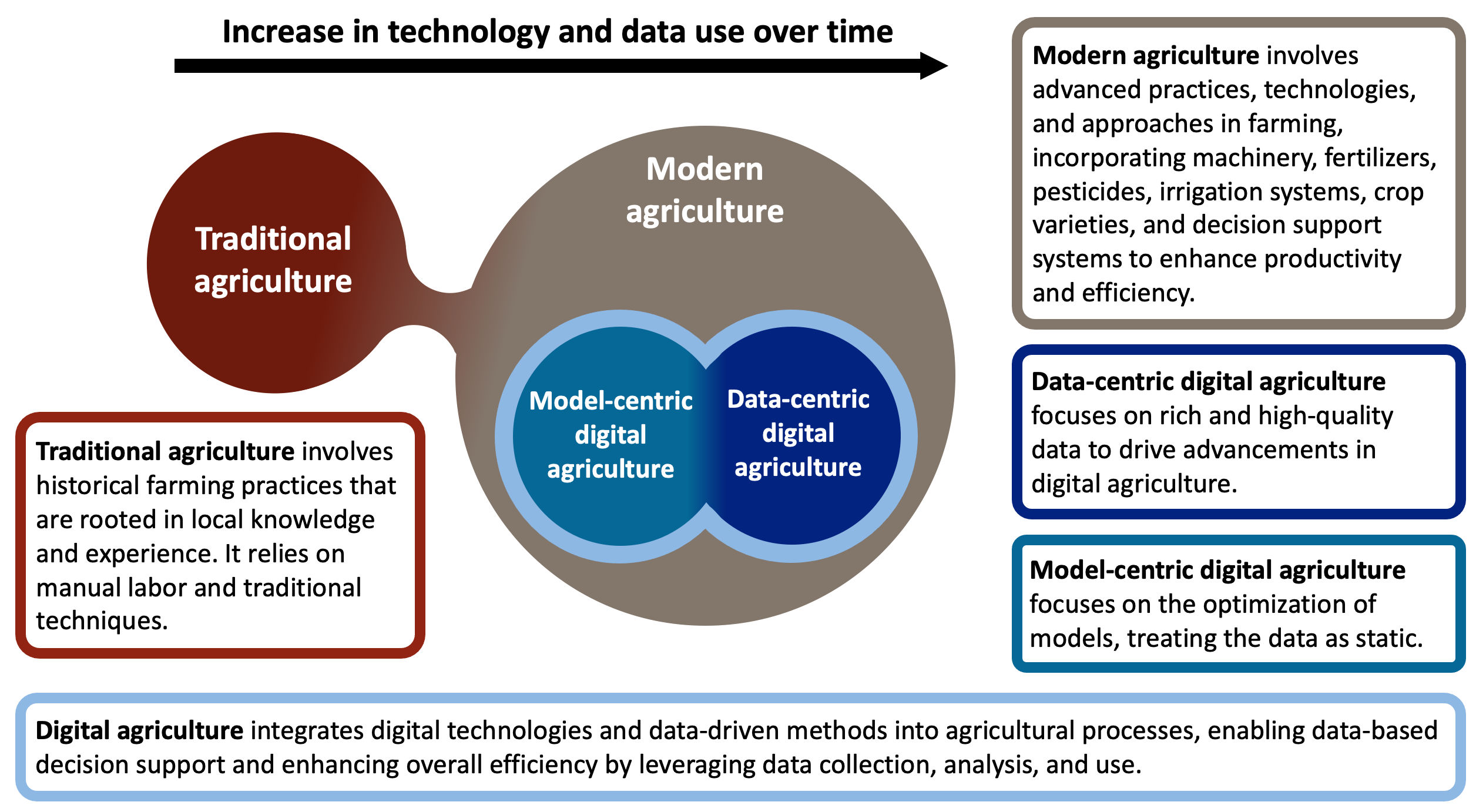
In response to the increasing global demand for food, feed, fiber, and fuel, digital agriculture is rapidly evolving to meet these demands while reducing environmental impact. This evolution involves incorporating data science, machine learning, sensor technologies, robotics, and new management strategies to establish a more sustainable agricultural framework. So far, machine learning research in digital agriculture has predominantly focused on model-centric approaches, focusing on model design and evaluation. These efforts aim to optimize model accuracy and efficiency, often treating data as a static benchmark. Despite the availability of agricultural data and methodological advancements, a saturation point has been reached, with many established machine learning methods achieving comparable levels of accuracy and facing similar limitations. To fully realize the potential of digital agriculture, it is crucial to have a comprehensive understanding of the role of data in the field and to adopt data-centric machine learning. This involves developing strategies to acquire and curate valuable data and implementing effective learning and evaluation strategies that utilize the intrinsic value of data. This approach has the potential to create accurate, generalizable, and adaptable machine learning methods that effectively and sustainably address agricultural tasks such as yield prediction, weed detection, and early disease identification
연구 동기 및 목표
- 모델 중심 머신러닝의 한계를 해결하기 위해 데이터 품질 및 정제에 초점을 재편함으로써 디지털 농업에서의 접근 방식을 전환한다.
- 실험적 및 비실험적 农업 데이터의 잠재력이 아직 충분히 활용되지 않았음을 부각한다. 이는 견고하고 일반화 가능한 모델을 훈련하는 데 기여한다.
- 모델 성능의 포화 상태를 극복하고 지속 가능성을 향상시키기 위해 데이터 중심 디지털 농업으로의 범주 전환을 제안한다.
- 데이터 과학, 원격 감지, 로봇공학, 센서 기술을 통합하여 적응 가능하고 확장 가능하며 실천 가능한 농업 솔루션을 창출한다.
- 통제된 실험 데이터와 실제 현장에서의 관측 데이터 사이의 격차를 메우어 모델의 일반화 능력과 실용성을 향상시킨다.
제안 방법
- 통제된 실험적 데이터(가설 중심)와 실제 현장에서의 관측 데이터(비실험적 데이터)를 구분하며, 각각 모델 훈련에서 수행하는 역할을 강조한다.
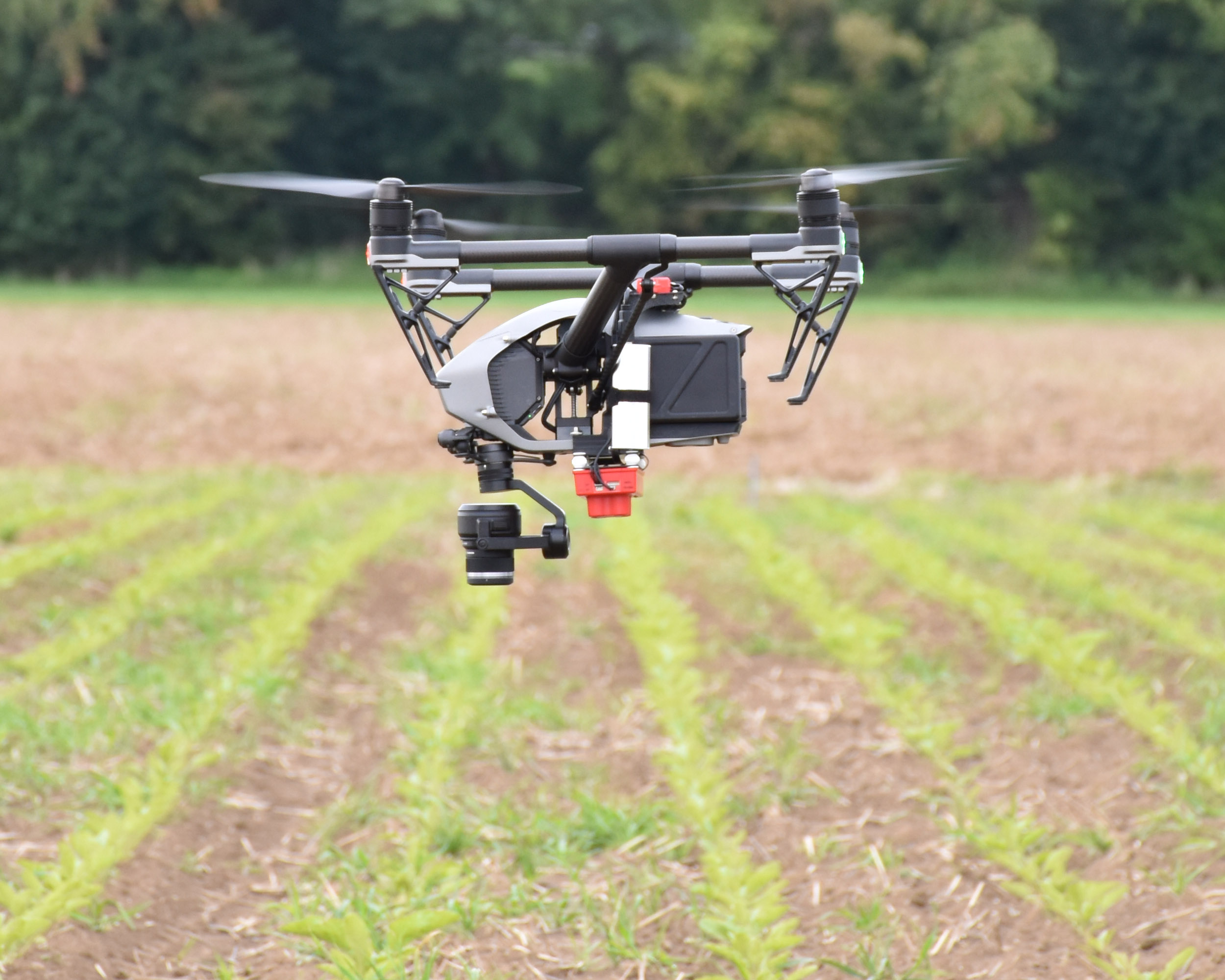
- 위성 영상(Landsat, Planet), 무인항공기(UAV) 기반 원격 감지(서브미터 해상도), 지상 기반 로봇 기술을 활용하여 고해상도의 현장 특화 데이터 확보를 수행한다.
- 비실험적 데이터에서 패턴을 추출하기 위해 데이터 중심 머신러닝 기법을 적용하며, 특히 복잡한 농업 시스템 내 상관관계 및 추세 탐지에 중점을 둔다.
- 데이터 품질 향상, 일관성 향상, 대표성 확보에 초점을 맞춘 데이터 정제 전략을 구현하여 모델 성능 및 일반화 능력을 향상시킨다.
- 농장 관리 정보 시스템과 변량 비료 시비(VRA) 기술을 통합하여 데이터 해상도를 운영 척도(예: 트랙터 노선, 필지 구역)와 일치시킨다.
- 실험적 데이터에 기반한 기계적 모델을 보정하고, 비실험적 데이터에 기반한 데이터 중심 모델과 융합하여 하이브리드이고 견고한 의사결정 지원 체계를 구축한다.
실험 결과
연구 질문
- RQ1데이터 중심 접근법은 디지털 농업 분야에서 모델 중심 머신러닝에서 관찰되는 성능 포화 상태를 어떻게 극복할 수 있는가?
- RQ2일반화 가능한 머신러닝 모델을 훈련시키기 위해 실험적 데이터와 비실험적 데이터의 상대적 가치는 무엇인가?
- RQ3모델 정확성과 수확 생산의 지속 가능성 향상을 위해 데이터 품질, 정제, 활용을 체계적으로 어떻게 향상시킬 수 있는가?
- RQ4신개념 센싱 기술(예: UAV, 고해상도 위성)은 데이터 중심 디지털 농업을 어떻게 지원하는가?
- RQ5데이터 중심 프레임워크는 다양한 데이터 원천을 어떻게 통합하여 실시간, 현장 특화 농업 의사결정을 지원하는가?
주요 결과
- 디지털 농업 분야에서의 모델 중심 접근법은 대부분의 기존 머신러닝 기법이 유사한 정확도를 달성하고 동일한 한계를 겪고 있음에도 불구하고 성능 포화 단계에 도달했다.
- 수확기 수확 지도 및 UAV, 위성에서 확보한 지리공간 데이터와 같은 비실험적 데이터는 견고하고 일반화 가능한 모델을 훈련시키는 데 필수적인 실제 세계의 변동성을 제공한다.
- 반복 및 무작위 배치를 포함한 통제된 시험에서 유래한 실험적 데이터는 인과관계를 검증하고 기계적 모델를 보정하는 데 핵심적인 역할을 한다.
- 2세대 위성(예: Planet, SkySat) 및 UAV(서브 센티미터 해상도)에서 확보한 고해상도 데이터의 통합은 트랙터 노선 및 소규모 필지 수준에서 정밀한 현장 특화 관리가 가능하게 한다.
- 데이터 중심 디지털 농업은 조기 병해충 탐지, 잡초 식별, 수확 예측과 같은 핵심 과제에서 더 정확하고 적응 가능한 솔루션을 가능하게 한다.
- 실험적 및 비실험적 데이터의 상호보완적 활용에 더해 고급 센싱 및 정제 기법을 통합함으로써 모델의 신뢰성과 실제 농업 응용 분야에서의 지속 가능성이 크게 향상된다.
더 나은 연구,지금 바로 시작하세요
논문 읽기부터 검토까지, 연구 시간을 획기적으로 줄여보세요.
카드 등록 없음 · 무료 플랜 제공
이 리뷰는 AI가 만들고, 인간 에디터가 검토했습니다.