
[논문 리뷰] Data Release 3: the Solar System survey
Gaia DR3은 150,000개 이상의 태양계 천체, 즉 소행성과 자연위성 포함한 대규모 천체측량 및 광도 측정 조사의 첫 번째 결과를 제공하며, 밀리초보자각 이내의 천체측량 잔차를 달성하고, 형상 및 위성 효과로 인한 밀리초보자각 수준의 광중심 진동을 탐지할 수 있게 하였다. 이 발표는 궤도 결정의 사상 초월 정확도를 입증하며, 레이더 측량 없이도 야르코프스키 효과 및 이중 시스템 탐지 가능성을 천체측량을 통해 드러내었다.
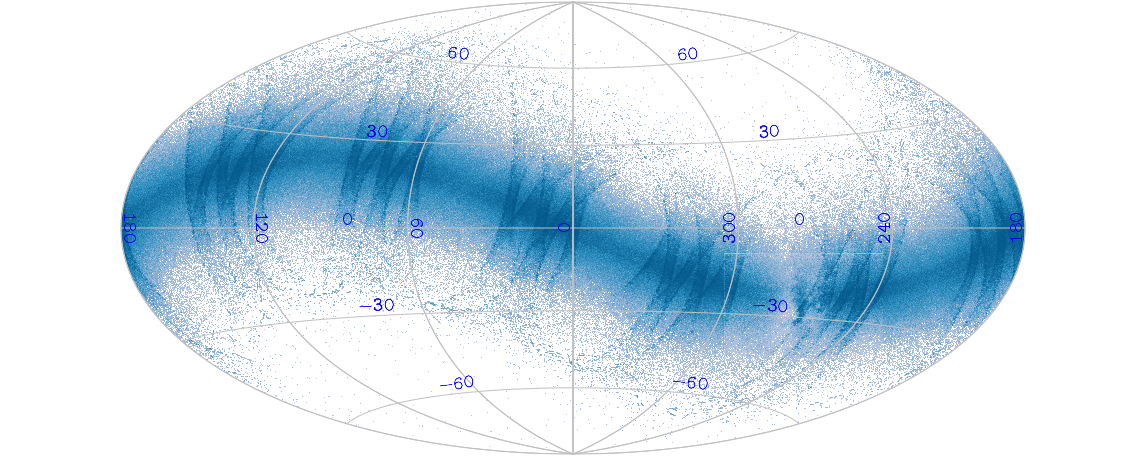
The third data release by the Gaia mission of the European Space (DR3) is the first release to provide the community with a large sample of observations for more than 150 thousand Solar System objects, including asteroids and natural planetary satellites. The release contains astrometry (over 23 million epochs) and photometry, along with average reflectance spectra of 60518 asteroids and osculating elements. We present an overview of the procedures that have been implemented over several years of development and tests to process Solar System data at the level of accuracy that Gaia can reach. We illustrate the data properties and potential with some practical examples. In order to allow the users of DR3 to best exploit the data, we explain the assumptions and approaches followed in the implementation of the data processing pipeline for Solar System processing, and their effects in terms of data filtering, optimisation, and performances. We then test the data quality by analysing post-fit residuals to adjusted orbits, the capacity of detecting subtle dynamical effects (wobbling due to satellites or shape and Yarkovsky acceleration), and to reproduce known properties of asteroid photometry (phase curves and rotational light curves). The DR3 astrometric accuracy is a clear improvement over the data published in DR2, which concerned a very limited sample of asteroids. The performance of the data reduction is met, and is illustrated by the capacity of detecting milliarcsecond-level wobbling of the asteroid photocentre that is due to satellite or shape effects and contributes to Yarkovsky effect measurements. The third data release can in terms of data completeness and accuracy be considered the first full-scale realisation of the Solar System survey by Gaia.
연구 동기 및 목표
- Gaia DR3에서 태양계 천체를 위한 고정확도 데이터 처리 파이프라인 개발 및 검증.
- 소행성 형상 및 위성 운동으로 인한 광중심 진동과 같은 미세한 천체역학적 효과 탐지 가능화.
- 특히 알려진 물리 모델과의 비교에서 Gaia의 광도 및 천체측량의 신뢰성과 한계 평가.
- 레이더 측량 자료 없이도 Gaia DR3가 이중 소행성 시스템 탐지 및 야르코프스키 가속도 측정 잠재력 입증.
제안 방법
- 정밀한 궤도 통합 및 반복 보정을 포함한 전천문 다중 에포크 추적 방식을 사용하여 소행성 천체측량 처리.
- 저해상도 반사율 스펙트럼과 G-대역 등급을 사용하여 광도 데이터 校정하였으며, 위상 곡선 및 자전 주기 빛의 변화 모델링 적용.
- 오비트 피팅에는 이완 요소와 피팅 후 잔차 분석을 사용하여 밀리초보자각 수준의 천체측량 정확도 검증.
- 로제타 미션 데이터를 기반으로 한 형상 및 산란 모델을 도출하여 예상 광도를 시뮬레이션하고, 이로 인해 이질치 탐지 및 품질 평가 수행.
- 특히 (2867) Šteins와 같은 천체에서 모델링 가정이 오차 기여한 것으로 보아 잔차가 큰 관측치에 대해 이질치 제거 적용.
- 천체측량 잔차, 광도 일관성, 형상 모델링의 통합적 접근을 통해 데이터 품질 평가 및 미세한 천체역학적 효과 탐지 수행.
실험 결과
연구 질문
- RQ1Gaia DR3는 형상에 의한 광중심 진동을 탐지하기 위해 요구되는, 대규모 소행성 샘플에 대해 밀리초보자각 이내의 천체측량 정확도를 달성할 수 있는가?
- RQ2레이더 측량 자료 없이 Gaia DR3는 근지구 소행성에서 야르코프스키 효과를 어느 정도 탐지할 수 있는가?
- RQ3Gaia DR3의 G-대역 광도 측정치는 소행성에 대해 얼마나 신뢰할 수 있으며, 모델링 한계로 인해 남는 이질치 비율은 얼마인가?
- RQ4Gaia DR3의 천체측량 방법은 위성에 의한 진동을 통해 이중 소행성 시스템을 성공적으로 탐지할 수 있는가?
- RQ5고정밀 형상 모델에서 시뮬레이션한 광도는 관측된 Gaia 광도를 얼마나 잘 재현하는가? 잔여 불확실성은 무엇인가?
주요 결과
- G < 18인 소행성의 천체측량 잔차는 밀리초보자각 이내이며, Gaia DR2 대비 상당한 향상 확인.
- (21) Lutetia의 광중심 진동이 밀리초보자각 수준에서 탐지되었으며, 이는 이 효과가 더 작은 소행성의 궤도 해법에 영향을 줄 수 있음을 시사.
- Gaia DR3는 위성에 의한 진동을 성공적으로 탐지하여, 천체측량만으로도 이중 소행성 탐지의 새로운 방법을 열었다.
- 일부 근지구 소행성에서 야르코프스키 이동이 측정 가능하여, 레이더 자료 없이도 지상 기반 추적과 결합해 Gaia가 이 효과를 탐지할 잠재력 입증.
- (2867) Šteins의 G-대역 등급은 16.3에서 18.4 mag 범위였으며 관측 오차는 0.0028–0.014 mag로, 모델링 한계가 있음에도 불구하고 높은 광도 정밀도를 보임.
- 높은 정확도에도 불구하고, 형상 모델 및 산란 성질 가정의 한계로 인해 여전히 무시할 수 없는 비율의 이상치 데이터가 광도 샘플에 남아 있을 수 있음.

더 나은 연구,지금 바로 시작하세요
논문 읽기부터 검토까지, 연구 시간을 획기적으로 줄여보세요.
카드 등록 없음 · 무료 플랜 제공
이 리뷰는 AI가 만들고, 인간 에디터가 검토했습니다.