
[논문 리뷰] Deep transfer learning for intrusion detection in industrial control networks: A comprehensive review
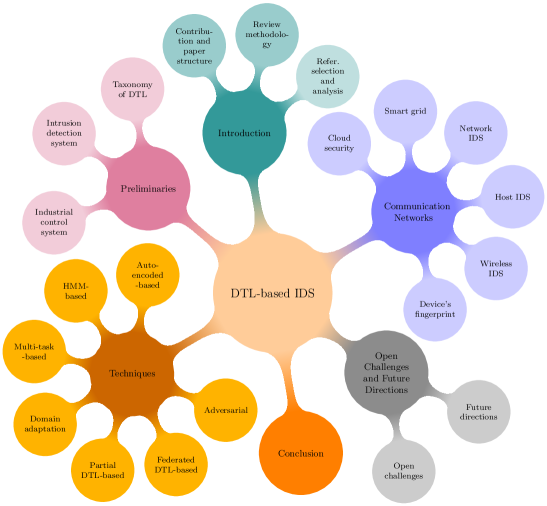
이 논문은 심층 전이 학습이 산업 제어 네트워크의 침입 탐지를 향상시키는 방식에 대한 분류 체계, 데이터셋, 방법, 미래 방향을 제시하는 고찰이다.
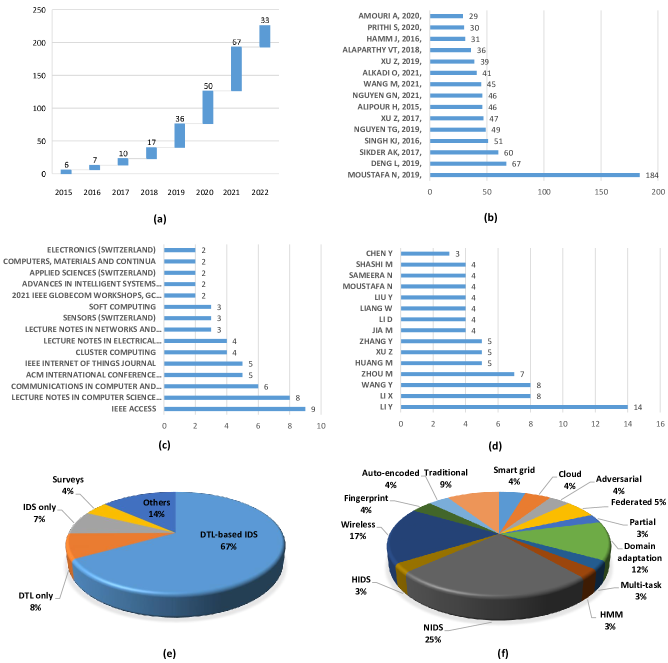
Globally, the external internet is increasingly being connected to industrial control systems. As a result, there is an immediate need to protect these networks from a variety of threats. The key infrastructure of industrial activity can be protected from harm using an intrusion detection system (IDS), a preventive mechanism that seeks to recognize new kinds of dangerous threats and hostile activities. This review examines the most recent artificial-intelligence techniques that are used to create IDSs in many kinds of industrial control networks, with a particular emphasis on IDS-based deep transfer learning (DTL). DTL can be seen as a type of information-fusion approach that merges and/or adapts knowledge from multiple domains to enhance the performance of a target task, particularly when labeled data in the target domain is scarce. Publications issued after 2015 were considered. These selected publications were divided into three categories: DTL-only and IDS-only works are examined in the introduction and background section, and DTL-based IDS papers are considered in the core section of this review. By reading this review paper, researchers will be able to gain a better grasp of the current state of DTL approaches used in IDSs in many different types of network. Other useful information, such as the datasets used, the type of DTL employed, the pre-trained network, IDS techniques, the evaluation metrics including accuracy/F-score and false-alarm rate, and the improvements gained, are also covered. The algorithms and methods used in several studies are presented, and the principles of DTL-based IDS subcategories are presented to the reader and illustrated deeply and clearly
연구 동기 및 목표
- IoT 및 beyond-5G 맥 context에서 산업 제어 시스템(ICS) 보안을 위한 침입 탐지 시스템(IDS)의 사용을 동기화.
- 심층 전이 학습(DTL) 모델 및 IDS 응용에 대한 포괄적 분류 체계 제공.
- 데이터셋, 사전 학습 모델, IDS 기법, 평가 지표 및 보고된 개선점 고찰.
- ICS/ICN 환경에서 DTL 기반 IDS의 도전과제와 향후 연구 방향 제시.
제안 방법
- 전이 학습 및 IDS 키워드를 사용하여 주요 데이터베이스(IEEE Xplore, ACM DL, ScienceDirect, SpringerLink)의 문헌 선별.
- 세 가지 범주 프레이밍: DTL-전용 배경, IDS-전용 배경, DTL 기반 IDS 핵심 연구.
- DTL 모델(인덕티브(inductive), 트랜스덕티브(transductive), 어드버셜(adversarial)) 및 IDS 기법(시그니처-, 이상-, 명세-, 남용-, 하이브리드 기반) 용도의 분류 체계 구성.
- ICS/ICN 맥락에서 IDS 평가에 사용된 데이터셋 및 관련 평가 지표(예: 정확도, F-score, false alarm rate) 논의.
- 설계 결정, 장단점 및 향후 방향 제시를 위한 종합적 분석.
실험 결과
연구 질문
- RQ1산업 제어 네트워크에서 DTL 기반 IDS의 현재 상태는 무엇인가?
- RQ2ICS/ICN 환경에서 IDS 응용을 위한 DTL 모델을 어떻게 분류할 수 있는가?
- RQ3DTL 기반 IDS를 벤치마크하기 위해 일반적으로 사용되는 데이터셋과 평가 지표는 무엇인가?
- RQ4ICS/ICN에서 IDS 기반 DTL 연구의 주요 도전과 향후 방향은 무엇인가?
- RQ5DTL 접근 방식은 새로운 위협 및 데이터 희소성에 대한 적응성 측면에서 전통적인 IDS 방법과 어떻게 비교되는가?
주요 결과
- 이 고찰은 다양한 ICS/ICN 시나리오에서의 기존 DTL 응용을 통합하고 설계 결정과 한계를 명확히 한다.
- IDS를 위한 DTL 모델의 분류 체계를 제공하며, 유도적(inductive), 전이적(transductive), 적대적(adversarial) DTL을 포함한다.
- 널리 사용되는 IDS 기법(시그니처-, 이상 탐지-, 명세-, 남용-, 하이브리드 기반)과 DTL의 통합 방법을 요약한다.
- ICS 맥락에서 IDS 평가에 사용된 데이터셋(예: SWaT, WADI, ADFA-LD, 및 논문에 참조된 기타 데이터)을 수록한다.
- 연구에서의 미해결 도전과제와 ICS/ICN 네트워크에서 IDS 기반 DTL의 향후 연구 방향을 제시한다.
더 나은 연구,지금 바로 시작하세요
논문 읽기부터 검토까지, 연구 시간을 획기적으로 줄여보세요.
카드 등록 없음 · 무료 플랜 제공
이 리뷰는 AI가 만들고, 인간 에디터가 검토했습니다.