
[논문 리뷰] Gaia Data Release 1: Astrometry - one billion positions, two million proper motions and parallaxes
Gaia DR1은 over 1 billion stars에 대한 천체측정 결과를 제시하며, 주 구성인 2 million-star subset이 hipparcos-type precision을 제공하고 TGAS 및 보조 데이터를 사용하며, 보조 데이터 세트는 epoch J2015.0 위치를 가진 over 1.14 billion sources를 포함한다.
Gaia Data Release 1 (Gaia DR1) contains astrometric results for more than 1 billion stars brighter than magnitude 20.7 based on observations collected by the Gaia satellite during the first 14 months of its operational phase. We give a brief overview of the astrometric content of the data release and of the model assumptions, data processing, and validation of the results. For stars in common with the Hipparcos and Tycho-2 catalogues, complete astrometric single-star solutions are obtained by incorporating positional information from the earlier catalogues. For other stars only their positions are obtained by neglecting their proper motions and parallaxes. The results are validated by an analysis of the residuals, through special validation runs, and by comparison with external data. Results. For about two million of the brighter stars (down to magnitude ~11.5) we obtain positions, parallaxes, and proper motions to Hipparcos-type precision or better. For these stars, systematic errors depending e.g. on position and colour are at a level of 0.3 milliarcsecond (mas). For the remaining stars we obtain positions at epoch J2015.0 accurate to ~10 mas. Positions and proper motions are given in a reference frame that is aligned with the International Celestial Reference Frame (ICRF) to better than 0.1 mas at epoch J2015.0, and non-rotating with respect to ICRF to within 0.03 mas/yr. The Hipparcos reference frame is found to rotate with respect to the Gaia DR1 frame at a rate of 0.24 mas/yr. Based on less than a quarter of the nominal mission length and on very provisional and incomplete calibrations, the quality and completeness of the astrometric data in Gaia DR1 are far from what is expected for the final mission products. The results nevertheless represent a huge improvement in the available fundamental stellar data and practical definition of the optical reference frame.
연구 동기 및 목표
- Gaia DR1 천체측정 내용의 개요와 그것의 모델 가정, 데이터 처리 및 검증을 제공한다.
- 주 데이터 세트(TGAS)와 보조 데이터 세트의 정밀도, 기준 프레임 및 한계를 설명한다.
- Gaia DR1에 사용된 입력 데이터, 기준 프레임, 그리고 상대론적 모델링을 설명한다.
- 자세한 자세와 기기 보정 및 그것이 천체측정 해에 어떻게 반영되는지 설명한다.
제안 방법
- 주 해결책에 대해 Gaia 관측치를 Hipparcos 및 Tycho-2의 사전 위치와 결합한다.
- 6-파라미터 천체측정 모델(α, δ, π, μ_α*, μ_δ, v_r)을 적용하되 Gaia DR1의 경우 v_r은 0으로 설정한다.
- 상대론적 Gaia 모델(GREM)을 사용하여 BCRS 방향을 CoMRS/SRS에서 Gaia가 관측한 방향으로 변환한다.
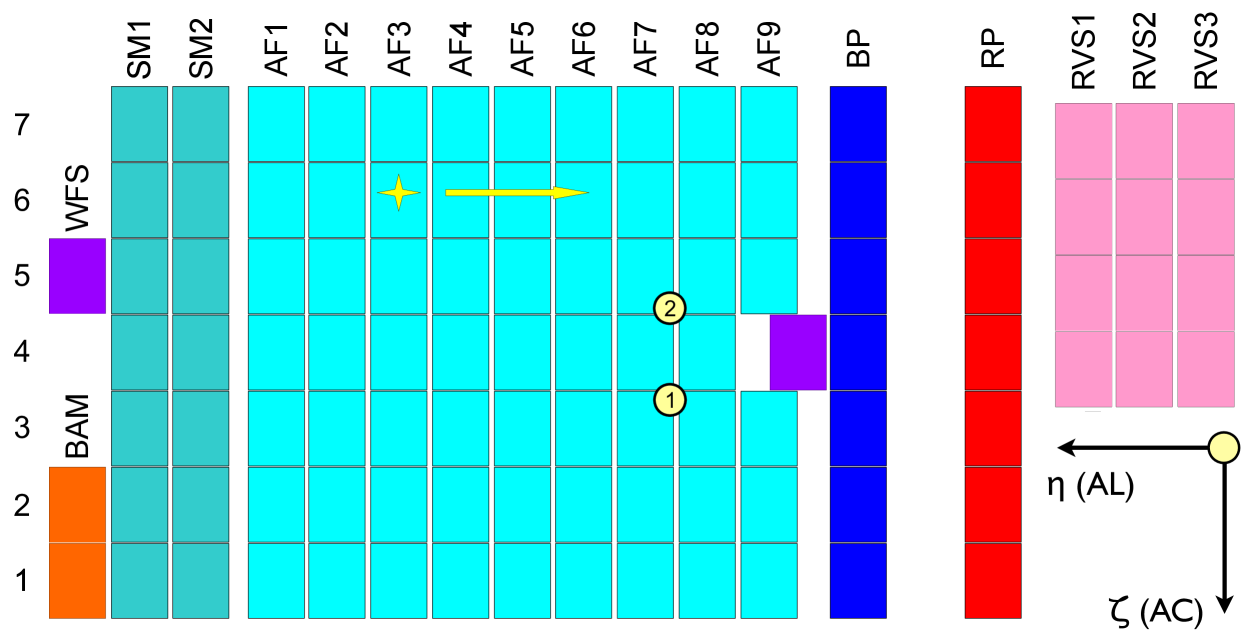
- 기하 보정과 자세 스플라인 표현으로 기기 기하학을 모델링한다.
- 온보드 계측(BAM) 데이터와 보조 태양계천문체를 보정에 포함한다.
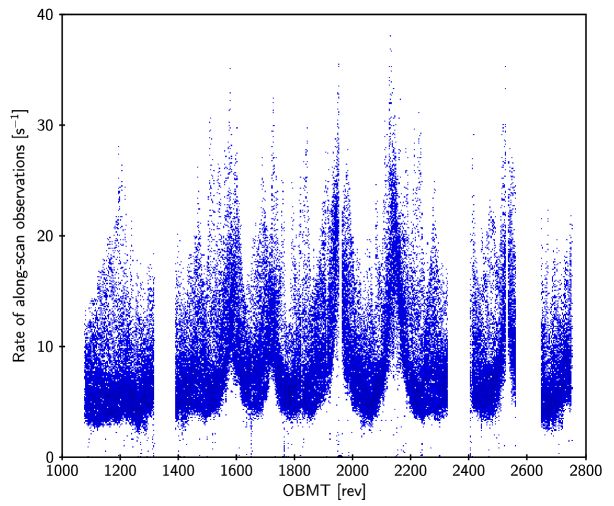
- 주 해에서 약 35백만 개의 기본 기록을 처리하고 보조 해에서 1.7×10^10 기록을 처리한다.
실험 결과
연구 질문
- RQ1Gaia DR1의 천체측정 내용은 무엇이며 주 데이터 세트와 보조 데이터 세트로 어떻게 조직되는가?
- RQ2밝은 별에 대한 Gaia DR1의 정밀도와 기준 프레임 정렬은 어떤가?
- RQ3천체측정 해는 어떻게 구성되며 TGAS와 보조 해에서 어떤 사전 정보가 사용되는가?
- RQ4상대론 효과와 기기 보정은 어떻게 모델링되고 Gaia DR1 처리에 반영되는가?
- RQ5Gaia DR1 결과의 한계와 임시적 특성은 무엇이며 향후 발표가 이를 어떻게 개선할 것인가?
주요 결과
- 주 데이터 세트는 약 2.06 million bright stars에 대한 위치, 시차, 평균 연주시를 포함하며, 위치/시차의 일반적인 불확실성은 약 0.3 mas이고 연주 모은은 약 1 mas/yr이다.
- 약 93,635명의 Hipparcos-backed stars에 대해 연주 모은은 약 0.06 mas/yr 정밀도에 도달한다.
- faint sources는 epoch J2015.0에서 약 10 mas 정확도로 위치를 제공하며, 기준 프레임은 J2015.0에서 0.1 mas 이내의 정렬로 ICRF에 맞춰져 있다.
- 전반적으로 Gaia DR1은 짧은 시간 범위와 진행 중인 보정으로 인해 임시적이지만, 기초 항성 데이터와 광학 기준 프레임에 대해 기존 데이터에 비해 상당한 향상을 이미 제시한다.
- Hipparcos 기준 프레임은 Gaia DR1의 프레임에 대해 약 0.24 mas/yr의 회전을 보인다.
더 나은 연구,지금 바로 시작하세요
연구 설계부터 논문 작성까지, 연구 시간을 획기적으로 줄여보세요.
카드 등록 없음 · 무료 플랜 제공
이 리뷰는 AI가 만들고, 인간 에디터가 검토했습니다.