
[논문 리뷰] Gauge invariant quantum thermodynamics: consequences for the first law
이 논문은 양자 상태 기술에서 중복 정보를 제거하기 위해 기댓값 게이지 대칭을 활용하는 게이지 불변의 양자 열역학 프레임워크를 제안한다. 이는 일과 열의 일관된 정의를 가능하게 하며, 시간에 따라 변하는 양자 혼성과 고유기저 변화로부터 유도된 불변 열과 일의 존재를 보여준다. 수치적 검증을 통해 리플킨-메쉬코프-글릭 모델에서 장기적인 크릴로프 복잡도가 역학적 순서 매개변수로 기능하는 것으로 나타났다.
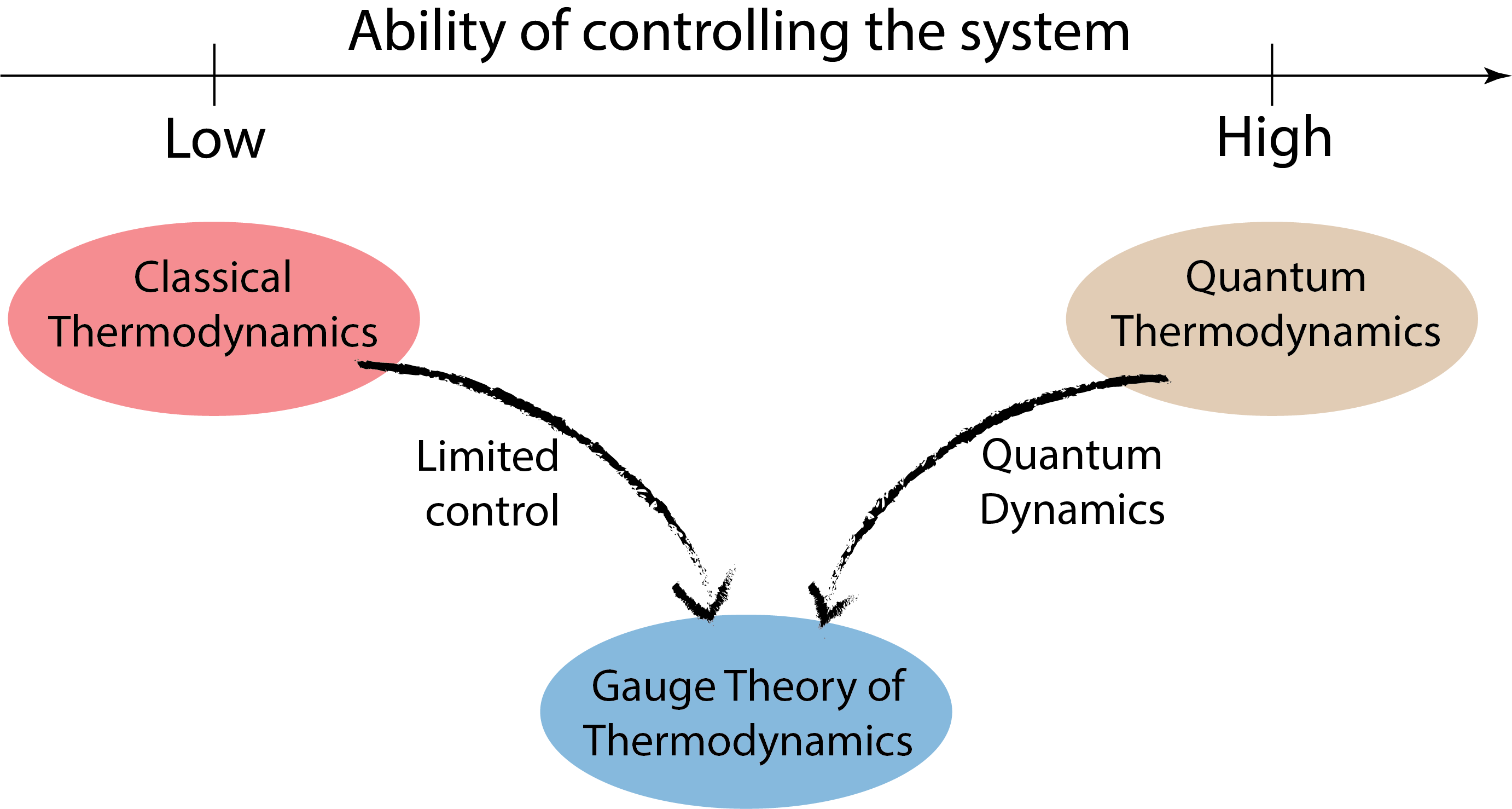
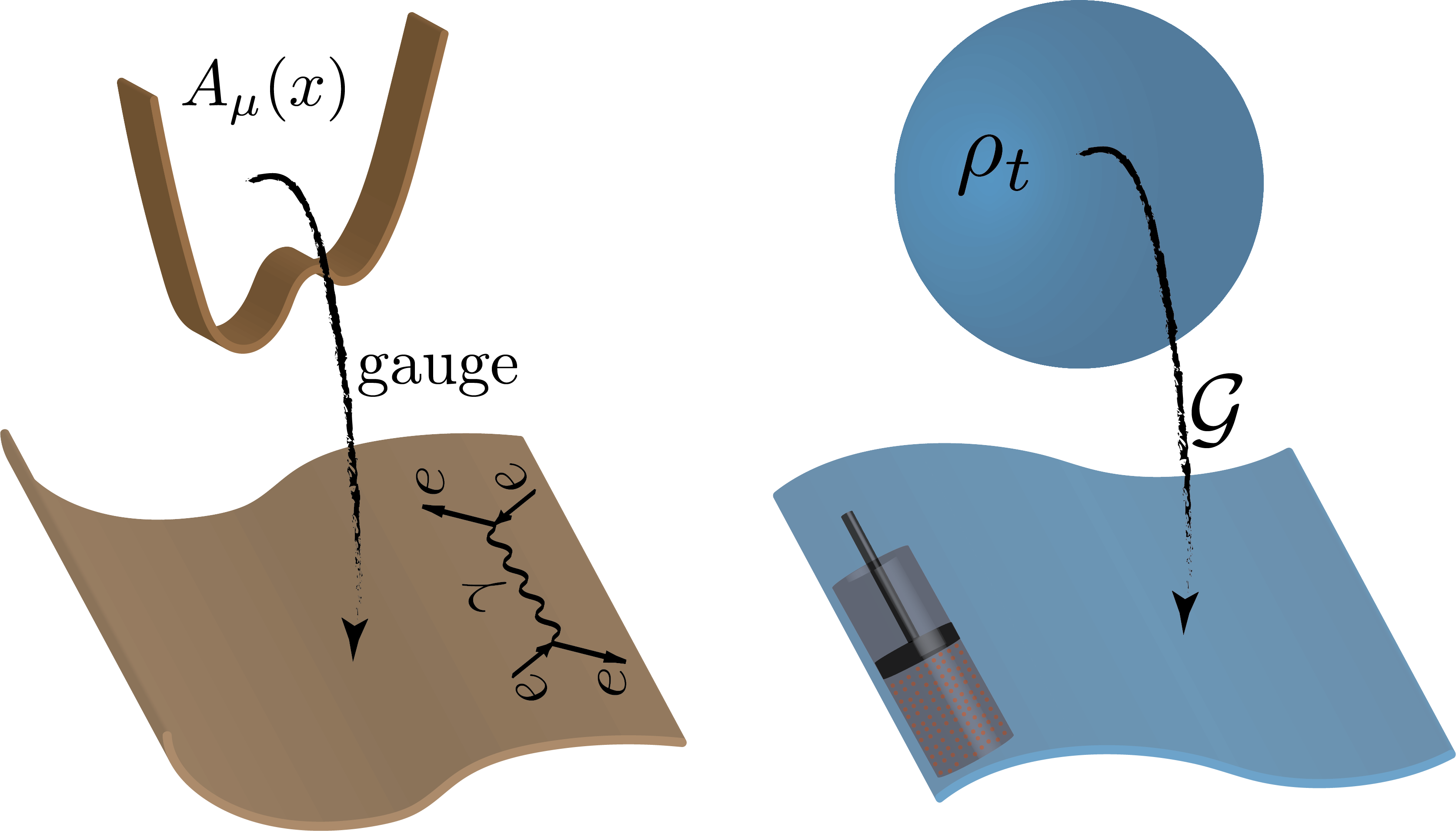
Universality of classical thermodynamics rests on the central limit theorem, due to which, measurements of thermal fluctuations are unable to reveal detailed information regarding the microscopic structure of a macroscopic body. When small systems are considered and fluctuations become important, thermodynamic quantities can be understood in the context of classical stochastic mechanics. A fundamental assumption behind thermodynamics is therefore that of coarse-graning, which stems from a substantial lack of control over all degrees of freedom. However, when quantum systems are concerned, one claims a high level of control. As a consequence, information theory plays a major role in the identification of thermodynamic functions. Here, drawing from the concept of gauge symmetry, essential in all modern physical theories, we put forward a new possible, intermediate route. Working within the realm of quantum thermodynamics we explicitly construct physically motivated gauge transformations which encode a gentle variant of coarse-graining behind thermodynamics. As a consequence, we reinterpret quantum work and heat, as well as the role of quantum coherence.
연구 동기 및 목표
- 양자 상태 기술에서 중복 정보를 제거하는 게이지 불변의 양자 열역학 공식화를 개발하는 것.
- 기저에 의존하지 않는 표현에 의존하지 않고, 게이지 대칭을 통해 일과 열과 같은 열역학적 양을 운영적으로 정의하는 것.
- 양자 역학적 동역학과 굴곡화의 상호작용으로부터 열역학적 양이 유도되는 프레임워크를 수립하여 고전적 열역학과 유사하게 만드는 것.
- 특히 동역학적 전이와 복잡도 측정법에 초점을 맞춰 리플킨-메쉬코프-글릭 모델에서 이 프레임워크를 수치적으로 검증하는 것.
제안 방법
- 시간에 따라 변하는 밀도 연산자에 작용하는 기대되는 게이지 대칭을 도입하여 기저에 의존하는 중복성을 제거한다.
- 에너지 기저에서 고유값과 혼성의 시간 도함수를 사용하여 불변 일과 열을 정의한다.
- 혼성의 진동에 따라 의존하는 $ Q_{\mathrm{inv}} = 2\int_{0}^{\tau} \mathrm{Re}[c_{12}(t)] \frac{\dot{\gamma}_{t}}{\lambda_{t}} dt $ 로 불변 열을 유도한다.
- 인구 변화에 민감한 $ W_{\mathrm{inv}} = \int_{0}^{\tau} [c_{22}(t) - c_{11}(t)] \dot{\lambda}_{t} dt $ 로 불변 일 정의.
- LMG 모델의 슈뢰딩거 방정식을 각운동량 기저에서 수치적으로 풀어 계수 $ c_m(t) $ 의 시간 진동을 계산한다.
- 크릴로프 기저와 에너지 기저에서 크릴로프 복잡도, 역 참여 비율, 샤논 엔트로피를 계산하여 역학적 행동을 비교한다.
실험 결과
연구 질문
- RQ1게이지 불변성이 양자 시스템에서 기저에 의존하지 않는 방식으로 일과 열과 같은 열역학적 양을 정의하는 데 어떻게 활용될 수 있는가?
- RQ2폐쇄된 양자 시스템에서 열전달을 결정하는 데 혼성과 고유기저의 진동이 수행하는 역할은 무엇인가?
- RQ3초기 상태가 대칭을 깨뜨려도, 크릴로프 복잡도가 양자 상전이에서 역학적 순서 매개변수로 기능할 수 있는가?
- RQ4대칭적인 초기 조건 하에서, 복잡도 측정법인 역 참여 비율과 샤논 엔트로피는 크릴로프 기저와 에너지 기저에서 어떻게 행동하는가?
- RQ5LMG 모델에서 크릴로프 기저가 표준 각운동량 기저와 일치하는 조건은 무엇인가?
주요 결과
- 장기적인 평균 크릴로프 복잡도가 영자기장에서의 쿠르트 편향에 의해 유도된 두 상을 구분하는 역학적 순서 매개변수로 작용하며, 전통적인 순서 매개변수와 동일한 임계점을 가진다.
- LMG 모델의 크릴로프 기저가 해석적으로 표준 각운동량 기저와 동일하다는 것이 밝혀져, 대칭적인 초기 조건 하에서 크릴로프 기저와 에너지 기저 간의 관찰된 역학적 행동의 동일성을 설명한다.
- 초기 상태가 필요한 대칭성을 갖추고 있을 경우, 역 참여 비율과 샤논 엔트로피는 크릴로프 기저와 에너지 기저에서 동일한 역학적 행동를 보인다.
- 불변 열 $ Q_{\mathrm{inv}} $ 는 대각선 인구에 의존하지 않고, 고유기저의 시간 도함수와 에너지 기저에서의 혼성에만 의존한다.
- 불변 일 $ W_{\mathrm{inv}} $ 는 결합 매개변수 $ \lambda_t $ 의 시간 도함수와 인구 차이 $ c_{22}(t) - c_{11}(t) $ 에 의해 결정된다.
- 각운동량 기저에서 슈뢰딩거 방정식의 수치적 통합은 일과 열에 대한 유도된 표현의 일관성을 확인하며, 게이지 불변 열역학 프레임워크를 검증한다.
더 나은 연구,지금 바로 시작하세요
논문 읽기부터 검토까지, 연구 시간을 획기적으로 줄여보세요.
카드 등록 없음 · 무료 플랜 제공
이 리뷰는 AI가 만들고, 인간 에디터가 검토했습니다.