
[논문 리뷰] Generative AI is already widespread in the public sector
본 연구는 938명의 영국 공공부문 전문가를 대상으로 Generative AI 사용이 이미 광범위하게 확산되었음을 보이고, 생산성 향상에 대한 주목할 만한 낙관과 함께 가이드라인 및 책임성의 명확성은 제한적임을 시사한다.
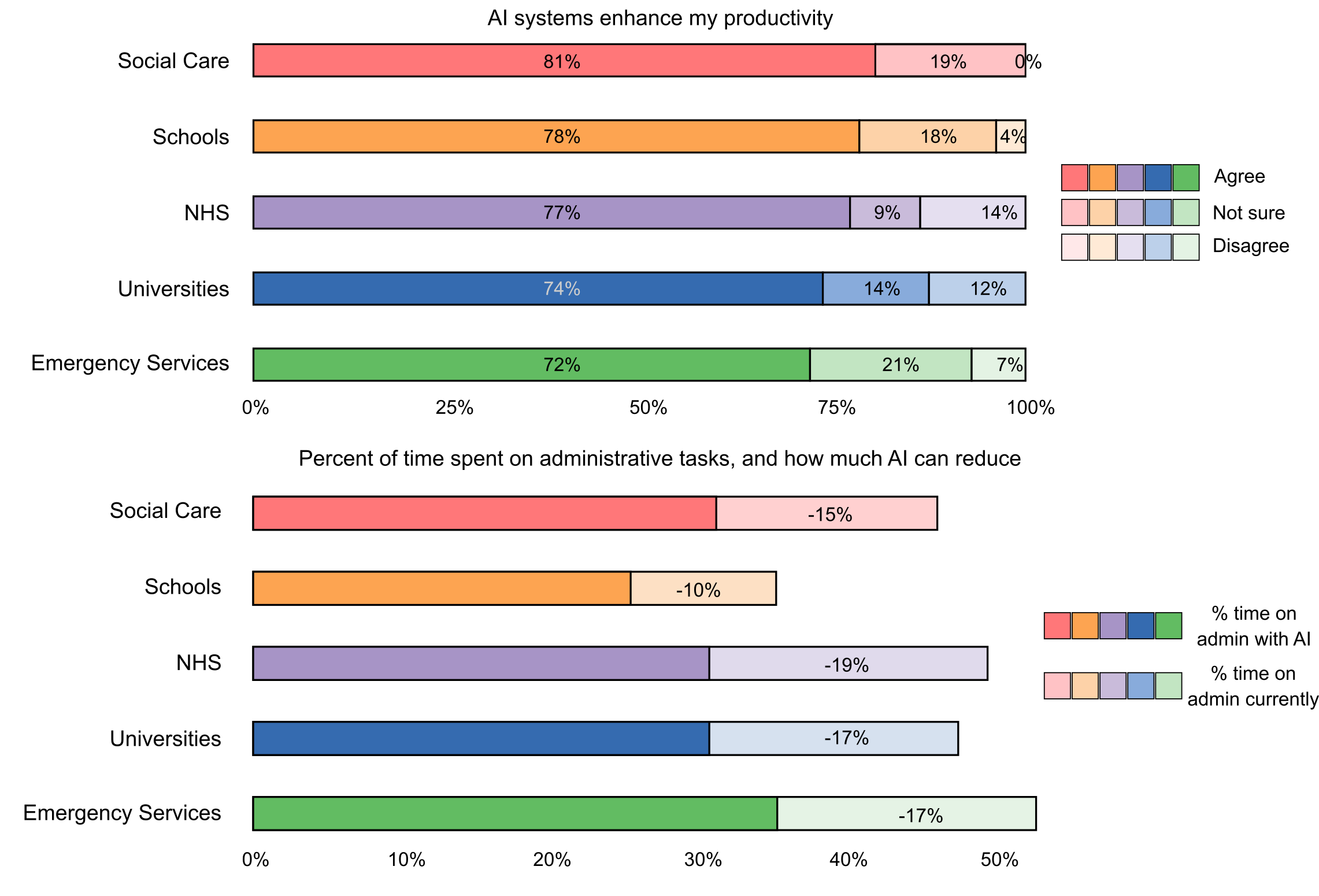
Generative AI has the potential to transform how public services are delivered by enhancing productivity and reducing time spent on bureaucracy. Furthermore, unlike other types of artificial intelligence, it is a technology that has quickly become widely available for bottom-up adoption: essentially anyone can decide to make use of it in their day to day work. But to what extent is generative AI already in use in the public sector? Our survey of 938 public service professionals within the UK (covering education, health, social work and emergency services) seeks to answer this question. We find that use of generative AI systems is already widespread: 45% of respondents were aware of generative AI usage within their area of work, while 22% actively use a generative AI system. Public sector professionals were positive about both current use of the technology and its potential to enhance their efficiency and reduce bureaucratic workload in the future. For example, those working in the NHS thought that time spent on bureaucracy could drop from 50% to 30% if generative AI was properly exploited, an equivalent of one day per week (an enormous potential impact). Our survey also found a high amount of trust (61%) around generative AI outputs, and a low fear of replacement (16%). While respondents were optimistic overall, areas of concern included feeling like the UK is missing out on opportunities to use AI to improve public services (76%), and only a minority of respondents (32%) felt like there was clear guidance on generative AI usage in their workplaces. In other words, it is clear that generative AI is already transforming the public sector, but uptake is happening in a disorganised fashion without clear guidelines. The UK's public sector urgently needs to develop more systematic methods for taking advantage of the technology.
연구 동기 및 목표
- 영국 공공 서비스에서 Generative AI에 대한 현재 인식 및 사용 현황을 평가한다.
- 어떤 공공 부문 직종에서 Generative AI를 채택했으며 그 비율이 얼마나 되는지 수량화한다.
- GenAI 채택과 관련된 인지된 생산성 증가 및 우려를 평가한다.
- GenAI 산출물에 대한 가이드라인 유무 및 책임성에 대한 명확성을 식별한다.
제안 방법
- Qualtrics를 통해 2023년 11월에 수행된 938명 영국 공공부문 전문가 대상 온라인 설문조사.
- NHS, 응급서비스, 사회복지, 학교 및 대학의 참가자를 대상으로 Prolific를 통한 모집.
- AI 유형을 Generative, Decision-Support, Perceptive로 분류하되, GenAI 사용 및 인식에 초점을 둔다.
- R에서 기술통계, 카이제곱 검정, 일원분산분석(ANOVA)을 사용한 통계 분석.
실험 결과
연구 질문
- RQ1공공부문 근로자들 사이에서 Generative AI에 대한 인식 정도와 실제 사용 정도는 어느 정도인가?
- RQ2어떤 분야나 직종에서 GenAI 채택이 더 높은가, 그리고 사용은 인구통계학적 변수와 어떻게 관련되는가?
- RQ3근로자들은 GenAI와 연관된 생산성 영향은 무엇이라고 보며, 특히 관료적 시간의 감소와 어떤 관계가 있는가?
- RQ4직장 내 GenAI 사용에 대해 인지된 위험, 가이드라인 및 책임성 우려는 무엇인가?
주요 결과
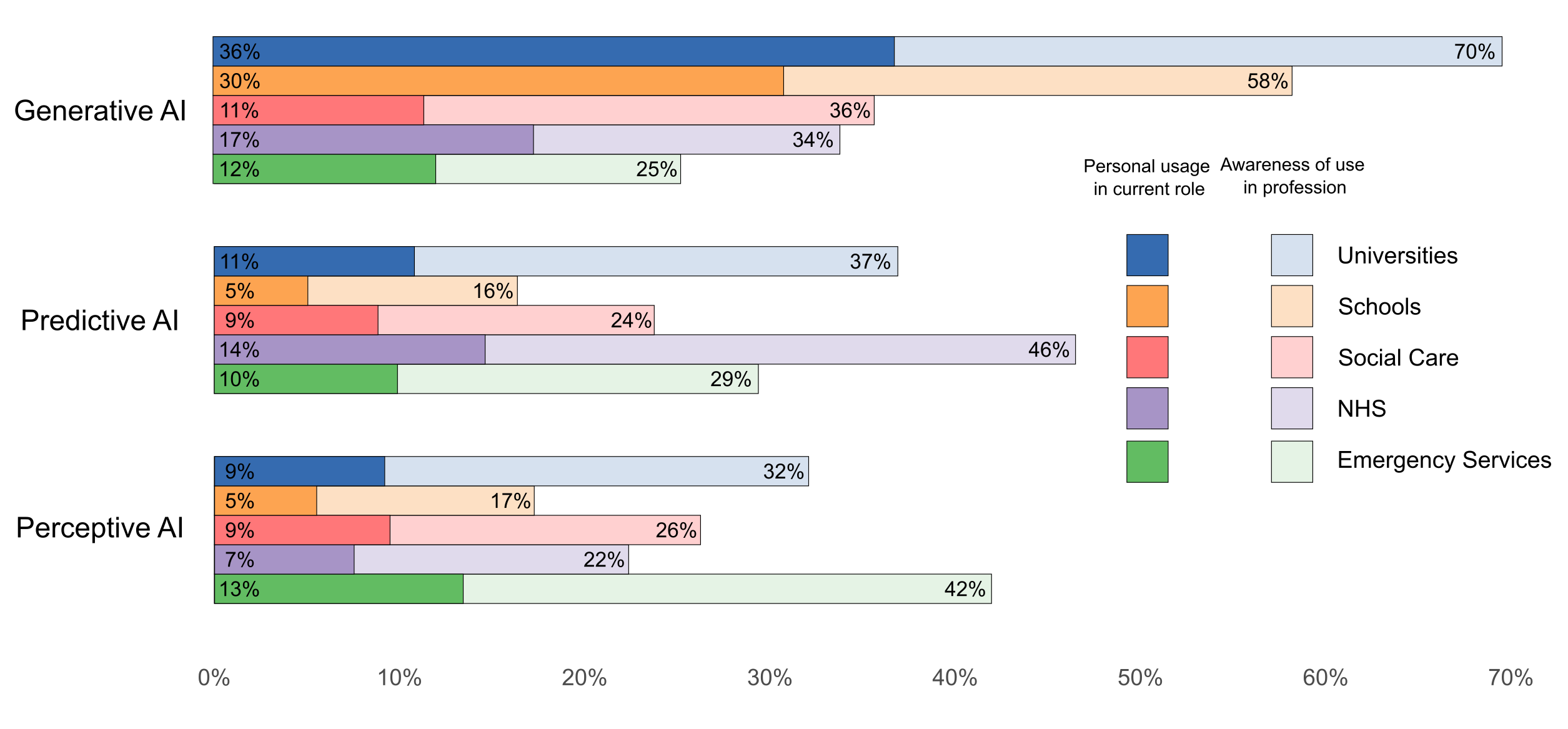
- GenAI 인식률: 응답자의 45%가 자신 업무 영역에서 GenAI 사용을 알고 있었고; 22%는 GenAI 시스템을 적극적으로 사용했다.
- 부문별 채택은 다르게 나타나며, 대학 36.4%, 학교 30.5%에서 GenAI 사용이 더 높은 반면, NHS 17%, 응급서비스 12%, 사회복지 11%는 더 낮은 채택을 보고한다.
- GenAI 사용자인(n=209) 중 132명(63%)이 ChatGPT를 사용했다; 대학(26.7%), 학교(19.6%)가 ChatGPT 사용을 보고할 가능성이 더 높다.
- GenAI를 사용하는 응답자들은 생산성 증가와 관료주의 감소를 지각했고, NHS 사용자는 관료주의가 시간의 50%에서 30%로 감소할 수 있다고 추정했다.
- 사용자들 사이의 GenAI 산출물에 대한 전반적 신뢰도는 높으며(사용자의 61%), 16%는 자신의 직업 대체를 두려워한다.
- 많은 응답자들(76%)이 영국이 공공서비스를 위한 AI 활용 기회를 놓치고 있다고 느끼며, 32%만이 직장에서 GenAI 사용에 대한 명확한 가이드라인이 있다고 느낀다.
더 나은 연구,지금 바로 시작하세요
연구 설계부터 논문 작성까지, 연구 시간을 획기적으로 줄여보세요.
카드 등록 없음 · 무료 플랜 제공
이 리뷰는 AI가 만들고, 인간 에디터가 검토했습니다.