
[논문 리뷰] Ground-breaking Exoplanet Science with the ANDES spectrograph at the ELT
본 논문은 ELT의 ANDES가 높은 해상도 전이/발광 분광학 및 반사광 관측을 통해 트랜스미션/발광 스펙트로스코피로 행성계 연구를 혁신적으로 가능하게 하며, 암석 행성 및 원반 물리에 대한 타당성 시뮬레이션을 포함한다는 내용을 개요로 제시한다.
In the past decade the study of exoplanet atmospheres at high-spectral resolution, via transmission/emission spectroscopy and cross-correlation techniques for atomic/molecular mapping, has become a powerful and consolidated methodology. The current limitation is the signal-to-noise ratio during a planetary transit. This limitation will be overcome by ANDES, an optical and near-infrared high-resolution spectrograph for the ELT. ANDES will be a powerful transformational instrument for exoplanet science. It will enable the study of giant planet atmospheres, allowing not only an exquisite determination of atmospheric composition, but also the study of isotopic compositions, dynamics and weather patterns, mapping the planetary atmospheres and probing atmospheric formation and evolution models. The unprecedented angular resolution of ANDES, will also allow us to explore the initial conditions in which planets form in proto-planetary disks. The main science case of ANDES, however, is the study of small, rocky exoplanet atmospheres, including the potential for biomarker detections, and the ability to reach this science case is driving its instrumental design. Here we discuss our simulations and the observing strategies to achieve this specific science goal. Since ANDES will be operational at the same time as NASA's JWST and ESA's ARIEL missions, it will provide enormous synergies in the characterization of planetary atmospheres at high and low spectral resolution. Moreover, ANDES will be able to probe for the first time the atmospheres of several giant and small planets in reflected light. In particular, we show how ANDES will be able to unlock the reflected light atmospheric signal of a golden sample of nearby non-transiting habitable zone earth-sized planets within a few tenths of nights, a scientific objective that no other currently approved astronomical facility will be able to reach.
연구 동기 및 목표
- 다양한 행성 유형에 걸쳐 ANDES가 외계 행성 대기 연구를 얼마나 극적으로 발전시킬지 동기 부여하고 설명한다.
- ANDES로 행성 과학을 이끌어가는 두 가지 주요 관측 모드와 그 최상위 요건을 정의한다.
- 암석질의 거주가능 영역 행성과 원시 행성원반에 대한 타당성, 관측 전략 및 시뮬레이션을 평가한다.
- JWST/ARIEL과의 시너지 효과를 강조하고, 항성 오염 및 장주기 행성 신호와 같은 주요 도전과제를 다룬다.
제안 방법
- ANDES의 두 가지 관측 모드를 설명한다: 시정 한계의 고해상도 분광학(R≥100,000, 0.5–1.8 μm) 및 AO 보조 IFU 모드(R≥100,000, YJH 밴드).
- 대기 신호를 검출하기 위한 고분산 트랜스미션/발광 분광법과 교차상관을 이용한 고대조 반사광 기법을 설명한다.
- petitRADTRANS 모델과 교차상관 분석을 사용하여 TRAPPIST-1b/d, K2-18b 등 주요 표적에 대한 검출 가능성을 평가하는 시뮬레이션을 제시한다.
- 지구 대기 및 항성 오염과 항성 대류가 신호 추출에 미치는 영향을 논의하며 3D RHD 항성 모델을 포함한다.
- PCA/SYSREM 기법이 장주기 행성의 신호 회복에 미치는 영향과 개선된 데이터 분석 접근법의 필요성을 개략한다.
실험 결과
연구 질문
- RQ1ANDES가 트랜스미션 스펙트로스코피를 통해 암석형 온건한 조건의 외계행성의 대기 특성화를 달성할 수 있는가?
- RQ2전송 및 반사광 모드에서 ANDES로 대기 신호를 검출하기 위한 관측 전략과 노출 체계가 SNR를 어떻게 최대화하는가?
- RQ3근접하는 비-무용 트랜짓(non-transiting) 거주가능 영역의 지구크기 행성의 반사광 검출을 어떻게 가능하게 하는가?
- RQ4장주기 행성의 검출을 제한하는 주요 도전과제(항성 오염, 지구대기 줄, PCA와 같은 데이터 기반 신호 제거)와 이를 완화하는 방법은 무엇인가?
- RQ5ANDES가 JWST, ARIEL 및 기타 시설과 어떻게 시너지를 발휘하여 다중 해상도 외계행성 대기 연구를 진전시킬 것인가?
주요 결과
- ANDES의 고분광 해상도와 AO 보조 IFU 모드는 암석 목표와 반사광 탐지를 포함한 다양한 외계 행성의 대기 및 표면 특성 발견 가능성을 열어준다.
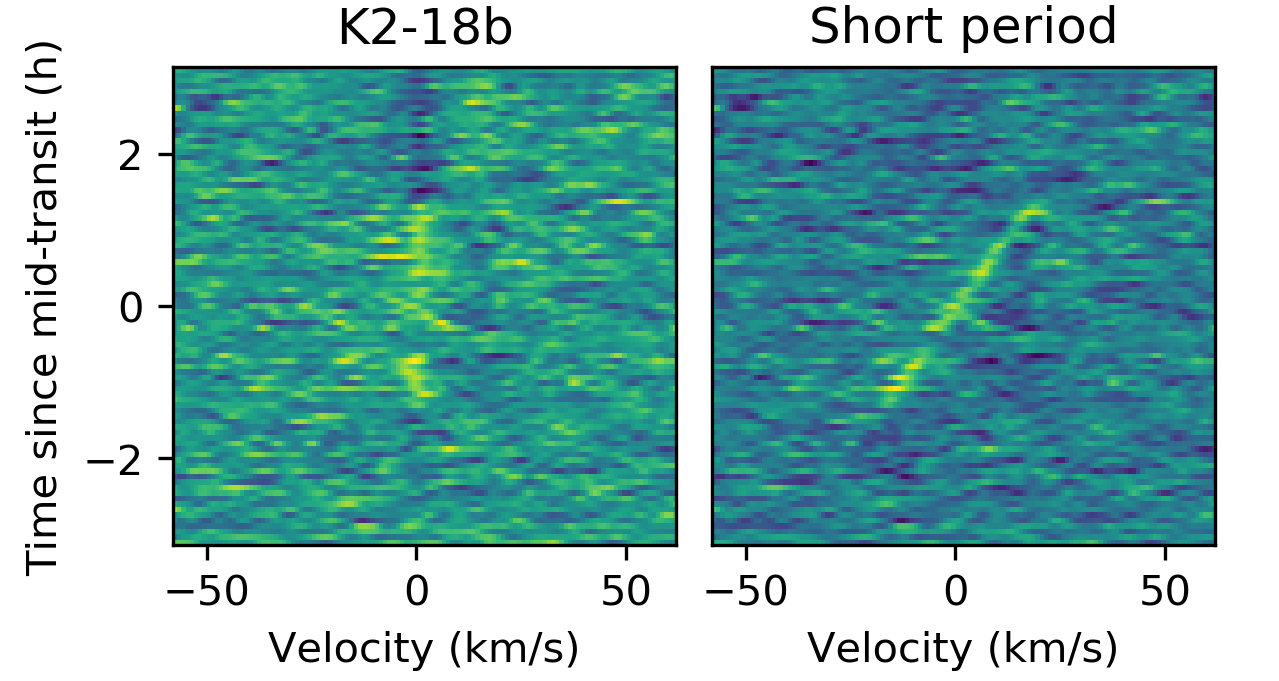
- TRAPPIST-1b/d 및 K2-18b에 대한 시뮬레이션은 다중 트랜짓과 교차상관 템플릿을 이용한 트랜스미션 스펙트로스코피의 타당성을 보여준다.
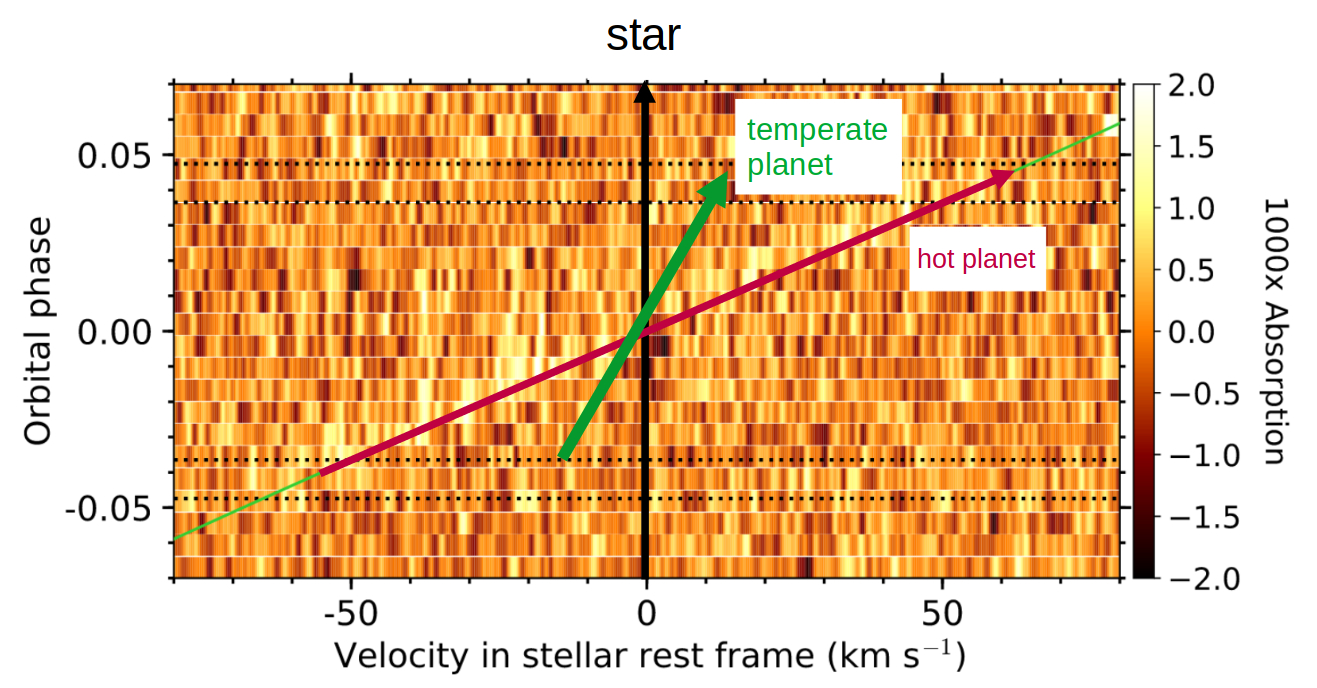
- 장주기 행성은 느린 RV 변화와 트랜짓 또는 방출 동안 준정적 신호로 인해 현재 데이터 감소 방법(PCA/SYSREM 등)에 상당한 도전을 제기하여 회복된 신호를 감소시킨다.
- 항성 대류와 3D 방사수력학(RHD) 효과는 시간에 따라 변하는 항성 선 특징을 도입하여 행성 신호를 오염시킬 수 있으며, 이를 위해 고급 항성 모델링이 필요하다.
- 본 논문은 JWST/ARIEL과의 강한 시너지 효과를 예측하고 ANDES가 반사광 대기를 탐구하는 고유한 능력을 보유하며, 잠재적으로 거주가능 영역의 비트랜짓 행성도 포함한다.
- 강력한 기술적 도전과제로는 1 m/s 방사속도 보정(목표: 20 cm/s) 달성과 관측 시간 규모에 따른 PSF 안정성 및 플랫필드 정확도 유지가 있다.
더 나은 연구,지금 바로 시작하세요
연구 설계부터 논문 작성까지, 연구 시간을 획기적으로 줄여보세요.
카드 등록 없음 · 무료 플랜 제공
이 리뷰는 AI가 만들고, 인간 에디터가 검토했습니다.