
[논문 리뷰] Intelligent Agricultural Greenhouse Control System Based on Internet of Things and Machine Learning
본 논문은 기계 학습을 이용하여 환경 매개변수를 모니터링하고 온도, 습도, 조명, 관개 및 기타 요인을 적응적으로 조절하는 IoT 기반 온실 제어 시스템을 설계·구현하여 작물 성장과 자원 효율성을 향상시킨다.
This study endeavors to conceptualize and execute a sophisticated agricultural greenhouse control system grounded in the amalgamation of the Internet of Things (IoT) and machine learning. Through meticulous monitoring of intrinsic environmental parameters within the greenhouse and the integration of machine learning algorithms, the conditions within the greenhouse are aptly modulated. The envisaged outcome is an enhancement in crop growth efficiency and yield, accompanied by a reduction in resource wastage. In the backdrop of escalating global population figures and the escalating exigencies of climate change, agriculture confronts unprecedented challenges. Conventional agricultural paradigms have proven inadequate in addressing the imperatives of food safety and production efficiency. Against this backdrop, greenhouse agriculture emerges as a viable solution, proffering a controlled milieu for crop cultivation to augment yields, refine quality, and diminish reliance on natural resources [b1]. Nevertheless, greenhouse agriculture contends with a gamut of challenges. Traditional greenhouse management strategies, often grounded in experiential knowledge and predefined rules, lack targeted personalized regulation, thereby resulting in resource inefficiencies. The exigencies of real-time monitoring and precise control of the greenhouse's internal environment gain paramount importance with the burgeoning scale of agriculture. To redress this challenge, the study introduces IoT technology and machine learning algorithms into greenhouse agriculture, aspiring to institute an intelligent agricultural greenhouse control system conducive to augmenting the efficiency and sustainability of agricultural production.
연구 동기 및 목표
- 식량 수요 증가와 기후 변화 도전에 직면한 상황에서 지능적이고 지속 가능한 온실 관리의 필요성을 제고한다.
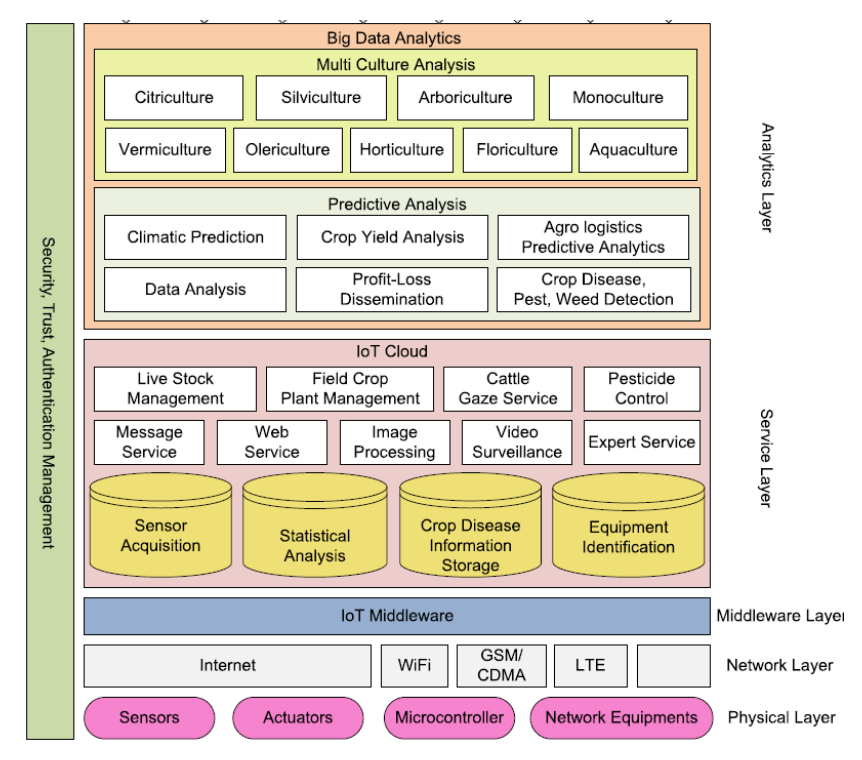
- 온실 내부 조건을 모니터링하고 제어하기 위해 머신러닝과 통합된 IoT 기반 아키텍처를 제안한다.
- 실시간 데이터 수집, 처리 및 모델 기반 규제를 시연하여 작물 성장 효율성을 높이고 자원 낭비를 줄인다.
- 지능형 온실 시스템 도입을 위한 프라이버시, 보안, 모듈성 및 사회경제적 고려사항을 다룬다.
제안 방법
- 온실 모니터링을 포괄하도록 구성된 센서(온도, 습도, 조도)를 배치한다.
- 센서 데이터를 처리 및 저장을 위해 IoT를 통해 클라우드로 전송한다.
- 이상치 보정, 정규화 등의 데이터 전처리를 적용하고 과거 시계열 데이터에서 RNN 기반 모델을 학습시킨다.
- 실시간 제어를 위해 PID, MPC, 퍼지 제어를 결합한 하이브리드 제어 전략을 구현한다.
- 피드백 제어를 통해 기계 학습 출력으로 환경 매개변수를 조정한다.
- 에너지, 관개 및 비료 공급 모델을 개발하여 자원 사용을 최적화한다.
실험 결과
연구 질문
- RQ1IoT 기반 센싱과 클라우드 처리로 온실 환경 역학의 정확한 모델링을 어떻게 지원할 수 있는가?
- RQ2ML 예측에 의해 안내되는 PID, MPC, 퍼지 제어 프레임워크의 결합이 정밀한 실시간 온실 규제를 달성할 수 있는가?
- RQ3작물 전반에 걸친 ML 기반 온실 제어로 달성 가능한 에너지, 물, 비료 절약 가능성은 어느 정도인가?
- RQ4스마트 온실 도입에서 데이터 프라이버시, 시스템 유지보수 및 기술 채택에 어떤 도전과제가 있는가?
주요 결과
- 클라우드 기반 데이터 파이프라인이 온실 센서 데이터의 정리, 정규화 및 이상치 보정을 지원한다.
- 과거 시계열 데이터로부터 미래의 온실 조건을 예측하기 위해 RNN 기반 모델을 사용한다.
- 다중 알고리즘 제어 전략(PID, MPC, 퍼지)이 변화하는 조건에 대한 규제 유연성과 반응성을 향상시킨다.
- 시스템은 작물별 환경 조정 및 에너지와 물 자원의 최적화를 가능하게 한다.
- 현실 세계의 사례 연구는 작물 성장 효율성 향상과 자원 낭비 감소를 시사한다.
- 향후 연구에는 고급 센서, 딥러닝 및 보다 넓은 생태계 상호 운용성의 통합이 포함된다.
더 나은 연구,지금 바로 시작하세요
연구 설계부터 논문 작성까지, 연구 시간을 획기적으로 줄여보세요.
카드 등록 없음 · 무료 플랜 제공
이 리뷰는 AI가 만들고, 인간 에디터가 검토했습니다.