
[논문 리뷰] Joint cosmological and gravitational-wave population inference using dark sirens and galaxy catalogues
이 논문은 어둠의 소리와 은하 목록을 사용하여 우주론적 파rameter(예: H₀)와 중력파 이중성 복합체 인구 특성의 동시 추론을 가능하게 하는 gwcosmo Python 패키지의 향상된 버전을 소개한다. 질량 분포와 병합률 진화를 동시에 모델링함으로써 편향을 줄이고, GWTC-3 목록의 42개 BBH 사건으로부터 H₀ = 69⁺¹²₋₇ km s⁻¹ Mpc⁻¹를 강력하게 추정하며, 렌즈되지 않은 중력파 사건으로부터의 우주론적 제약 조건을 크게 향상시킨다.
In the absence of numerous gravitational-wave detections with confirmed electromagnetic counterparts, the "dark siren" method has emerged as a leading technique of gravitational-wave cosmology. The method allows redshift information of such events to be inferred statistically from a catalogue of potential host galaxies. Due to selection effects, dark siren analyses necessarily depend on the mass distribution of compact objects and the evolution of their merger rate with redshift. Informative priors on these quantities will impact the inferred posterior constraints on the Hubble constant ($H_0$). It is thus crucial to vary these unknown distributions during an $H_0$ inference. This was not possible in earlier analyses due to the high computational cost, restricting them to either excluding galaxy catalogue information, or fixing the gravitational-wave population mass distribution and risking introducing bias to the $H_0$ measurement. This paper introduces a significantly enhanced version of the Python package GWCOSMO, which allows joint estimation of cosmological and compact binary population parameters. This thereby ensures the analysis is now robust to a major source of potential bias. The gravitational-wave events from the Third Gravitational-Wave Transient Catalogue are reanalysed with the GLADE+ galaxy catalogue, and an updated, more reliable measurement of $H_0=69^{+12}_{-7}$ km s$^{-1}$ Mpc$^{-1}$ is found (maximum a posteriori probability and 68% highest density interval). This improved method will enable cosmological analyses with future gravitational-wave detections to make full use of the information available (both from galaxy catalogues and the compact binary population itself), leading to promising new independent bounds on the Hubble constant.
연구 동기 및 목표
- 중력파 천문학을 통해 독립적이고 고정밀도로 H₀를 측정할 수 있도록 하여 지속적인 허블 긴장 문제를 해결한다.
- 어둠의 소리 분석에서 고정된 사전 확률에 의해 유도되는 편향을 극복한다.
- 중력파 사건과 은하 목록으로부터 우주론적 및 인구 파rameter를 동시에 추론할 수 있는 계산적으로 효율적인 방법을 개발한다.
- 미래의 우주론적 분석에서 은하 목록 데이터와 고유한 밀집 이중성 인구 정보를 모두 최대한 활용할 수 있도록 한다.
제안 방법
- gwcosmo 패키지를 확장하여 질량 분포와 병합률 진화를 포함한 우주론적 및 인구 초파rameter의 동시 추론을 수행한다.
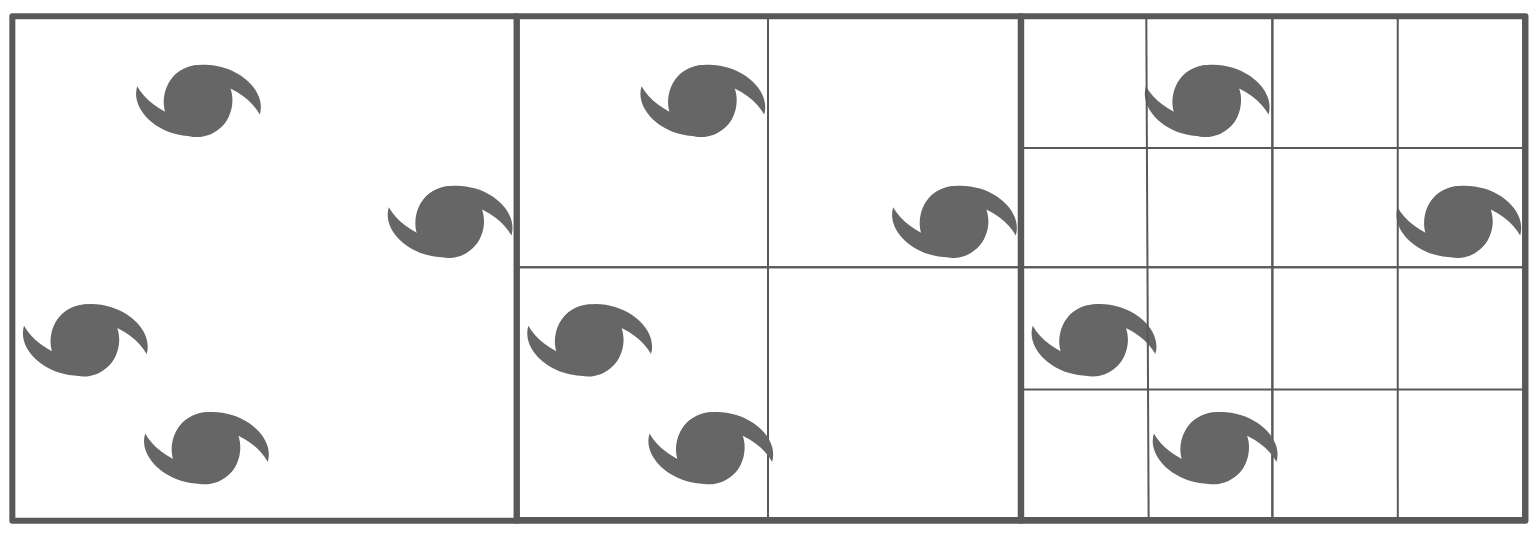
- GLADE+ 은하 목록을 사용하여 은하 주체 가능성 확률을 중력파 사건의 국소화 부피에 할당한다.
- 평탄한 ΛCDM 우주론 모델을 사용하여 거리-적색편이 관계를 모델링하고, H₀를 주요 우주론적 파rameter로 설정한다.
- 적색편이에 따라 변화하는 병합률 진화 및 질량 분포 사전 확률을 추론 파이프라인의 자유 초파rameter로 통합한다.
- 선택 효과와 불확실성을 고려하여 베이지안 계층적 프레임워크를 사용해 H₀ 및 인구 파rameter를 동시에 제약 조건을 둔다.
- 고차원 파rameter 공간에도 불구하고 계산 가능성을 확보하기 위해 효율적인 샘플링 기법을 활용한다.
실험 결과
연구 질문
- RQ1어둠의 소리에서 H₀ 측정의 편향을 줄이기 위해 우주론적 및 밀집 이중성 인구 파rameter를 동시에 추론할 수 있는가?
- RQ2질량 분포 및 병합률 진화 모델의 선택이 H₀의 추정치에 어떤 영향을 미치는가?
- RQ3전기적 대응체가 없는 상황에서 은하 목록 정보가 H₀ 제약 조건의 정밀도를 얼마나 향상시킬 수 있는가?
- RQ4공통 초파rameter를 사용해 여러 밀집 이중성 인구(예: BBH, NSBH)를 동시에 모델링할 수 있는 통합 프레임워크를 구축할 수 있는가?
주요 결과
- 동시 추론 방법은 질량 분포와 병합률 진화와 같은 인구 파rameter를 H₀와 함께 제약 조건을 둠으로써 편향을 줄인다.
- 업데이트된 분석은 GWTC-3 목록의 42개 BBH 사건과 GLADE+ 은하 목록을 사용하여 H₀ = 69⁺¹²₋₇ km s⁻¹ Mpc⁻¹의 강력한 측정치를 도출한다.
- 이 방법은 계산적으로 효율적이며 은하 목록 크기와 독립적으로 확장 가능하여, DES, LSST, Euclid와 같은 더 깊은 설문 조사에도 미래에 활용 가능하다.
- 결과는 은하 목록 정보와 고유한 인구 모델링이 고정밀도 어둠의 소리 우주론에서 모두 핵심적임을 보여준다.
- 이 방법은 비정규 적색편이 불확실성에 적응 가능하며, 여러 소스 인구의 동시 모델링을 포함하도록 확장 가능하다.
더 나은 연구,지금 바로 시작하세요
논문 읽기부터 검토까지, 연구 시간을 획기적으로 줄여보세요.
카드 등록 없음 · 무료 플랜 제공
이 리뷰는 AI가 만들고, 인간 에디터가 검토했습니다.