
[논문 리뷰] Latency and Privacy-Aware Resource Allocation in Vehicular Edge Computing
이 논문은 Vehicular Edge Computing (VEC)에서 프라이버시 및 지연(latency)을 고려한 자원 할당 방식을 제안하며, 에지 처리를 사용자 및 RSU/클라우드 계층으로 분리하고 프라이버시, 실시간 요구, 처리 자원을 기반으로 휴리스틱을 사용해 작업을 배정합니다.
The rapid increase in the number of connected vehicles has led to the generation of vast amounts of data. As a significant portion of this data pertains to vehicle-to-vehicle and vehicle-to-infrastructure communications, it is predominantly generated at the edge. Considering the enormous volume of data, real-time applications, and privacy concerns, it is crucial to process the data at the edge. Neglecting the management of processing resources in vehicular edge computing (VEC) could lead to numerous challenges as a substantial number of vehicles with diverse safety, economic, and entertainment applications, along with their data processing, emerge in the near future [1]. Previous research in VEC resource allocation has primarily focused on issues such as response time and privacy preservation techniques. However, an approach that takes into account privacy-aware resource allocation based on vehicular network architecture and application requirements has not yet been proposed. In this paper, we present a privacy and latency-aware approach for allocating processing resources at the edge of the vehicular network, considering the specific requirements of different applications. Our approach involves categorizing vehicular network applications based on their processing accuracy, real-time processing needs, and privacy preservation requirements. We further divide the vehicular network edge into two parts: the user layer (OBUs) is considered for processing applications with privacy requirements, while the allocation of resources in the RSUs and cloud layer is based on the specific needs of different applications. In this study, we evaluate the quality of service based on parameters such as privacy preservation, processing cost, meeting deadlines, and result quality. Comparative analyses demonstrate that our approach enhances service quality by 55% compared to existing state-of-the-art methods.
연구 동기 및 목표
- V2V/V2I 데이터 증가로 인한 프라이버시 인식형, 저지연 자원 관리의 필요성의 동기화.
- 이종 VEC 아키텍처 정의 및 프라이버시, 지연 및 정확도 요구사항에 따라 응용 프로그램 분류.
- 응용 유형에 따라 처리 작업을 edge, RSU 또는 cloud에 할당하는 리소스 할당 프레임워크 개발.
- 개인정보를 사용자 장치 (OBUs)에서 처리하고 비공개 데이터는 cloud/RSU에서 처리하는 프라이버시 보호 분할 도입.
- 제안된 시스템을 QoS, QoR, 및 처리 비용 측면에서 최신 방법과 비교 평가.
제안 방법
- 에지(OBUs), RSU, 및 cloud 계층으로 VEC 아키텍처 모델링.
- 프라이버시, 실시간 필요성 및 정확도 요구사항에 따라 응용 프로그램 분류하여 처리 위치 결정.
- 프라이버시 및 실시간 작업을 사용자 에지에 할당하고 비공개가 아닌 작업은 RSU 또는 cloud로 라우팅하며 허용 가능한 경우 근사 처리 적용하는 휴리스틱 PVEC 알고리즘 제안.
- QoS를 처리 비용, 기한 준수 실패, 및 프라이버시의 함수로 정의.
- 처리 비용을 cloud 처리에 한정하여 PT * SRP로 정의.
- 정확한 결과를 필요로 하지 않는 응용에 대해 근사 처리 사용으로 에지 자원 절약.
![Figure 1 : Vehicular Edge Architecture [ 15 ]](https://ar5iv.labs.arxiv.org/html/2501.02804/assets/x1.jpg)
실험 결과
연구 질문
- RQ1다양한 VEC 응용의 프라이버시 및 지연 요구를 충족하기 위해 에지, RSU, 클라우드 간 처리 할당은 어떻게 해야 하는가?
- RQ2VEC에서 프라이버시 및 지연 인식 리소스 할당을 적용했을 때 QoS, QoR 및 비용에 미치는 영향은?
- RQ3자원 제약이 있는 에지 장치에서 근사 처리가 비용을 줄이면서도 수용 가능한 QoR을 유지할 수 있는가?
- RQ4개인 애플리케이션을 사용자 계층으로 분리하는 것이 전체 시스템 성능 및 프라이버시 보장에 어떤 영향을 미치는가?
주요 결과
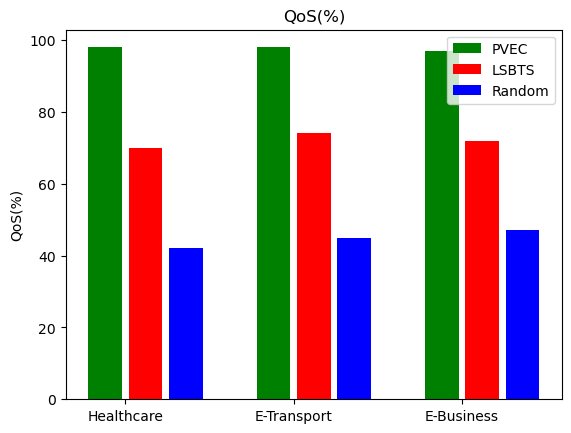
- PVEC 방법은 Healthcare, E-Transport, E-Business 워크로드에서 baseline 방법(LSBTS 및 Random)에 비해 QoS를 30-55% 증가시킨다.
- 에지에서의 근사 처리는 5% 오차 대역 및 95% 신뢰구간으로 거의 QoR 손실이 없음을 보여준다.
- 이 방법은 baseline 대비 cloud 처리 비용을 49-63% 감소시킨다.
- 실시간, 근사, 프라이버시 데이터 작업에는 에지 처리가 선호되고, 정확한, 소프트 실시간 및 덜 프라이빗한 데이터는 클라우드 처리가 처리한다.
- 제안된 프레임워크는 평가에서 최신 기술 대비 QoS 약 55% 향상을 달성한다.
더 나은 연구,지금 바로 시작하세요
연구 설계부터 논문 작성까지, 연구 시간을 획기적으로 줄여보세요.
카드 등록 없음 · 무료 플랜 제공
이 리뷰는 AI가 만들고, 인간 에디터가 검토했습니다.