
[논문 리뷰] Linking fast and slow: the case for generative models
이 논문은 빠른 신경 가속도(밀리초 단위)와 느린 시스템 수준의 변화(분에서 연 단위)를 연결하기 위해 계층적 생성 모델과 베이지안 추론을 주장한다. 이는 상관관계를 넘어서 기계적 원인을 추론할 수 있도록 한다. 슬레이브 원리와 변분 베이즈를 활용함으로써, 다중 척도 신경과학 모델링을 위한 원리적인 프레임워크를 제공하며, 간질 연구에 응용된 바가 있으며 뇌 네트워크 동역학 전반에 널리 적용 가능하다.
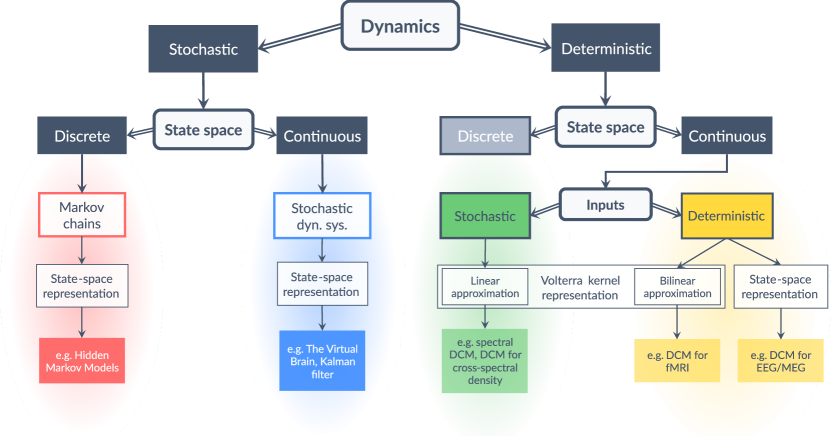
A pervasive challenge in neuroscience is testing whether neuronal connectivity changes over time due to specific causes, such as stimuli, events, or clinical interventions. Recent hardware innovations and falling data storage costs enable longer, more naturalistic neuronal recordings. The implicit opportunity for understanding the self-organised brain calls for new analysis methods that link temporal scales: from the order of milliseconds over which neuronal dynamics evolve, to the order of minutes, days, or even years over which experimental observations unfold. This review article demonstrates how hierarchical generative models and Bayesian inference help to characterise neuronal activity across different time scales. Crucially, these methods go beyond describing statistical associations among observations and enable inference about underlying mechanisms. We offer an overview of fundamental concepts in state-space modeling and suggest a taxonomy for these methods. Additionally, we introduce key mathematical principles that underscore a separation of temporal scales, such as the slaving principle, and review Bayesian methods that are being used to test hypotheses about the brain with multiscale data. We hope that this review will serve as a useful primer for experimental and computational neuroscientists on the state of the art and current directions of travel in the complex systems modelling literature.
연구 동기 및 목표
- 신경 활동을 밀리초에서 연 단위까지 다양한 시간 척도에 걸쳐 연결하는 데 도전하는 것.
- 다중 척도 시간 시리즈 데이터를 사용하여 신경과학 가설을 체계적으로 평가하는 프레임워크를 개발하는 것.
- 생성 모델과 베이지안 모델 비교를 통해 통계적 연관성뿐만 아니라 잠재 메커니즘에 대한 추론을 가능하게 하는 것.
- 빠른 척도의 동역학을 입력으로 사용하여 뇌 연결성의 느린 변화를 모델링하는 실용적이고 확장 가능한 방법을 제공하는 것.
- 가상의 간질 환자 프레임워크를 통해 임상 신경과학, 특히 간질 연구에 이 방법의 유용성을 입증하는 것.
제안 방법
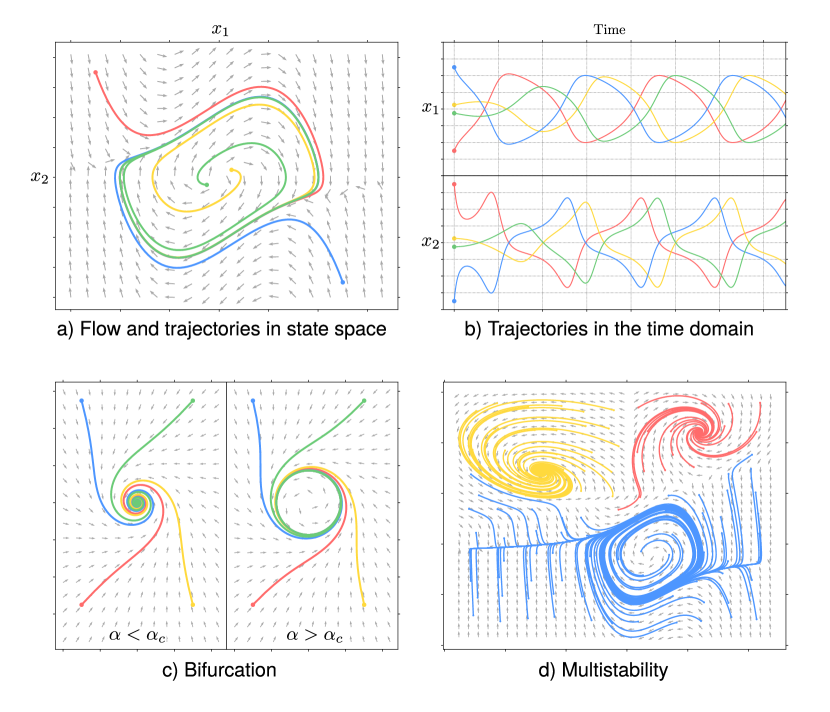
- 연속 시간 진화 방정식과 측정 노이즈를 포함한 관측 모델을 갖는 잠재 신경 가속도를 나타내기 위해 상태공간 모델을 사용한다.
- 빠른 척도와 느린 척도를 분리하기 위해 슬레이브 원리를 적용하여 각각을 계층적 구조로 독립적으로 모델링할 수 있도록 한다.
- 복잡한 계층적 모델의 역행을 가능하게 하기 위해 모델 매개변수에 대한 사후 분포를 근사하기 위해 변분 베이즈를 사용한다.
- 중간 수준에서 초우도를 학습하기 위해 실증적 베이즈를 구현하여 강한 사전 가정 없이 데이터로부터 모델 학습을 지원한다.
- 빠른 척도의 매개변수(예: 신경 집단 활동)를 고수준 모델의 느리게 변화하는 관측치로 간주하여 계층적 모델을 구성한다.
- 경쟁적인 다중 척도 모델 간 비교 및 가장 적합한 가설 선택을 위해 변분 자유 에너지로 근사된 모델 증거를 사용한다.
실험 결과
연구 질문
- RQ1계층적 생성 모델은 어떻게 빠른 신경 가속도와 느린 뇌 연결성의 시스템 수준 변화를 연결할 수 있는가?
- RQ2다중 척도 뇌 모델링에서 시간 척도를 분리하는 데 기초가 되는 수학적 원리는 무엇이며, 어떻게 엄밀하게 적용할 수 있는가?
- RQ3특히 변분 베이즈를 통해 복잡한 다중 척도 시간 시리즈의 계층적 모델을 어떻게 역행할 수 있는가?
- RQ4다양한 시간 척도를 모델링할 것인지 결정하는 데 어떤 기준을 따라야 하며, 모델의 복잡성은 데이터 적합도로 어떻게 정당화할 수 있는가?
- RQ5생성 모델은 어떻게 뇌 네트워크의 상태 전이(예: 간질에서의 전이)에 대한 기계적 설명을 드러내는 데 사용될 수 있는가?
주요 결과
- 슬레이브 원리는 시간 척도의 엄밀한 분리를 가능하게 하며, 빠른 동역학과 느린 동역학을 독립적으로 모델링하면서도 그들의 인과적 상호의존성을 유지한다.
- 베이지안 역행을 적용한 계층적 생성 모델은 다중 척도 데이터에서 통계적 연관성뿐만 아니라 잠재 메커니즘에 대한 추론을 가능하게 한다.
- 실증적 베이즈와 함께 사용된 변분 베이즈는 복잡한 뉴런 시간 시리즈의 계층적 모델을 역행하는 데 있어 확장 가능하고 실용적인 방법을 제공한다.
- 변분 자유 에너지로 근사된 모델 증거는 경쟁적인 다중 척도 모델 간 비교 및 가장 타당한 가설 선택을 위한 원리적인 방법을 제공한다.
- 이 방법은 가상의 간질 환자 프레임워크를 통해 간질 연구에 성공적으로 적용되었으며, 간질 발작 동역학의 개인 맞춤형 모델링을 가능하게 하였다.
- 숨은 마르코프 모델에 탈출률과 연속적인 느린 동역학을 통합함으로써 네트워크 애트랙터 전이를 시냅스 및 예측 코딩 메커니즘과 연결할 수 있다.
더 나은 연구,지금 바로 시작하세요
논문 읽기부터 검토까지, 연구 시간을 획기적으로 줄여보세요.
카드 등록 없음 · 무료 플랜 제공
이 리뷰는 AI가 만들고, 인간 에디터가 검토했습니다.