
[논문 리뷰] Precisely determining photon-number in real-time
이 논문은 초전도성 전이모서리 센서(TES) 펄스를 실시간으로 분석하는 맞춤형 FPGA 기반 하드웨어 프로세서를 사용한 실시간 광자 수 해상도 시스템을 제시한다. 낮은 광자 수에서 백분의 일억 단위의 분辩 능력을 달성하며, 최대 16개의 광자를 해상도할 수 있다. 이 시스템은 후처리 분석에 의존하지 않고 즉각적인 광자 수 할당을 가능하게 하여 양자 광학 및 천문학 분야의 적용을 혁신한다.
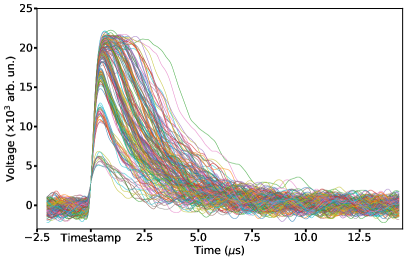
Superconducting transition-edge sensors (TES) are extremely sensitive microcalorimeters used as photon detectors with unparalleled energy resolution. They have found application from measuring astronomical spectra through to determining the quantum property of photon-number, $\hat{n} {=} \hat{a}^† \hat{a}$, for energies from 0.6-2.33eV. However, achieving optimal energy resolution requires considerable data acquisition -- on the order of 1GB/min -- followed by post-processing, which does not allow access to energy information in real time. Here we use a custom hardware processor to process TES pulses while new detections are still being registered, allowing photon-number to be measured in real time as well as reducing data requirements by orders-of-magnitude. We resolve photon number up to n=16 -- achieving up to parts-per-billion discrimination for low photon numbers on the fly -- providing transformational capacity for applications of TES detectors from astronomy through to quantum technology.
연구 동기 및 목표
- TES 기반 광자 수 해상도에서 후처리의 한계를 해결하여 에너지 정보에의 접근 지연을 줄이기 위해.
- TES 검출기에서 최적의 에너지 해상도를 확보하기 위해 필요한 데이터 집약적인 측정(최대 1 GB/분)의 문제점을 해결하기 위해.
- 데이터 수집 중에 TES 펄스를 처리하여 실시간 광자 수 할당을 가능하게 하여 오프라인 분석에 의존하지 않도록 하기 위해.
- 최소한의 오류로 n = 16까지의 고정밀 광자 수 분별 능력을 확보하여, 특히 낮은 광자 수에서의 할당 정확도를 높이기 위해.
- 캘리브레이션 및 전체 펄스 기록이 필요한 경우를 대비해 유연하고 재구성 가능한 실시간 펄스 분석 하드웨어 플랫폼을 개발하기 위해.
제안 방법
- 현장 프로그래머블 게이트 어레이(FPGA)를 구현하여 TES의 아날로그 전압 신호를 실시간으로 디지털화하기 위해.
- 임계값 기반 탐지 적용: 펄스의 높이와 기울기가 모두 사용자 정의 임계값을 초과할 경우에만 탐지되도록 하기 위해.
- 각 탐지 이벤트의 핵심 펄스 특성(예: 진폭, 감쇠 시간)을 추출하여 광자 수를 할당하기 위해.
- 재구성 가능한 프로세서를 사용하여 물리적으로 의미 있는 펄스 파rameter만 저장하고, 캘리브레이션 필요 시를 제외한 원시 데이터는 기각하기 위해.
- 알려진 광자 수 분포를 가진 일관된 상태(coherent states)를 사용하여 캘리브레이션을 수행하여 펄스 특성과 광자 수 확률 간의 맵핑을 수립하기 위해.
- 토모그래피 분석을 위해 600 ns의 공진 시간 창을 사용하며, 펄스 이후 100–700 ns 이외의 이벤트는 기각하여 배경 노이즈를 감소시키기 위해.
실험 결과
연구 질문
- RQ1TES 검출기에서 후처리 없이 실시간으로 광자 수 해상도를 달성할 수 있는가?
- RQ2실시간 펄스 분석을 통해 TES로 안정적으로 해상도할 수 있는 최대 광자 수(n)는 얼마인가?
- RQ3실시간 하드웨어 처리를 사용할 경우 낮은 광자 수(n ≤ 16)에서 광자 수 할당의 정밀도는 어느 정도인가?
- RQ4탐지 임계값과 펄스 특성이 광자 수 할당 정확도에 미치는 영향은 무엇인가?
- RQ5데이터 처리량과 측정 지연 측면에서 실시간 처리는 전통적인 후처리 방식과 비교해 어떤가?
주요 결과
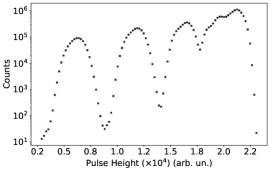
- 시스템은 n = 16까지 광자 수를 해상도하며, n = 16일 때 정확한 할당 확률 pⁿₘ₌ₙ > 0.90을 달성하고, n = 16일 때 0.90, n = 15일 때 0.936로 감소한다.
- n = 1일 경우 정확한 할당 확률은 0.99999598734이며, 표준편차는 2×10⁻⁴로, 백분의 일억 단위 정밀도를 나타낸다.
- n ≤ 10에 대해 n−1 또는 n+1 광자를 잘못 할당할 확률은 무시할 만큼 작으며, pⁿₘ₌ₙ₋₁ < 5×10⁻³ 및 pⁿₘ₌ₙ₊₁ < 5×10⁻³이다.
- α = 1.32 및 α = 2.16를 가진 일관된 상태를 사용한 캘리브레이션은 표준편차 내에서 일관된 α 추정치를 제공하여 캘리브레이션 신뢰성을 확인한다.
- 약 1.8×10⁷개의 탐지 이벤트 중 525개(0.003%)만 600 ns 공진 시간 창 외부에 위치하여 효과적인 배경 노이즈 감소를 입증한다.
- 시스템은 데이터 수집 중에 펄스를 분석함으로써 실시간 처리를 달성하여 1 GB/분 데이터 기록 및 후처리의 필요성을 제거한다.
더 나은 연구,지금 바로 시작하세요
논문 읽기부터 검토까지, 연구 시간을 획기적으로 줄여보세요.
카드 등록 없음 · 무료 플랜 제공
이 리뷰는 AI가 만들고, 인간 에디터가 검토했습니다.