
[논문 리뷰] PubChemQC B3LYP/6-31G*//PM6 dataset: the Electronic Structures of 86 Million Molecules using B3LYP/6-31G* calculations
이 논문은 DFT(B3LYP/6-31G*) 및 PM6 방법을 사용하여 계산된 8,590만 개의 분자에 대한 전자 구조를 포함하는 포괄적인 PubChemQC B3LYP/6-31G*//PM6 데이터셋을 소개한다. 이 데이터셋은 약물 발굴 및 재료 과학 분야에서 고속 스크리닝 및 머신러닝 응용을 가능하게 하며, 주요 결과로는 CHON300 서브셋에서 HOMO-LUMO 갭 예측의 R² 값이 0.892로 나타났다.
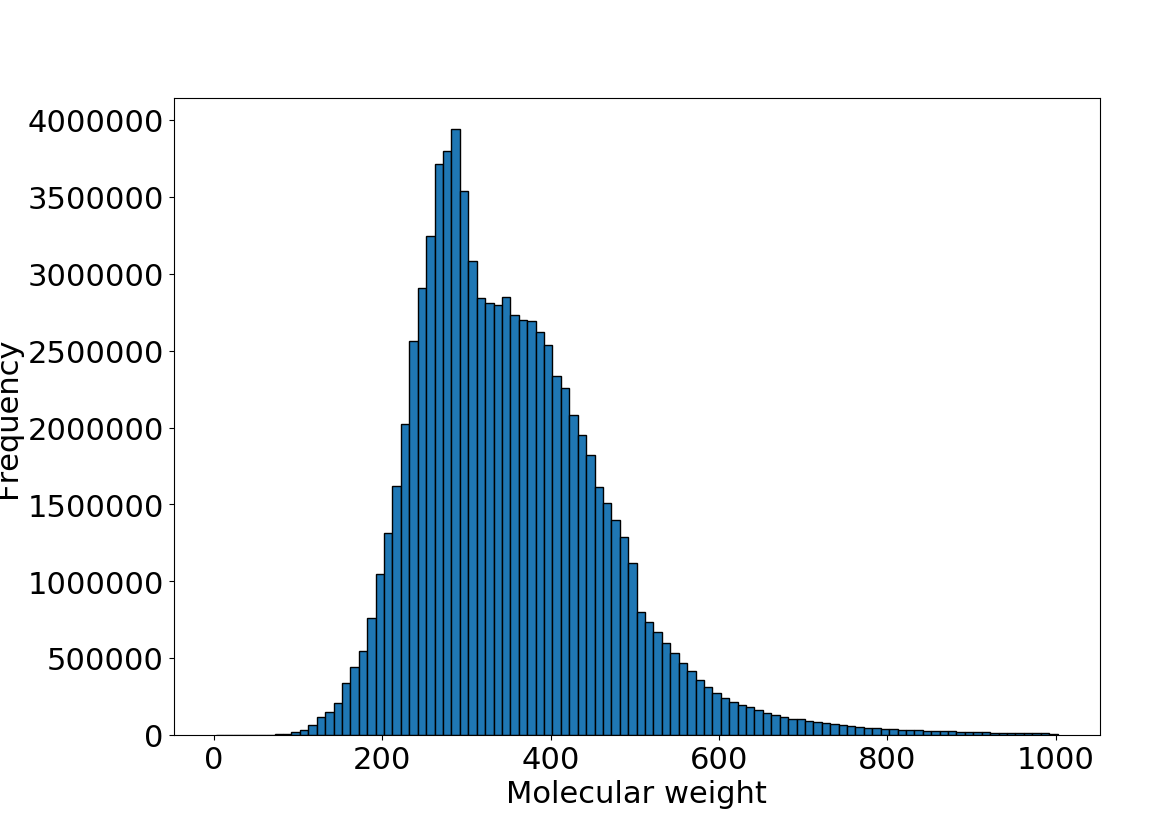
This article presents the "PubChemQC B3LYP/6-31G*//PM6" dataset, containing electronic properties of 85,938,443 molecules. It includes orbitals, orbital energies, total energies, dipole moments, and other relevant properties. The dataset encompasses a wide range of molecules, from essential compounds to biomolecules up to 1000 molecular weight, covering 94.0% of the original PubChem Compound catalog (as of August 29, 2016). The electronic properties were calculated using the B3LYP/6-31G* and PM6 methods. The dataset is available in three formats: (i) GAMESS quantum chemistry program files, (ii) selected JSON output files, and (iii) a PostgreSQL database, enabling researchers to query molecular properties. Five sub-datasets offer more specific data. The first two subsets include molecules with C, H, O, and N, under 300 and 500 molecular weight respectively. The third and fourth subsets contain C, H, N, O, P, S, F, and Cl, under 300 and 500 molecular weight respectively. The fifth subset includes C, H, N, O, P, S, F, Cl, Na, K, Mg, and Ca, under 500 molecular weight. Coefficients of determination ranged from 0.892 (CHON500) to 0.803 (whole) for the HOMO-LUMO energy gap. These findings represent extensive investigations and can be utilized for drug discovery, material science, and other applications. The datasets are available under the Creative Commons Attribution 4.0 International license at https://nakatamaho.riken.jp/pubchemqc.riken.jp/b3lyp_pm6_datasets.html.
연구 동기 및 목표
- 다양한 유기 및 생분자 화합물의 전자 구조를 위한 대규모로 공개 가능한 데이터셋을 생성하여 고속 계산 스크리닝을 지원한다.
- QM9 및 ANI-1과 같은 기존 양자화학 데이터셋의 한계를 극복하기 위해 원소 다양성과 분자량 범위를 넓히며 8,600만 개의 분자로 확장한다.
- HOMO-LUMO 갭, 전기 이중극 모멘트, 총 에너지 등 일관되고 고품질의 전자 구조 데이터를 제공하여 약물 발굴 및 재료 과학 분야에서 머신러닝 응용을 가능하게 한다.
- JSON, PostgreSQL 및 GAMESS 입력/출력 형식을 포함한 다양한 데이터 접근 형식을 제공하여 연구 분야 간의 광범위한 활용성을 높인다.
- 특정 응용을 위한 하위 데이터셋을 구축하여, 예를 들어 약물 유사 분자(C, H, O, N) 및 생분자(P, S, 할로젠, 금속 포함)에 특화된 분석을 향상시킨다.
제안 방법
- 2016년 8월 29일 기준 PubChem Compound 데이터베이스에서 유래한 분자 기하구조를 바탕으로 B3LYP/6-31G* 방법을 사용해 전자 구조를 계산하였으며, 이는 카탈로그의 94.0%를 커버한다.
- 초기 분자 기하구조를 생성하기 위해 PM6 준경험적 계산을 사용하였고, 이를 B3LYP/6-31G* 단일점 에너지 및 궤도 계산의 입력으로 활용하였다.
- 원소 조성과 분자량 임계값에 따라 다섯 개의 하위 데이터셋으로 구성하여 타겟팅된 연구를 지원하였다(예: CHON300nosalt, CHON500nosalt, CHONPSFCl300nosalt 등).
- 세 가지 형식으로 데이터를 제공: 전체 GAMESS 입력/출력 파일, 구조화된 JSON 추출본, PostgREST를 통한 풀텍스트 검색 및 필터링 기능을 갖춘 PostgreSQL 데이터베이스.
- B3LYP/6-31G*를 기준으로 하여 하위 데이터셋 전반에 걸쳐 HOMO-LUMO 갭 예측의 R² 값을 계산하여 데이터셋의 예측 능력을 검증하였다.
- Docker화된 PostgreSQL 및 PostgREST 서비스를 통해 프로그래밍 방식의 액세스를 가능하게 하여 연구자들이 SMILES, 에너지 갭, 전기 이중극 모멘트 등 다양한 성질로 분자를 쿼리할 수 있도록 하였다.
실험 결과
연구 질문
- RQ1B3LYP/6-31G* 및 PM6 방법을 사용하여 8,600만 개의 분자에 대한 일관되고 대규모의 전자 구조 데이터셋을 생성할 수 있는가? 이는 머신러닝 및 고속 스크리닝을 지원하는 데에 적합한가?
- RQ2B3LYP/6-31G* 전자 구조가 다양한 분자 서브셋에서 기준 데이터와 얼마나 잘 상관되는가? 특히 HOMO-LUMO 에너지 갭에 대해 어떻게 평가되는가?
- RQ3특정 원소 조성과 분자량 제한을 가진 하위 데이터셋은 약물 발굴 및 재료 과학 분야에서 예측 모델의 정확성과 관련성에 얼마나 기여하는가?
- RQ4최대 50TB에 이르는 이와 같은 대규모 데이터셋을 PostgreSQL과 Docker를 활용하여 확장 가능하고 쿼리에 유리한 형식으로 구현하는 것이 가능한가?
- RQ5공개 데이터베이스에 양자화학 데이터를 통합하면, OLED나 고에너지 밀도 배터리 재료와 같은 새로운 재료의 발견을 얼마나 가속화할 수 있는가?
주요 결과
- 데이터셋은 2016년 8월 29일 기준 PubChem Compound 카탈로그의 94.0%를 차지하는 85,938,443개의 분자로 구성되어 있으며, PM6 최적화 기하구조를 기반으로 B3LYP/6-31G*로 전자 구조가 계산되었다.
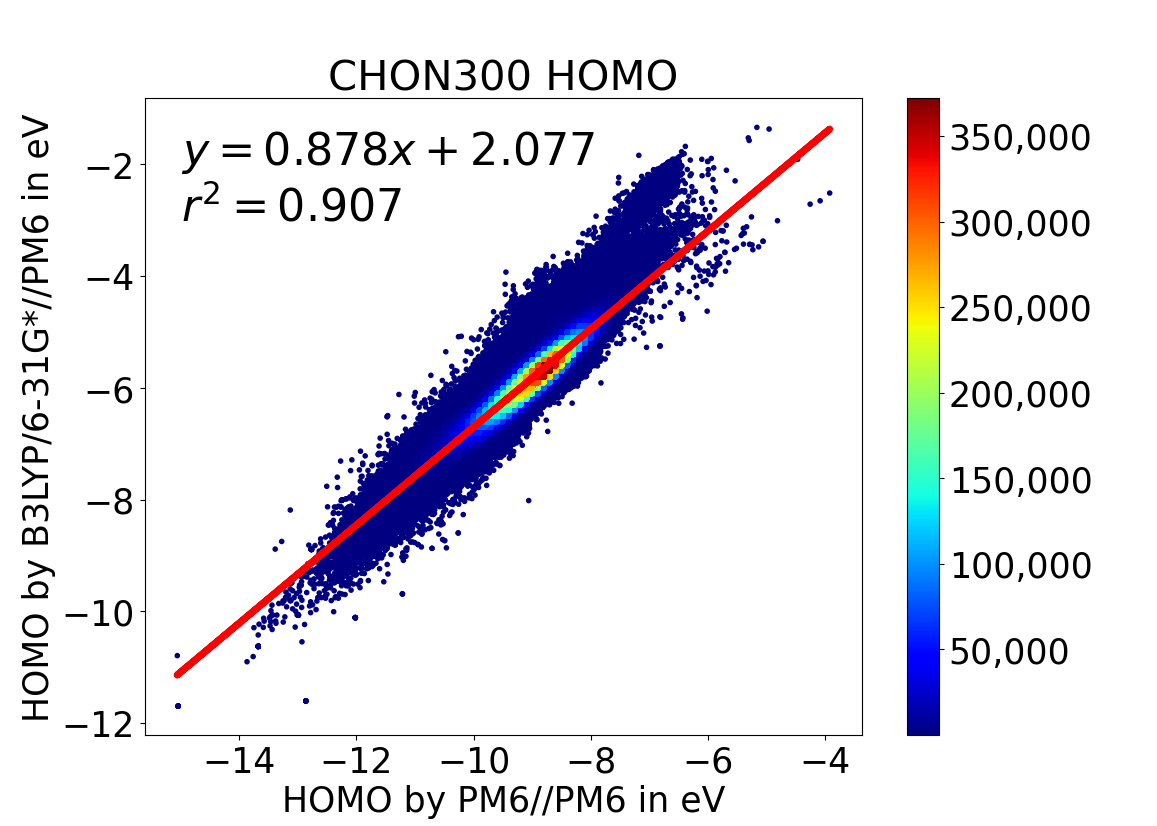
- HOMO-LUMO 갭 예측의 R² 값은 전체 데이터셋에서 0.803에서 CHON300nosalt 서브셋에서 0.892까지 변동하여 전자 구조 경향 예측에 강력한 능력을 보였다.
- 원소 다양성과 분자량 한계를 고려해 다섯 개의 하위 데이터셋을 생성하였으며, 이는 CHON300nosalt(R² = 0.892), CHON500nosalt(R² = 0.892), CHONPSFCl500nosalt(R² = 0.803)를 포함하여 타겟팅된 응용을 가능하게 하였다.
- 세 가지 형식으로 데이터셋을 제공: 전체 GAMESS 입력/출력 파일, 구조화된 JSON, PostgREST 인터페이스를 갖춘 완전히 쿼리 가능한 PostgreSQL 데이터베이스로, 복잡한 필터링 및 검색을 지원한다.
- 다이폴 모멘트, 총 에너지, 궤도 에너지 등의 분자 성질에 대한 고속 스크리닝이 가능하며, 예시 쿼리로는 갭 = 4.76 eV, 다이폴 = 2.38 D인 C3H4O4 분자가 반환된다.
- 저자들은 향후 머신러닝 모델의 정확도 향상을 위해 CREST 최적화 구형체와 고수준 DFT 방법(예: ωB97X-D/def2-SVP)을 통합하여 데이터셋을 확장할 계획이다.
더 나은 연구,지금 바로 시작하세요
논문 읽기부터 검토까지, 연구 시간을 획기적으로 줄여보세요.
카드 등록 없음 · 무료 플랜 제공
이 리뷰는 AI가 만들고, 인간 에디터가 검토했습니다.