
[논문 리뷰] Quantum machine learning for image classification
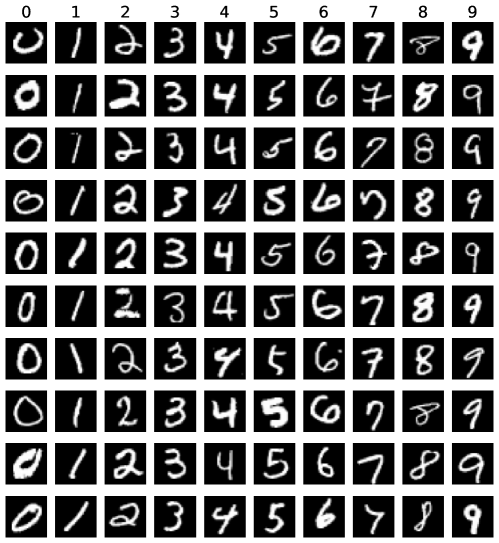
논문은 MNIST 숫자 분류를 위한 두 개의 하이브리드 양자-고전 신경망을 제시한다: HQNN-Parallel은 병렬 VQCs로 테스트 정확도 99.21%를 달성하고, HQNN-Quanv는 양자 quanvolutional 층으로 67%의 정확도를 달성하며, 두 모델 모두 고전적 대응 모델보다 학습 가능한 매개변수가 훨씬 적다.
Image classification, a pivotal task in multiple industries, faces computational challenges due to the burgeoning volume of visual data. This research addresses these challenges by introducing two quantum machine learning models that leverage the principles of quantum mechanics for effective computations. Our first model, a hybrid quantum neural network with parallel quantum circuits, enables the execution of computations even in the noisy intermediate-scale quantum era, where circuits with a large number of qubits are currently infeasible. This model demonstrated a record-breaking classification accuracy of 99.21% on the full MNIST dataset, surpassing the performance of known quantum-classical models, while having eight times fewer parameters than its classical counterpart. Also, the results of testing this hybrid model on a Medical MNIST (classification accuracy over 99%), and on CIFAR-10 (classification accuracy over 82%), can serve as evidence of the generalizability of the model and highlights the efficiency of quantum layers in distinguishing common features of input data. Our second model introduces a hybrid quantum neural network with a Quanvolutional layer, reducing image resolution via a convolution process. The model matches the performance of its classical counterpart, having four times fewer trainable parameters, and outperforms a classical model with equal weight parameters. These models represent advancements in quantum machine learning research and illuminate the path towards more accurate image classification systems.
연구 동기 및 목표
- 양자 효과를 활용해 이미지 분류를 고전적 딥러닝을 넘어 향상시키려는 동기를 제시한다.
- MNIST 숫자 인식을 위한 두 개의 하이브리드 양자-고전 모델(HQNN-Parallel 및 HQNN-Quanv)을 제안한다.
- 고전 CNN 기초 모델과 비교하여 성능과 매개변수 효율성을 평가한다.
제안 방법
- 특징을 추출하기 위한 고전적 컨볼루션 프런트엔드를 사용하고, 그 다음 고병렬 VQC를 갖춘 양자-밀집 블록(HQNN-Parallel)을 적용한다.
- 각도 임베딩을 통해 고전적 특징을 양자 상태로 인코딩하고, 매개변수 시프트 규칙을 사용하여 가변 매개변수를 학습하며; VQC 출력들을 연결해 최종 고전적 Dense 계층으로 전달한다.
- n×n 크기의 양자 필터가 각도 임베딩, 가변 게이트, 측정을 통해 컨볼루션 커널로 작동하는 quanvolutional 층(HQNN-Quanv)을 도입하여, Dense 층으로 전달되는 출력 채널을 생성한다.
- 교차 엔트로피 손실과 역전파를 사용해 고전 부분은 엔드-투-엔드로 모든 매개변수를 학습한다; 양자 그래디언트는 파인들(PennyLane)을 사용하고(매개변수 시프트 규칙), 고전 부분은 PyTorch를 사용한다.
- 동일한 구조의 매개변수 수가 더 적은 CNN과 HQNN-Parallel을 비교한다; HQNN-Quanv를 작은 커널과 큰 커널을 가진 CNN들과 매개변수 수를 같게 맞춰 비교한다.
실험 결과
연구 질문
- RQ1유사한 아키텍처와 매개변수 수를 가진 고전 CNN과 비교하여, 하이브리드 양자-고전 네트워크가 MNIST에서 이미지 분류 정확도를 향상시킬 수 있는가?
- RQ2병렬 VQCs와 quanvolutional 양자 층의 분류 성능 및 매개변수 효율성에 어떤 차이가 있는가?
- RQ3양자 회로 매개변수의 학습 가능성은 어느 정도이며, 엔드-투-엔드 학습이 이미지 데이터 학습을 향상시킬 수 있는가?
- RQ4제한된 데이터 세트 크기와 간소화된 아키텍처에서 양자 신경망의 성능은 어떠한가?
주요 결과
| 모델 | 훈련 손실 | 테스트 손실 | 테스트 정확도 | 매개변수 수 |
|---|---|---|---|---|
| CNN | 0.0205 | 0.0449 | 98.71 | 372234 |
| HQNN | 0.0204 | 0.0274 | 99.21 | 45194 |
- HQNN-Parallel은 MNIST에서 99.21%의 테스트 정확도를 달성하여 약 8배 더 많은 매개변수를 가진 CNN(98.71%)을 상회한다.
- HQNN-Parallel은 비교 대상 고전 CNN에 비해 매개변수를 8배 적게 사용한다.
- HQNN-Quanv은 67% ±1%의 테스트 정확도를 달성하며 CNN4(66% ±2%)와 비슷하지만, 첫 번째 층에서 학습 가능한 매개변수는 네 배 적다.
- 필터의 매개변수 수를 맞추었을 때 HQNN-Quanv은 CNN1(53% ±2%)보다 성능이 더 좋다.
- 두 모델의 모든 매개변수는 학습 가능하며, 이미지 분류를 위한 하이브리드 양자-고전 접근 방식의 가능성을 강조한다.
더 나은 연구,지금 바로 시작하세요
연구 설계부터 논문 작성까지, 연구 시간을 획기적으로 줄여보세요.
카드 등록 없음 · 무료 플랜 제공
이 리뷰는 AI가 만들고, 인간 에디터가 검토했습니다.