
[논문 리뷰] RealTime Health Monitoring Using 5G Networks: A Deep Learning-Based Architecture for Remote Patient Care
하이브리드 CNN-LSTM 딥러닝 모델과 5G URLLC를 융합한 실시간 원격 환자 모니터링 시스템을 제안하여 다수의 활력징후에 대해 초 이하의 지연과 높은 예측 정확도를 달성했으며, 1000명의 ICU 환자에서 평가되었다.
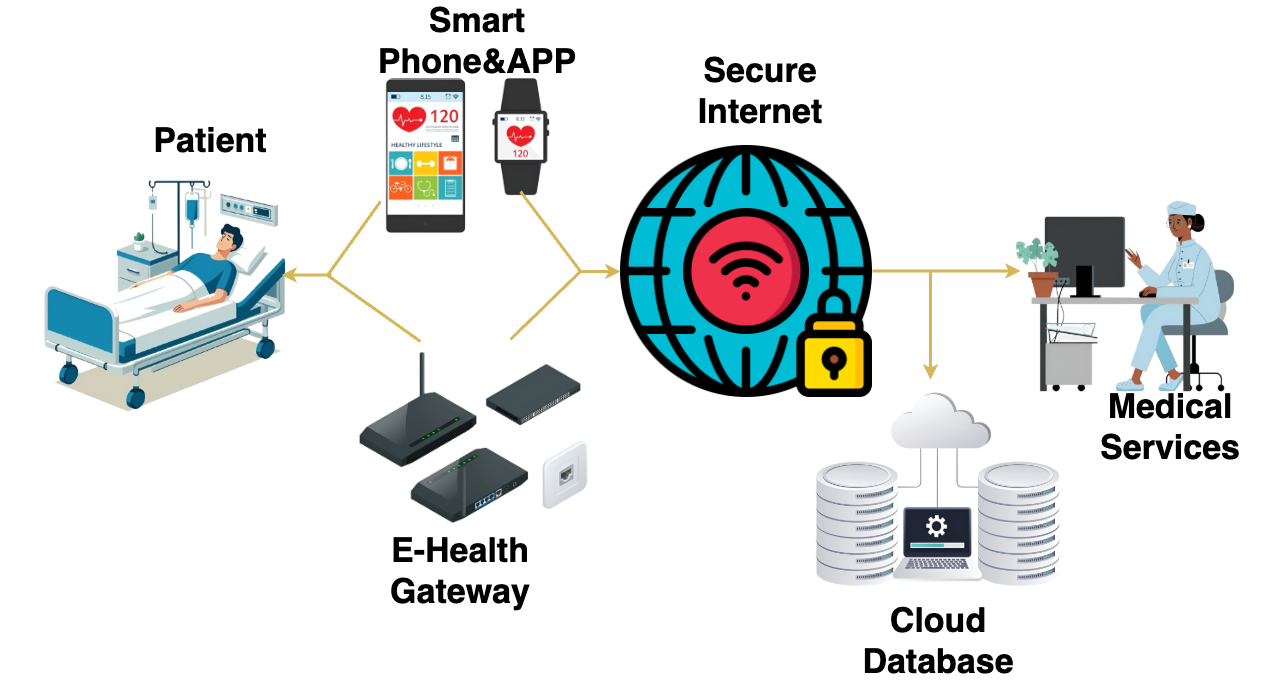
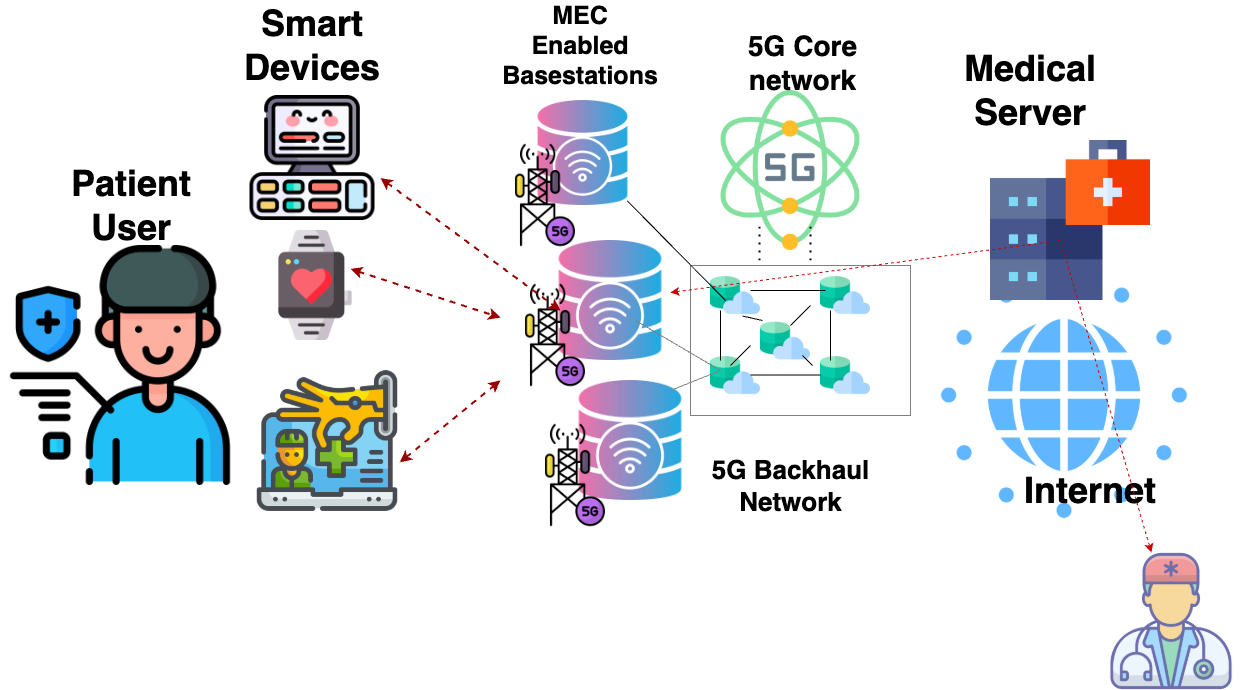
Remote patient monitoring is crucial in modern healthcare, but current systems struggle with real-time analysis and prediction of vital signs. This paper presents a novel architecture combining deep learning with 5G network capabilities to enable real-time vital sign monitoring and prediction. The proposed system utilizes a hybrid CNN-LSTM model optimized for edge deployment, paired with 5G Ultra-Reliable Low-Latency Communication (URLLC) for efficient data transmission. The architecture achieves end-to-end latency of 14.4ms while maintaining 96.5% prediction accuracy across multiple vital signs. Our system shows significant improvements over existing solutions, reducing latency by 47% and increasing prediction accuracy by 4.2% compared to current state-of-the-art systems. Performance evaluations conducted over three months with data from 1000 patients validate the system's reliability and scalability in clinical settings. The results demonstrate that integrating deep learning with 5G technology can effectively address the challenges of real-time patient monitoring, leading to early detection of deteriorating conditions and improved clinical outcomes. This research establishes a framework for reliable, real-time vital sign monitoring and prediction in digital healthcare.
연구 동기 및 목표
- 실시간 활력징도 분석 및 예측에서 기존 원격 환자 모니터링(RPM) 시스템의 한계 해결.
- 엣지 배치를 최적화한 딥러닝 프레임워크를 개발하여 다변량 활력징도를 실시간으로 처리.
- 전송 지연을 최소화하고 신뢰성을 높이기 위해 네트워크 슬라이싱과 5G URLLC 활용.
- 초당 단위의 지연과 높은 예측 정확도라는 엔드-투-엔드 실시간 성능을 활력징도 전반에 대해 구현.
- 대규모 임상 데이터로 접근법을 검증하고 임상 환경에서의 확장성 및 실용성을 평가.
제안 방법
- 다변량 활력징도 분석을 위한 주의 메커니즘이 포함된 하이브리드 CNN-LSTM 신경망 개발.
- 실시간 제약을 충족하기 위한 엣지 배치 및 모델 양자화를 구현.
- QoS와 초밀리초(또는 그 이하) 지연을 보장하기 위해 네트워크 슬라이싱과 5G URLLC를 통합.
- 신호 품질을 위한 슬라이딩 윈도우(500 샘플, 보폭 100)와 적응 필터링을 사용하는 데이터 처리 파이프라인 구현.
- 베이지안 최적화(Optuna)와 코사인 감소 학습률 스케줄을 사용한 모델 학습 및 최적화.
- 세 달간의 배포를 통한 1000명의 ICU 환자 데이터를 이용한 엔드-투-엔드 지연 및 정확도 평가.
실험 결과
연구 질문
- RQ1주의 메커니즘이 있는 CNN-LSTM 아키텍처가 다수의 활력징도에 대한 실시간 정확한 예측을 제공할 수 있는가?
- RQ2RPM에서 5G URLLC 및 엣지 컴퓨팅의 통합으로 지연을 얼마나 줄일 수 있는가?
- RQ31000명의 환자를 대상으로 한 임상 환경에서 제안 시스템의 엔드-투-엔드 성능(정확도 및 지연)은 어떠한가?
- RQ4정확도, 지연 및 자원 효율성 측면에서 제안 시스템이 기존 RPM 솔루션과 어떻게 비교되는가?
- RQ5실제 의료 환경에서 솔루션의 확장을 위해 필요한 배포 및 데이터 처리 전략은 무엇인가?
주요 결과
- 엔드-투-엔드 지연 14.4 ms를 달성하였고 각 단계에서의 5단계에서 10 ms 미만의 처리 및 피크 18.9 ms.
- 예측 MAE: 심박수 1.82%, 혈압 2.14%, 호흡수 1.95%.
- 전체 시스템 정확도: 중환자실 96.5%, 수술 후 95.8%, 일반병동 97.2%.
- 제안 시스템은 레이턴시와 정확도 측면에서 시스템 A–C를 능가하며, 다음 최적 시스템보다 47%의 지연 감소와 4.2%p의 정확도 상승.
- 자원 활용은 CPU 약 45%, GPU 약 38%, 메모리 약 52%, 네트워크 약 6.2 Mbps로 10 Mbps 할당 하에서 효율적 유지.
- 엔드-투-엔드 지연 분석은 초소형 네트워크 전송과 영향력 있는 엣지 처리의 여부를 확인.
더 나은 연구,지금 바로 시작하세요
연구 설계부터 논문 작성까지, 연구 시간을 획기적으로 줄여보세요.
카드 등록 없음 · 무료 플랜 제공
이 리뷰는 AI가 만들고, 인간 에디터가 검토했습니다.