
[논문 리뷰] Relaxing Hardware Requirements for Surface Code Circuits using Time-dynamics
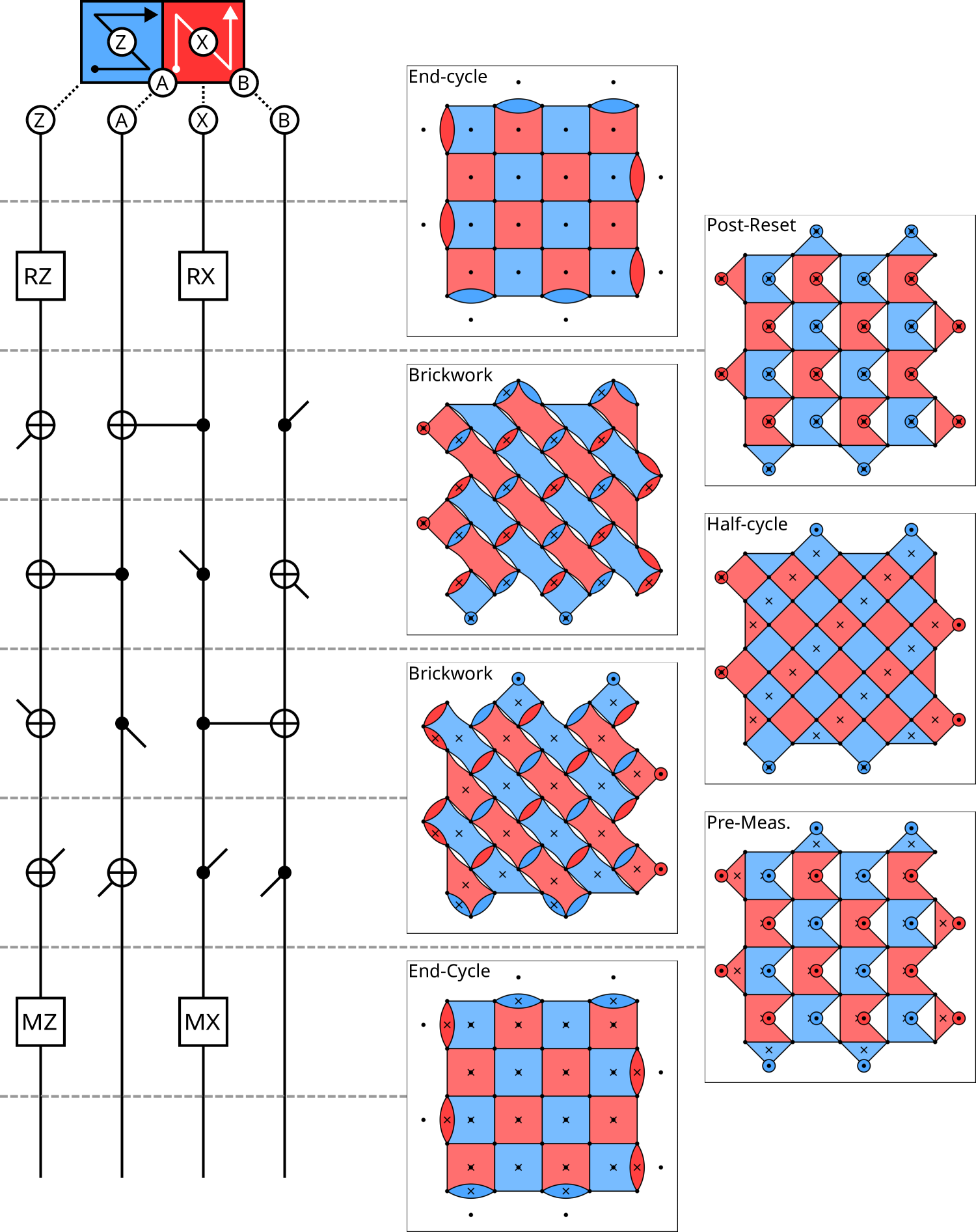
이 논문은 표면 코드 양자 오류 수정을 위한 시간에 따라 변화하는 회로 설계 방식을 제안하여 하드웨어 제약을 완화하면서도 논리 성능을 손상시키지 않는다. 안정자(stabilizers)를 시간에 따라 변화하는 '검출 영역(detecting regions)'으로 재해석함으로써, 각 큐비트당 세 개의 결합만을 사용하고 CNOT/CZ 대신 ISWAP 게이트를 사용하며 동적 패치 이동을 가능하게 하는 개선된 표면 코드 회로를 구축한다. 이 모든 과정에서 네 층의 얽힘 게이트 깊이와 표준 표면 코드의 25% 이내의 테라퀘이프(teraquop) 면적을 유지한다.
The typical time-independent view of quantum error correction (QEC) codes hides significant freedom in the decomposition into circuits that are executable on hardware. Using the concept of detecting regions, we design time-dynamic QEC circuits directly instead of designing static QEC codes to decompose into circuits. In particular, we improve on the standard circuit constructions for the surface code, presenting new circuits that can embed on a hexagonal grid instead of a square grid, that can use ISWAP gates instead of CNOT or CZ gates, that can exchange qubit data and measure roles, and that move logical patches around the physical qubit grid while executing. All these constructions use no additional entangling gate layers and display essentially the same logical performance, having teraquop footprints within 25% of the standard surface code circuit. We expect these circuits to be of great interest to quantum hardware engineers, because they achieve essentially the same logical performance as standard surface code circuits while relaxing demands on hardware.
연구 동기 및 목표
- 정적 양자 오류 수정(QEC) 코드와 물리적 양자 하드웨어의 시간에 따라 변화하는 현실 사이의 격차를 메우기 위해.
- 제한된 연결성, 비-native 게이트 세트(예: CNOT/CZ), 표면 코드 구현에서의 누출 민감성 등의 하드웨어 제약을 극복하기 위해.
- 정적 코드 구조보다 시간 역학을 우선시하는 QEC를 위한 회로 중심 프레임워크를 개발하여 더 유연하고 실용적인 하드웨어 통합을 가능하게 하기 위해.
- 직접적인 회로 설계를 통해 물리적 하드웨어 요구 조건을 크게 완화하면서도 논리 성능을 유지할 수 있음을 입증하기 위해.
제안 방법
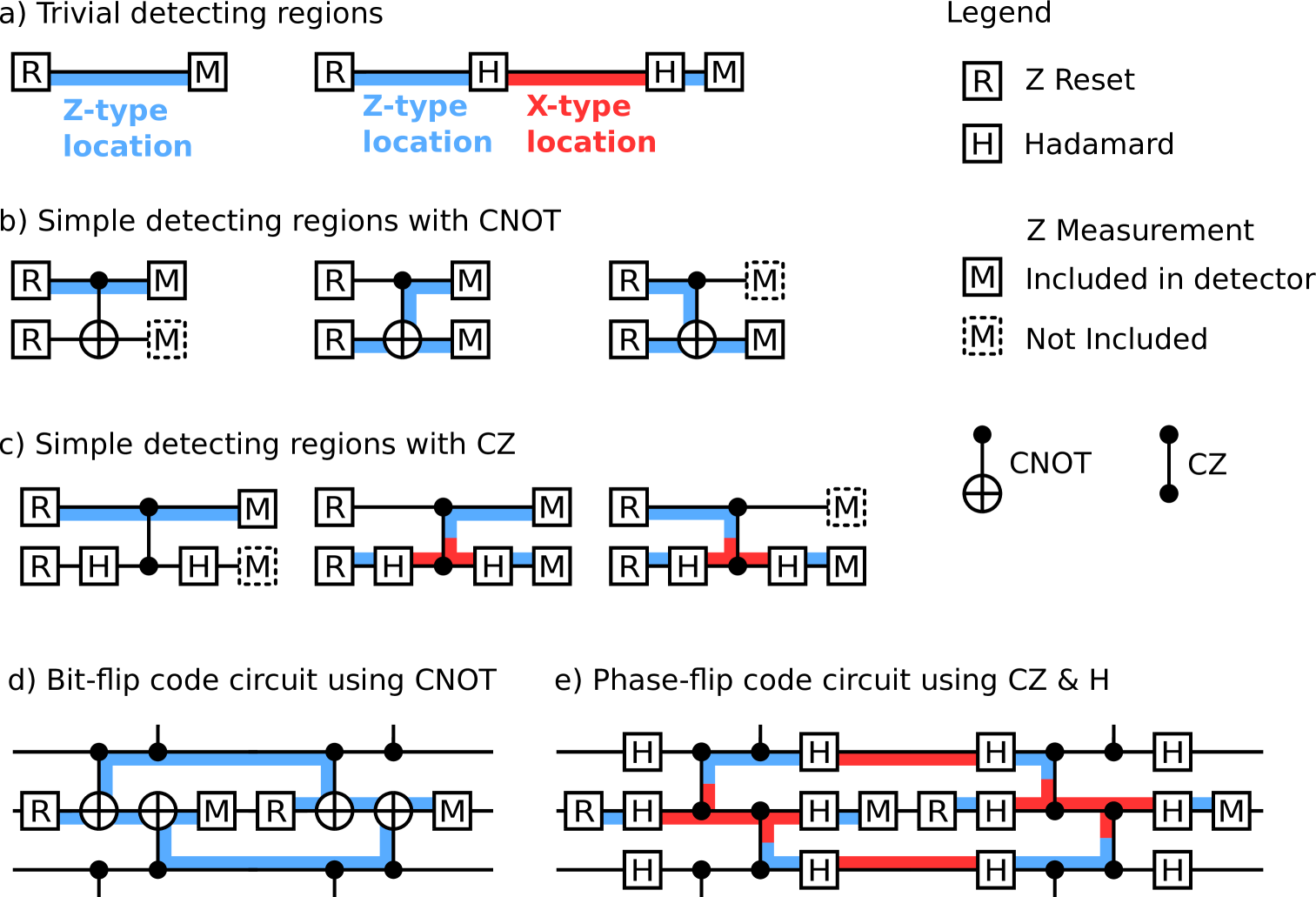
- 시간에 따라 변화하는 회로로 일반화된 안정자(stabilizers) 개념을 '검출 영역(detecting regions)'으로 도입하여 시간에 따른 오류 검출 분석을 가능하게 한다.
- 검출 영역의 진화를 설계 과정에서 명시적으로 모델링하고 조작할 수 있는 QEC의 회로 기반, 시공간적 그림을 사용한다.
- 검출 영역의 시간적 및 공간적 레이아웃을 재구성하여 새로운 표면 코드 회로를 설계함으로써, 육각형 격자와 같은 대체 물리적 레이아웃과 ISWAP와 같은 대체 게이트 세트를 가능하게 한다.
- 검출 영역 프레임워크를 적용하여 실행 중일 때 논리적 패치 이동과 큐비트 역할 전환(데이터 vs. 측정)을 재구성한다.
- Stim 및 고유의 시각화 라이브러리와 같은 소프트웨어 도구를 활용하여 현실적인 노이즈 모델 하에서 설계를 탐색하고 검증하며 성능을 평가한다.
- 모든 구성에서 네 층의 얽힘 게이트만 유지하여 회로 깊이와 논리 성능을 그대로 유지한다.
실험 결과
연구 질문
- RQ1정적 코드 구조가 아닌 시간 역학을 기반으로 양자 오류 수정 회로를 직접 설계할 수 있는가?
- RQ2연결성, 게이트 세트, 큐비트 역할 제약 등의 하드웨어 제약을 얼마나 완화할 수 있으며, 이로 인해 논리 성능이 떨어지지 않는가?
- RQ3검출 영역 개념을 어떻게 체계적으로 활용하여 표면 코드 회로 설계를 향상시킬 수 있는가?
- RQ4회로 깊이나 오류율을 증가시키지 않고도 동적 패치 이동과 큐비트 역할 전환을 표면 코드 회로에 구현할 수 있는가?
- RQ5시간에 따라 변화하는 회로 설계가 근접한 양자 하드웨어 아키텍처에 실질적인 영향을 미치는가?
주요 결과
- 제안된 회로는 표준 표면 코드의 25% 이내의 테라퀘이프 면적을 확보하여 거의 동일한 논리 성능을 나타낸다.
- 육각형 격자 구조는 큐비트당 필요한 결합 수를 네 개에서 세 개로 줄여, 낮은 연결성 하드웨어에서도 구현 가능하게 한다.
- ISWAP 기반 회로는 동일한 네 층의 얽힘 게이트 깊이와 논리 오류율을 유지하면서 CNOT/CZ 게이트를 대체한다.
- 이 모든 과정에서 실행 중에 논리적 패치를 물리적 큐비트 격자 상에서 동적으로 이동시킬 수 있으며, 새로운 하드웨어 활용 전략을 가능하게 한다.
- 모든 구성에서 완전한 오류 검출 능력을 유지하며, 효율적인 매칭 디코딩과도 호환되어 실용적인 고장 내성 보장한다.
- 모든 물리적 큐비트에 대한 측정을 포함시킴으로써 누출에 대한 복원력을 향상시키며, 추가적인 게이트 층을 도입하지 않는다.
더 나은 연구,지금 바로 시작하세요
논문 읽기부터 검토까지, 연구 시간을 획기적으로 줄여보세요.
카드 등록 없음 · 무료 플랜 제공
이 리뷰는 AI가 만들고, 인간 에디터가 검토했습니다.