
[논문 리뷰] Sharing to Learn and Learning to Share; Fitting Together Meta, Multi-Task, and Transfer Learning: A Meta Review
메타 리뷰로, 전이 학습, 메타 학습, 다중 작업 학습이 도메인 간에 어떻게 결합되는지 분석하고, 일반적 작업- 및 모델-에 구애받지 않는 통합 학습 네트워크를 제안합니다.
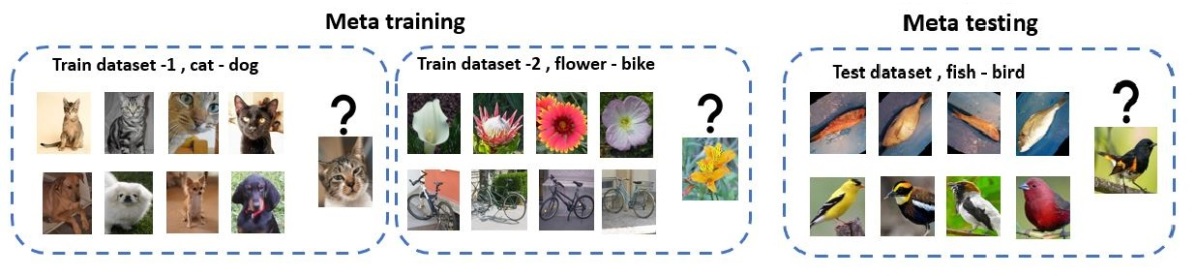
Integrating knowledge across different domains is an essential feature of human learning. Learning paradigms such as transfer learning, meta-learning, and multi-task learning reflect the human learning process by exploiting the prior knowledge for new tasks, encouraging faster learning and good generalization for new tasks. This article gives a detailed view of these learning paradigms and their comparative analysis. The weakness of one learning algorithm turns out to be a strength of another, and thus, merging them is a prevalent trait in the literature. Numerous research papers focus on each of these learning paradigms separately and provide a comprehensive overview of them. However, this article reviews research studies that combine (two of) these learning algorithms. This survey describes how these techniques are combined to solve problems in many different fields of research, including computer vision, natural language processing, hyper-spectral imaging, and many more, in a supervised setting only. Based on the knowledge accumulated from the literature, we hypothesize a generic task-agnostic and model-agnostic learning network – an ensemble of meta-learning, transfer learning, and multi-task learning, termed Multi-modal Multi-task Meta Transfer Learning. We also present some open research questions, limitations, and future research directions for this proposed network. The aim of this article is to spark interest among scholars in effectively merging existing learning algorithms with the intention of advancing research in this field. Instead of presenting experimental results, we invite readers to explore and contemplate techniques for merging algorithms while navigating through their limitations.
연구 동기 및 목표
- 전이 학습, 다중 작업 학습(MTL), 메타 학습이 정보를 공유하는 방식으로 학습을 개선하는 방법을 설명한다.
- 비전, NLP 및 기타 도메인에서 이 패러다임 중 두 가지 이상을 결합한 기존 연구를 조사한다.
- 이 패러다임들 간의 강점, 약점 및 일반적인 오해를 강조한다.
- 세 가지 패러다임을 통합하고 작업 및 모델에 구애받지 않는 일반적인 학습 네트워크를 제안하고 향후 연구 문제를 개괄한다.
제안 방법
- 전이 학습, 다중 작업 학습(MTL), 메타 학습의 정의와 차별화, 정보 공유 메커니즘과 목표를 설명한다.
- 메타-전이 학습, 다중 작업 메타 학습 및 관련 하이브리드를 포함하여 이 패러다임의 결합에 초점을 맞춘 문헌을 조사한다.
- 공유 구성 요소와 작업 특화 구성 요소의 아키텍처 및 학습 전략을 논의하고, 경성(하드) 파라미터 공유와 연성(소프트) 파라미터 공유를 비교한다.
- 세 가지 패러다임을 모두 통합하는 개념적 일반 네트워크를 제시하고 그 가능성, 한계 및 향후 연구 방향을 검토한다.
- 관계 표기법을 요약하고 비전, NLP 및 기타 분야의 예시를 통해 패러다임 간의 구조적 비교를 제공한다.
![Figure 1: Illustration of PAD-Net architecture proposed by [ 33 ] , with four primary tasks monocular depth estimation, surface normal estimation, edge detection, and semantic segmentation. Outputs are integrated to predict of two output tasks of depth estimation and scene parsing. Here, Loss 1 - Lo](https://ar5iv.labs.arxiv.org/html/2111.12146/assets/x1.jpg)
실험 결과
연구 질문
- RQ1전이 학습, 메타 학습, 다중 작업 학습의 정보 공유 및 목표 측면에서의 핵심 유사점과 차이점은 무엇인가?
- RQ2연구자들이 두 가지 또는 세 가지 패러다임을 어떻게 결합해 왔으며, 도메인 간에 어떤 실증적 패턴이 나타나는가?
- RQ3메타 학습, 전이 학습, 다중 작업 학습을 통합하고 작업-비종속적이며 모델-비종속적인 일반 학습 네트워크는 무엇이며, 그 열린 과제는 무엇인가?
- RQ4이 학습 패러다임의 앙상블 및 통합에 남아 있는 연구 문제와 한계는 무엇인가?
주요 결과
- 두 패러다임의 결합에 대한 폭넓은 관심이 있으며, 기사에서는 보완적 강점을 활용하는 통합 프레임워크를 옹호한다.
- 부정적 전이 및 부적절한 공유가 성능 저하를 초래할 수 있어, 균형 잡힌 공유 아키텍처 및 작업 관계 학습의 필요성을 강조한다.
- 다양한 도메인과 데이터 세트를 다루며, 작업 유형과 데이터 이질성이 지식 공유에 미치는 영향을 요약한다.
- 개념적 방향으로서의 일반적, 작업- 및 모델-에 구애받지 않는 네트워크—Multi-modal Multi-task Meta Transfer Learning—를 제시한다.
- MTL, 메타 학습, 전이 학습을 결합하는 앙상블 접근 방식의 열린 질문, 한계 및 향후 연구 방향을 식별한다.
더 나은 연구,지금 바로 시작하세요
연구 설계부터 논문 작성까지, 연구 시간을 획기적으로 줄여보세요.
카드 등록 없음 · 무료 플랜 제공
이 리뷰는 AI가 만들고, 인간 에디터가 검토했습니다.