
[논문 리뷰] Should ChatGPT and Bard Share Revenue with Their Data Providers? A New Business Model for the AI Era
이 논문은 ChatGPT 및 Bard와 같은 대규모 AI 모델이 프롬프트 기반 평가 체계에 따라 훈련 데이터 제공자와 수익을 공유하는 혁신적인 수익 분배 모델을 제안한다. 텍스트 분류 및 유사도 모델을 활용해 데이터 참여도를 측정함으로써, 공정하고 확장 가능한 수익 분배를 가능하게 하며, 적대적인 데이터 관계를 협업적이고 효용 중심의 AI 생태계로 전환한다.
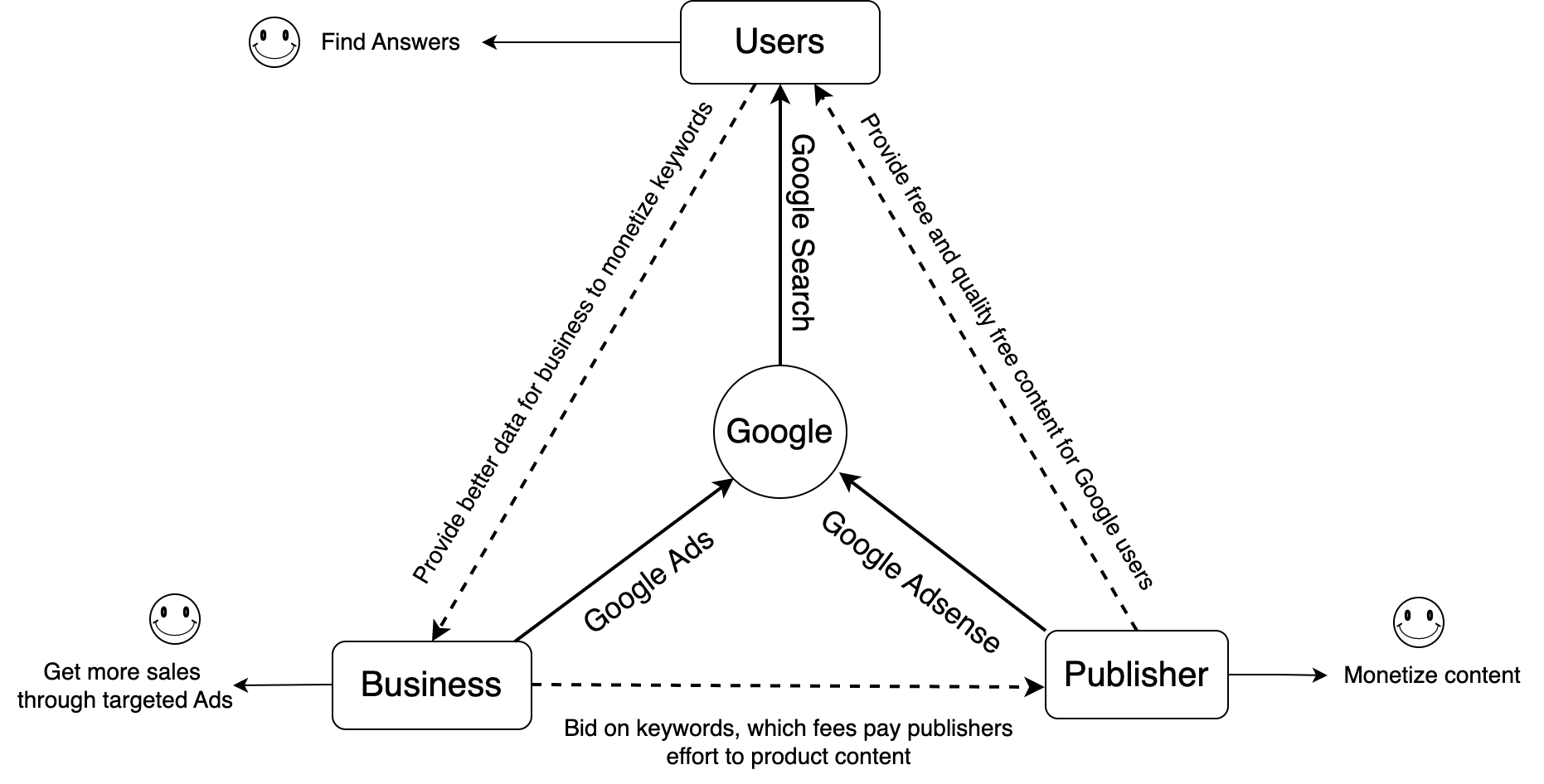
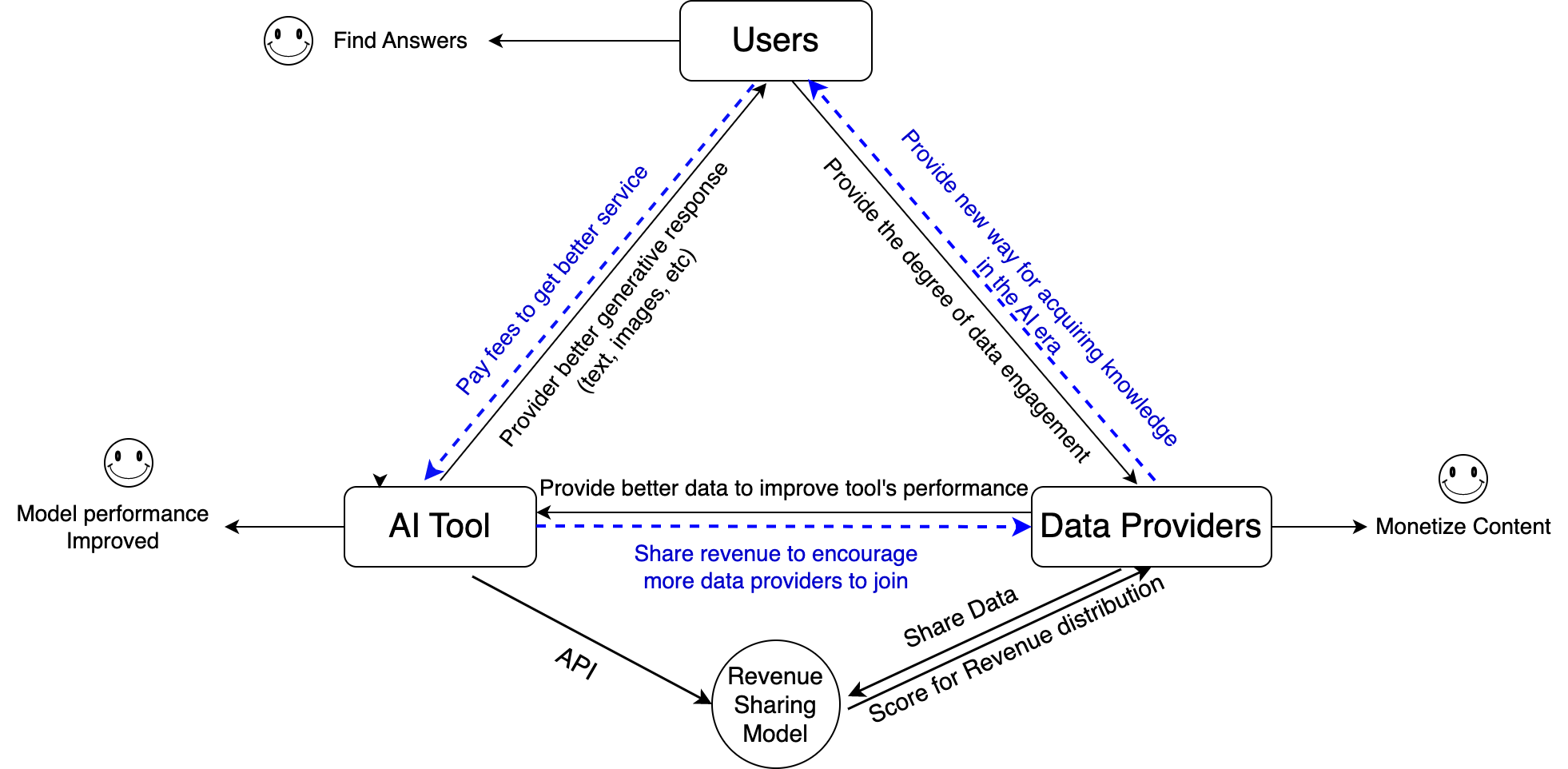
With various AI tools such as ChatGPT becoming increasingly popular, we are entering a true AI era. We can foresee that exceptional AI tools will soon reap considerable profits. A crucial question arise: should AI tools share revenue with their training data providers in additional to traditional stakeholders and shareholders? The answer is Yes. Large AI tools, such as large language models, always require more and better quality data to continuously improve, but current copyright laws limit their access to various types of data. Sharing revenue between AI tools and their data providers could transform the current hostile zero-sum game relationship between AI tools and a majority of copyrighted data owners into a collaborative and mutually beneficial one, which is necessary to facilitate the development of a virtuous cycle among AI tools, their users and data providers that drives forward AI technology and builds a healthy AI ecosystem. However, current revenue-sharing business models do not work for AI tools in the forthcoming AI era, since the most widely used metrics for website-based traffic and action, such as clicks, will be replaced by new metrics such as prompts and cost per prompt for generative AI tools. A completely new revenue-sharing business model, which must be almost independent of AI tools and be easily explained to data providers, needs to establish a prompt-based scoring system to measure data engagement of each data provider. This paper systematically discusses how to build such a scoring system for all data providers for AI tools based on classification and content similarity models, and outlines the requirements for AI tools or third parties to build it. Sharing revenue with data providers using such a scoring system would encourage more data owners to participate in the revenue-sharing program. This will be a utilitarian AI era where all parties benefit.
연구 동기 및 목표
- AI 훈련에서의 윤리적 및 경제적 불균형을 해결하기 위해 AI 도구가 데이터 제공자와 수익을 공유하도록 제안하는 것.
- 생성형 AI 환경에서 전통적인 클릭 수 같은 오래된 지표에 의존하는 기존 수익 분배 모델의 한계를 극복하는 것.
- 프롬프트 상호작용 기반으로 데이터 제공자의 참여도를 측정하는, 확장 가능하고 기술적으로 구현 가능하며 설명 가능한 평가 체계를 설계하는 것.
- 대규모 언어 모델을 넘어서 이미지 생성 및 헬스케어 AI와 같은 다른 AI 응용 분야로 모델을 확장하는 것.
- AI 개발자, 사용자, 데이터 제공자 간의 인cent라이브를 조율함으로써 혁신의 선순환을 촉진하는 것.
제안 방법
- 사용자 프롬프트/생성물과 각 제공자로부터의 훈련 데이터 간의 텍스트 유사도를 측정함으로써 데이터 참여도를 정량화하는 프롬프트 기반 평가 체계를 개발한다.
- 일반적 또는 모델 전용 텍스트 임bedding 기법을 사용해 문서를 벡터로 변환하여 유사도 계산을 수행한다.
- 공급자별로 데이터를 그룹화할 수 있도록 지도 학습 기반 분류 모델을 적용하여 스케일러블한 공급자 수준의 평가를 가능하게 한다.
- 여러 프롬프트에 걸친 평균 텍스트 유사도 점수를 계산하여 각 데이터 제공자별 누적 참여도 점수를 생성한다.
- 생산 규모의 AI 시스템을 지원하기 위해 최적화된 계산 복잡도를 갖춘 실시간 평가를 구현한다.
- 이미지 및 기타 데이터 유형과 같은 다중모odal AI에 대해, 모odal별 특화된 평가 체계를 개발하여 프레임워크를 확장한다.
실험 결과
연구 질문
- RQ1대규모 언어 모델에 대해 데이터 제공자의 기여를 고려한 공정하고 확장 가능한 수익 분배 메커니즘을 어떻게 설계할 수 있는가?
- RQ2생성형 AI 시스템에서 전통적인 웹 트래픽 지표를 대체하기 위해 데이터 참여도를 측정하기 위해 필요한 지표와 기술 구성 요소는 무엇인가?
- RQ3사용자 수준의 추적이나 중앙 집중식 데이터 저장소에 의존하지 않고 프롬프트 상호작용 기반으로 데이터 제공자를 어떻게 평가할 수 있는가?
- RQ4이와 같은 프레임워크는 텍스트 기반 이미지 생성기나 헬스케어 AI 시스템과 같은 비-LLM AI 도구에도 동일하게 적용될 수 있는가?
- RQ5이러한 시스템을 대규모로 구현할 때의 기술적 및 경제적 구현 제약 조건은 무엇인가?
주요 결과
- 텍스트 유사도 및 분류 모델을 활용한 프롬프트 기반 평가 체계는 생성형 AI 응용 분야에서 데이터 제공자의 참여도를 효과적으로 측정할 수 있다.
- 텍스트 임베딩의 사용은 훈련 데이터 출처가 완전히 공개되지 않은 경우에도 데이터 기여도를 정량화할 수 있도록 한다.
- 제안된 모델은 실시간 평가를 지원할 수 있으며, 이미지 및 의료 데이터를 포함한 다중모달 데이터로도 확장 가능하다.
- 이미지 기반 AI의 경우, 이미지 분류 및 유사도 모델을 활용해 유사한 체계를 구축할 수 있으며, 개별 예술 작품의 참여도 점수를 산정할 수 있다.
- 훈련 데이터셋에 아직 포함되지 않은 데이터 제공자에 대해서도 일시적인 평가가 가능해 수익 분배 프로그램에 조기에 참여할 수 있다.
- 이 모델은 기술적으로 구현 가능하며, 기존의 NLP 및 컴퓨터 비전 기법(예: Pile 및 LIOAN-5B 데이터셋)을 활용해 벤치마크할 수 있다.
더 나은 연구,지금 바로 시작하세요
논문 읽기부터 검토까지, 연구 시간을 획기적으로 줄여보세요.
카드 등록 없음 · 무료 플랜 제공
이 리뷰는 AI가 만들고, 인간 에디터가 검토했습니다.