
[논문 리뷰] Spatio-Temporal Graph Neural Networks for Predictive Learning in Urban Computing: A Survey
도시 컴퓨팅에서 예측 학습을 위한 Spatio-Temporal Graph Neural Networks (STGNNs)에 대한 포괄적 고찰로, 데이터 구성, 아키텍처, 도메인, 데이터셋 및 향후 방향을 다룹니다.
With recent advances in sensing technologies, a myriad of spatio-temporal data has been generated and recorded in smart cities. Forecasting the evolution patterns of spatio-temporal data is an important yet demanding aspect of urban computing, which can enhance intelligent management decisions in various fields, including transportation, environment, climate, public safety, healthcare, and others. Traditional statistical and deep learning methods struggle to capture complex correlations in urban spatio-temporal data. To this end, Spatio-Temporal Graph Neural Networks (STGNN) have been proposed, achieving great promise in recent years. STGNNs enable the extraction of complex spatio-temporal dependencies by integrating graph neural networks (GNNs) and various temporal learning methods. In this manuscript, we provide a comprehensive survey on recent progress on STGNN technologies for predictive learning in urban computing. Firstly, we provide a brief introduction to the construction methods of spatio-temporal graph data and the prevalent deep-learning architectures used in STGNNs. We then sort out the primary application domains and specific predictive learning tasks based on existing literature. Afterward, we scrutinize the design of STGNNs and their combination with some advanced technologies in recent years. Finally, we conclude the limitations of existing research and suggest potential directions for future work.
연구 동기 및 목표
- 광범위한 도시 시공간 데이터에 대한 예측 학습의 필요성을 제시하고 STGNNs를 해결책으로 검토한다.
- 도시 도메인 및 예측 작업별로 STGNN 응용 분야를 분류한다.
- 공간적, 시간적, 융합적 아키텍처 및 고급 기법과의 통합을 분석한다.
- 공개 데이터셋, 벤치마크, 한계 및 향후 연구 방향을 요약한다.
제안 방법
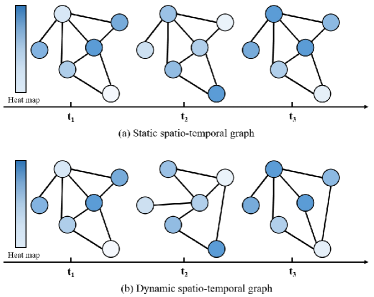
- 스파시오-템포럴 그래프가 어떻게 구성되는지 설명한다(토폴로지 기반, 거리 기반, 유사성 기반, 상호작용 기반).
- 기본 STGNN 아키텍처를 조사한다: 공간 GCNs, 스펙트럴 GCNs, GATs, 시간 학습을 위한 RNNs/TCNs/TSANs, 그리고 STGNN 데이터 흐름(DPM, STGLM, TPM).
- 공간 학습, 시간 학습, 그리고 스파시오-템포럴 융합으로 STGNN 설계를 분류하고, 향상된 하이브리드 기법을 추가한다.
- 다른 학습 프레임워크 및 신흥 기법과의 STGNN 통합을 논의한다.
실험 결과
연구 질문
- RQ1도시 컴퓨팅에서 시공간 그래프를 구성하는 주요 방법은 무엇인가?
- RQ2STGNN 아키텍처는 공간적, 시간적 및 시공간 상호 의존성을 포착하도록 어떻게 설계되는가?
- RQ3STGNN이 다루는 주요 도시 응용 도메인 및 예측 작업은 무엇인가?
- RQ4일반적으로 사용되는 데이터셋과 벤치마크는 무엇이며, 도시 예측 학습에서 STGNN의 주요 한계와 향후 방향은 무엇인가?
주요 결과
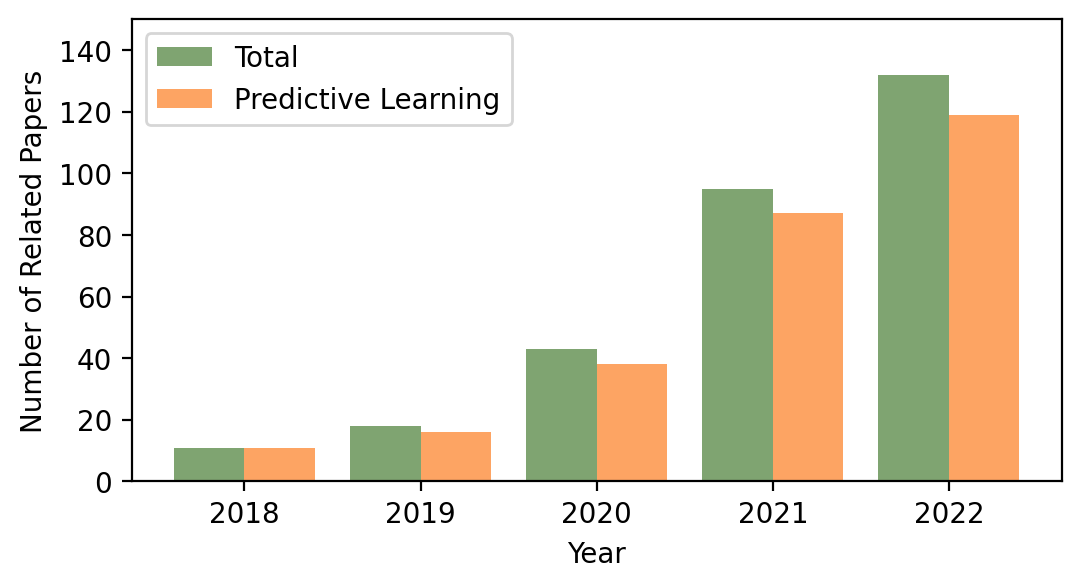
- STGNN은 교통, 환경, 공공 안전, 공중 보건 전반에 걸쳐 점차적으로 적용되며, 교통이 문헌의 60% 이상을 차지한다.
- 주요 시공간 그래프 구성 전략은 토폴로지 기반, 거리 기반, 유사성 기반, 상호작용 기반의 네 가지이며, 적응형 그래프 학습 접근법이 추가된다.
- STGNN은 일반적으로 데이터 처리 모듈, 시공간 그래프 학습 모듈, 그리고 작업 인식 예측 모듋을 따른다.
- STGNN의 기본 신경 아키텍처로는 공간 GCNs(스펙트럴 및 공간 변형)와 그래프 어텐션 네트워크가 있으며, RNNs, LSTMs/GRUs, TCNs, TSANs와 같은 시간 학습기와 결합된다.
- 본 고찰은 분류학적 체계를 제공하고, 데이터셋/벤치마크를 다루며, 도시 맥락에서의 예측 학습 과제와 향후 방향을 제시한다.
더 나은 연구,지금 바로 시작하세요
연구 설계부터 논문 작성까지, 연구 시간을 획기적으로 줄여보세요.
카드 등록 없음 · 무료 플랜 제공
이 리뷰는 AI가 만들고, 인간 에디터가 검토했습니다.