
[논문 리뷰] Status Report on the Chicago-Carnegie Hubble Program (CCHP): Measurement of the Hubble Constant Using the Hubble and James Webb Space Telescopes
본 논문은 Hubble 상수를 독립적으로 세 가지 JWST 기반 측정(TRGB, JAGB, Cepheids)과 NGC 4258으로 보정된 결합 H0를 보고하며, TRGB와 JAGB가 약 1% 수준에서 일치하는 반면 Cepheids는 2.5–4% 차이가 있음을 보인다.
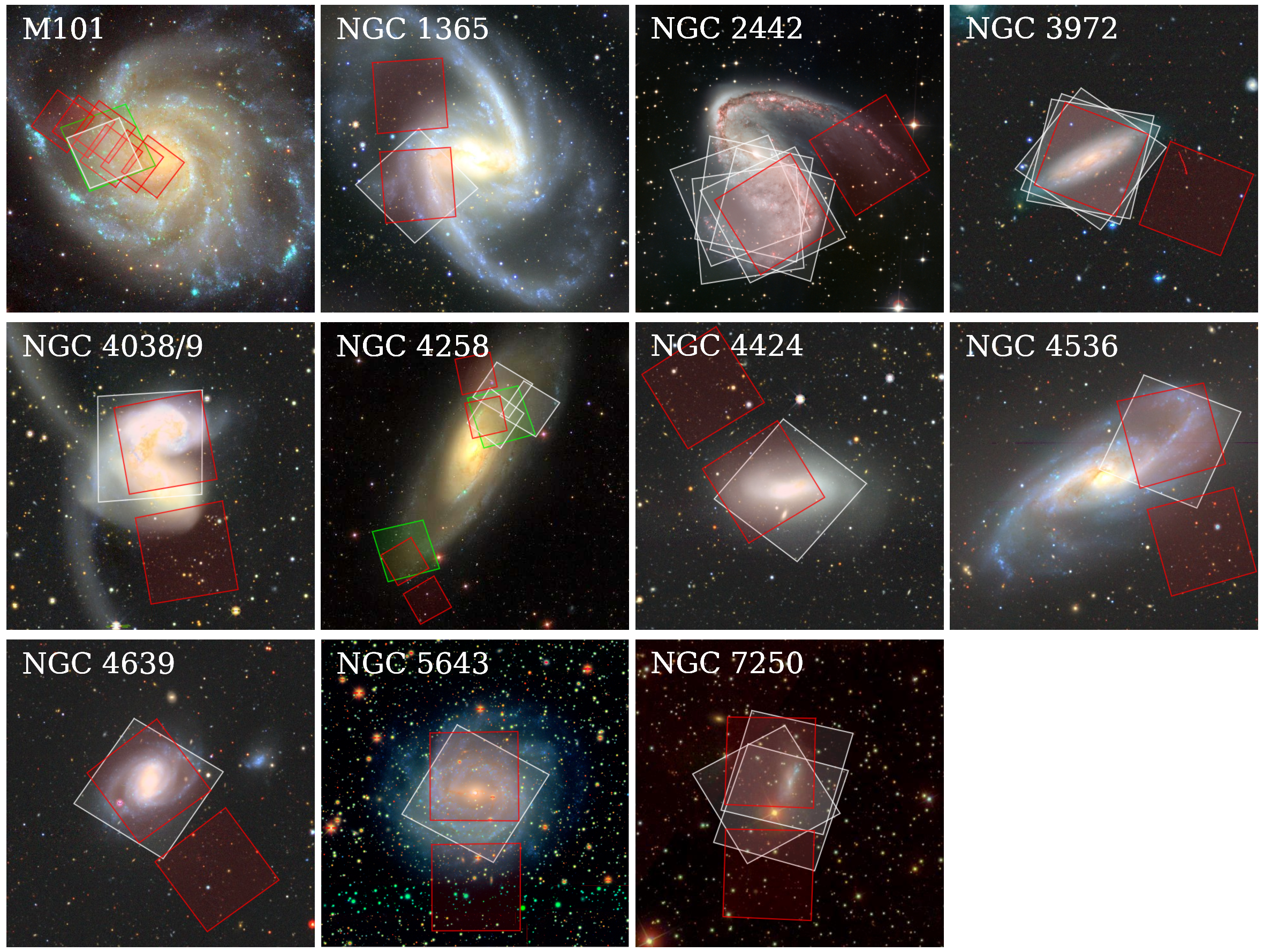
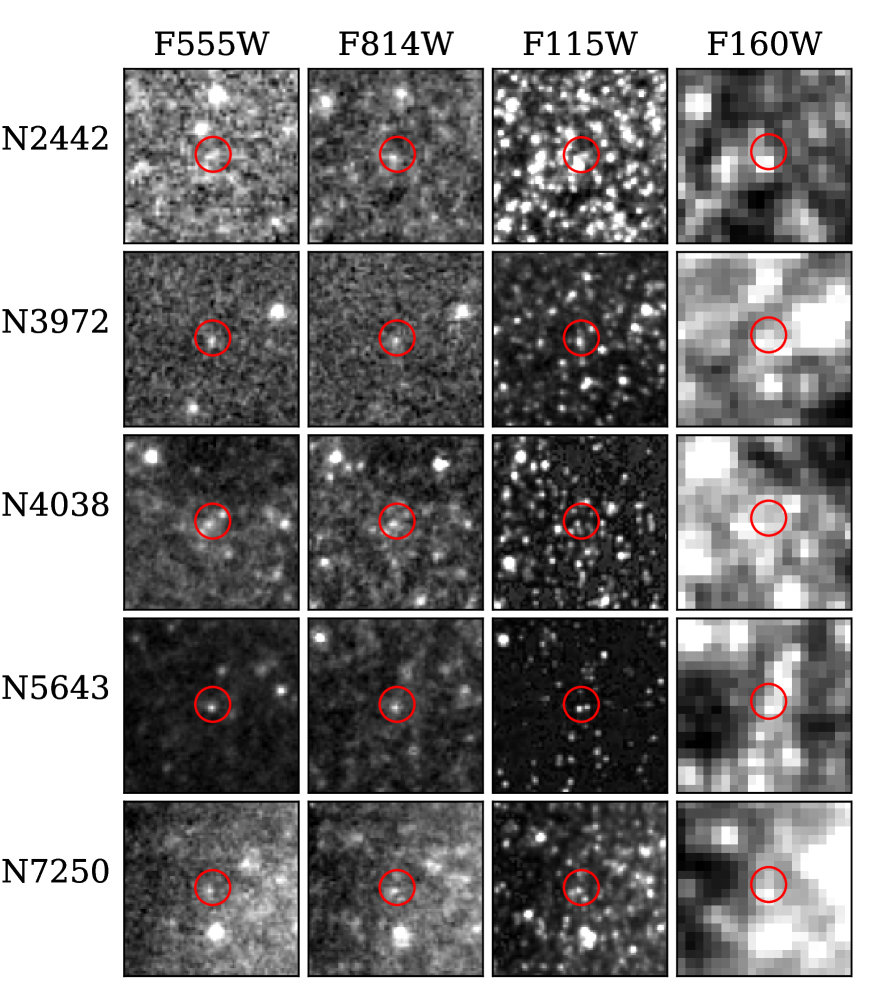
We present the latest results from the Chicago-Carnegie Hubble Program (\cchp) to measure the Hubble constant, using data from the James Webb Space Telescope (JWST). The overall program aims to calibrate three independent methods: (1) Tip of the Red Giant Branch (TRGB) stars, (2) JAGB (J-Region Asymptotic Giant Branch) stars, and (3) Cepheids. To date, our program includes 10 nearby galaxies, hosting 11 Type Ia supernovae (SNe Ia) suitable for measuring the Hubble constant ($H_0$). It also includes the galaxy NGC 4258, whose geometric distance provides the zero-point calibration. In this paper we discuss our results from the TRGB and JAGB methods. Our current best (highest precision) estimate is $H_0$ = 70.39 $\pm$ 1.22 (stat) $\pm$ 1.33 (sys) $\pm$ 0.70 ($σ_{SN}$), based on the TRGB method alone, with a total of 24 SN Ia calibrators from both HST and JWST data. Based on our new JWST data only, and tying into SNe Ia, we find values of $H_0$ = 68.81 $\pm$ 1.79 (stat) $\pm$ 1.32 (sys) for the TRGB, and $H_0$ = 67.80 $\pm$ 2.17 (stat) $\pm$ 1.64 (sys) km/s/Mpc for the JAGB method. The distances measured using the TRGB and the JAGB method agree, on average, at a level better than 1%, and with the SH0ES Cepheid distances at just over the 1% level. Our results are consistent with the current standard LambdaCDM model, without the need for the inclusion of additional new physics. Future JWST data will be required to increase the precision and accuracy of the local distance scale.
연구 동기 및 목표
- H0를 정제하기 위해 국지 거리 스케일의 체계적 불확실성을 줄인다.
- 초신성 Ia 보정을 위한 세 가지 독립적 거리 측정(TRGB, JAGB, Cepheids)을 제공한다.
- JWST의 더 높은 해상도와 적외선 능력을 활용해 천체 혼잡도와 소멸 효과를 최소화한다.
- NGC 4258을 기하학적 기준점으로 삼아 거리를 보정한다.
- 방법 간의 합의와 금속성(metallicity) 또는 먼지 효과의 가능성을 평가한다.
제안 방법
- 10개의 SN Ia 숙주 은하와 NGC 4258를 포함해 거리를 얻기 위해 JWST NIRCam 이미징(F115W, F356W, F444W)을 사용하여 TRGB, JAGB, Cepheids를 측정한다.
- 원천 추출을 위한 워밍스타트 방식의 통합 광측정 감소 프레임워크(DOLPHOT, DAOPHOT)를 적용한다.
- 특히 Cepheid 영역에서의 혼잡 보정을 정량화하기 위해 인공 항성 테스트를 수행하고, 소프트웨어 간의 처리 차이를 비교한다.
- JAGB와 TRGB의 거리 결정에서 편향을 방지하기 위한 블라인딩 절차를 채택하고, Cepheids는 부분적으로 블라인딩한다.
- NGC 4258의 메저 기반 기하학적 거리로 절대 거리 스케일을 보정하고 [O/H]를 통해 금속성 고려를 반영한다.
- SNe Ia 보정자에 연결한 후 평탄한 사전으로 세 거리 지표를 결합하여 H0를 추정한다.
실험 결과
연구 질문
- RQ1JWST 시대의 H0 값이 TRGB, JAGB, Cepheids에서 각각 독립적으로 무엇인가?
- RQ2세 가지 방법에서 JWST 기반 거리의 통계적 및 체계적 불확실성은 어떻게 비교되는가?
- RQ3TRGB와 JAGB의 일치는 어느 정도이며 Cepheid 기반 거리는 어떻게 다른가?
- RQ4JWST 데이터를 사용할 때 거리 지표에 대한 금속성 및 먼지 보정의 영향은 무엇인가?
- RQ5세 JWST 지표가 SN Ia 보정자에 평탄한 사전으로 연결될 때 얻어지는 H0는 무엇인가?
주요 결과
- H0(TRGB) = 69.85 ± 1.75 (stat) ± 1.54 (sys) km s−1 Mpc−1.
- H0(JAGB) = 67.96 ± 1.85 (stat) ± 1.90 (sys) km s−1 Mpc−1.
- H0(Cepheids) = 72.05 ± 1.86 (stat) ± 3.10 (sys) km s−1 Mpc−1.
- Combined H0 (three methods with flat prior) = 69.96 ± 1.05 (stat) ± 1.12 (sys) km s−1 Mpc−1.
- TRGB와 JAGB 거리는 약 1% 수준에서 일치하고; Cepheid 거리는 이들보다 약 2.5–4% 차이가 난다.
- JWST-전용 두 방법(TRGB/JAGB) 데이터의 H0 값 = 69.03 ± 1.75 총 (km s−1 Mpc−1).
- 결과는 새로운 물리학 없이 표준 ΛCDM 모델과 일치한다; 더 높은 정밀도를 위해 향후 JWST 데이터가 필요하다.
더 나은 연구,지금 바로 시작하세요
연구 설계부터 논문 작성까지, 연구 시간을 획기적으로 줄여보세요.
카드 등록 없음 · 무료 플랜 제공
이 리뷰는 AI가 만들고, 인간 에디터가 검토했습니다.