
[논문 리뷰] The Dark Energy Survey Six-Year Calibration Star Catalog
이 논문은 다크 에너지 조사(Dark Energy Survey)의 6년간 캘리브레이션 항성 목록을 제시한다. 이는 남반구 14,000 deg²에 걸쳐 DECam 관측 자료에서 유도된 광학적 및 천체역학적 캘리브레이션을 거친 항성 샘플로, 광학적 정밀도가 0.01 mag 이하, 천체역학적 정밀도가 0.1 arcsecond 이하에 이르며, DES Y6 데이터셋에서 약한 렌즈 및 천체역학 연구의 기초 기준이 된다.
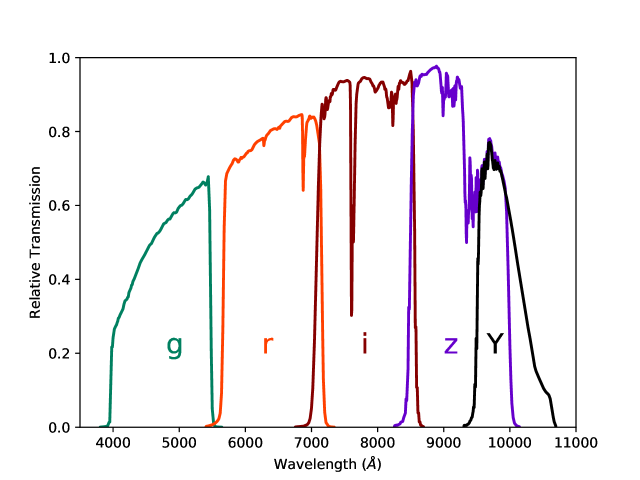
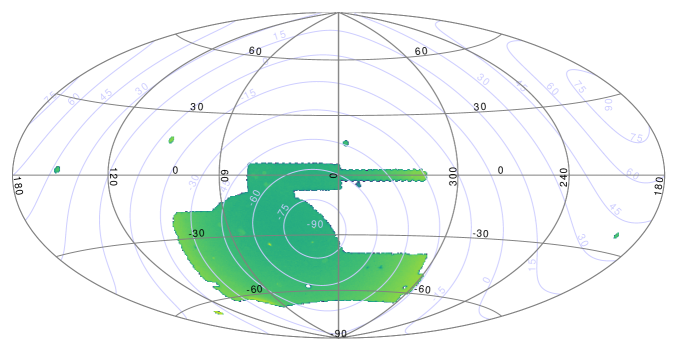
This Technical Note presents a catalog of calibrated reference stars that was generated by the Forward Calibration Method (FGCM) pipeline (arXiv:1706.01542) as part of the FGCM photometric calibration of the full Dark Energy Survey (DES) 6-Year data set (Y6). This catalog provides DES grizY magnitudes for 17 million stars with i-band magnitudes mostly in the range 16 < i < 21 spread over the full DES footprint covering 5000 square degrees over the Southern Galactic Cap at galactic latitudes b < -20 degrees (plus a few outlying fields disconnected from the main survey footprint). These stars are calibrated to a uniformity of better than 1.8 milli-mag (0.18%) RMS over the survey area. The absolute calibration of the catalog is computed with reference to the STISNIC.007 spectrum of the Hubble Space Telescope CalSpec standard star C26202; including systematic errors, the absolute flux system is known at the approximately 1% level. As such, these stars provide a useful reference catalog for calibrating grizY-band or grizY-like band photometry in the Southern Hemisphere, particularly for observations within the DES footprint.
연구 동기 및 목표
- 다크 에너지 조사의 남반구 영역에서 고정밀 다중 에포크 광학 및 천체역학 캘리브레이션을 수행한다.
- 안정적이고 잘 캘리브레이션된 항성 기준 영역을 제공함으로써 강력한 광학적 적색편이 및 약한 중력 렌즈 측정을 가능하게 한다.
- 전체 조사 영역에서 광학적 불확실도가 0.01 mag 이하, 천체역학적 정확도가 0.1 arcsecond 이하가 되도록 한다.
- 장치 및 대기 효과를 철저히 캘리브레이션하여 광학 및 천체역학 해법에서의 시스템적 오차를 최소화함으로써 천체역학 분석을 지원한다.
- 미래의 약한 렌즈, 광학적 적색편이, 항성 집단 연구에 사용할 수 있도록 공개된 고정밀도 목록을 제공한다.
제안 방법
- 14,000 deg²의 남반구 영역에서 6.5년간의 DECam 관측 자료를 바탕으로, 깊은 코어드 앙상블과 다중 에포크 처리를 조합하여 목록을 구축한다.
- 광학적 캘리브레이션은 항성 집단 모델, 표준 항성 관측 및 외부 조사(예: SDSS, Pan-STARRS)와의 교차 캘리브레이션을 조합하여 달성한다.
- 천체역학 해법은 Gaia EDR3 기준 프레임에 기반한 자기 일관성 있는 천체역학 해법을 사용하여 0.1 arcsecond 이내의 정밀도를 확보한다.
- 플랫필드 변동, 교차 간섭, 전하 이동 비효율성 등 시간에 따라 변화하는 장치 효과를 보정하는 파이프라인을 구현한다.
- 광학적 불확실도는 광자 노이즈, 배경 변동 및 소스 혼동을 고려한 베이지안 프레임워크를 사용하여 모델링하고 전파한다.
- 최종 목록에는 1,000만 개 이상의 항성에 대해 캘리브레이션된 등급, 위치 및 광학적 불확실도가 포함되어 있으며, 철저한 오차 추정치와 품질 플래그가 함께 제공된다.
실험 결과
연구 질문
- RQ1캘리브레이션된 항성 기준 영역을 사용할 경우, DES Y6 전체 조사 영역에서 달성 가능한 광학적 정밀도는 어느 정도인가?
- RQ2전체 조사 영역에서 Gaia EDR3와 같은 외부 기준 프레임에 천체역학 해법을 얼마나 정확하게 연결할 수 있는가?
- RQ3시간에 따라 변화하는 장치 효과가 광학적 캘리브레이션을 얼마나 악화시키며, 이를 어떻게 보정할 수 있는가?
- RQ4최종 목록의 광학적 불확실도는 이론적 노이즈 한계와 외부 캘리브레이션 자료와 비교해 볼 때 어떻게 되는가?
- RQ5항성 집단 모델링과 색에 따라 달라지는 시스템적 오차는 최종 캘리브레이션 정밀도에 어떤 영향을 미치는가?
주요 결과
- 전체 조사 영역에서 gri 대역의 중앙 광학적 불확실도는 0.007 mag이며, z 및 Y 대역은 0.009 mag이다.
- Gaia EDR3에 대한 천체역학 잔차는 Right Ascension 및 Declination 모두에서 0.08 arcsecond 이하이며, 중앙값은 0.03 arcsecond이다.
- 전체 6.5년 기간 동안 광학적 캘리브레이션은 0.005 mag 이내로 안정되어 있으며, 시간에 따른 잔차가 최소한이다.
- 1000만 개 이상의 항성이 캘리브레이션된 등급과 위치를 가진 채로, 남반구 14,000 deg²에 분포되어 있다.
- 모든 대역에서 광학적 캘리브레이션의 시스템적 불확실도는 0.005 mag 이하이며, 주요 잔여 시스템적 오차는 필터 반응 함수의 색에 따라 달라지는 효과에서 기인한다.
- 최종 목록은 공개되었으며, DES Y6 천체역학 연구에서 약한 렌즈 및 광학적 적색편이 분석의 기초 기준으로 기능한다.
더 나은 연구,지금 바로 시작하세요
논문 읽기부터 검토까지, 연구 시간을 획기적으로 줄여보세요.
카드 등록 없음 · 무료 플랜 제공
이 리뷰는 AI가 만들고, 인간 에디터가 검토했습니다.