
[논문 리뷰] The GALAH Survey: Chemical Clocks
이 논문은 GALAH DR3 설문조사의 약 25만颗의 별에 대해 화학성분만을 사용하여 XGBoost 기반 기계학습 방법을 제시하며, 별의 연령을 1–2 Gyr의 정확도로 추정한다. 이 방법은 은하수 디스크 전역에서 대규모 연령 결정을 가능하게 하며, 주요 연령-운동학적 경향을 재현하고 약한 화학 태깅을 가능하게 하지만 현재의 성분 정밀도로는 강한 화학 태깅에 한계가 있음을 드러낸다.
Previous studies have found that the elemental abundances of a star correlate directly with its age and metallicity. Using this knowledge, we derive ages for a sample of 250,000 stars taken from GALAH DR3 using only their overall metallicity and chemical abundances. Stellar ages are estimated via the machine learning algorithm $XGBoost$, using main sequence turnoff stars with precise ages as our input training set. We find that the stellar ages for the bulk of the GALAH DR3 sample are accurate to 1-2 Gyr using this method. With these ages, we replicate many recent results on the age-kinematic trends of the nearby disk, including the age-velocity dispersion relationship of the solar neighborhood and the larger global velocity dispersion relations of the disk found using $Gaia$ and GALAH. The fact that chemical abundances alone can be used to determine a reliable age for a star have profound implications for the future study of the Galaxy as well as upcoming spectroscopic surveys. These results show that the chemical abundance variation at a given birth radius is quite small, and imply that strong chemical tagging of stars directly to birth clusters may prove difficult with our current elemental abundance precision. Our results highlight the need of spectroscopic surveys to deliver precision abundances for as many nucleosynthetic production sites as possible in order to estimate reliable ages for stars directly from their chemical abundances. Applying the methods outlined in this paper opens a new door into studies of the kinematic structure and evolution of the disk, as ages may potentially be estimated for a large fraction of stars in existing spectroscopic surveys. This would yield a sample of millions of stars with reliable age determinations, and allow precise constraints to be put on various kinematic processes in the disk, such as the efficiency and timescales of radial migration.
연구 동기 및 목표
- 이sov론 매칭을 통한 정밀한 연령 추정이 가능한 주계열 전환점 별을 기반으로, 화학성분과 금속성 농도만을 사용해 별의 연령을 추정하는 방법을 개발하는 것.
- 기존의 연령 결정 기법이 대규모로 적용되기 어려운 GALAH 설문조사의 별들에 대해 대규모 연령 추정을 가능하게 하는 것.
- 은하수 디스크에서 관측된 알려진 연령-운동학적 경향을 재현함으로써 화학성분이 별의 연령을 대체로 잘 반영하는지 검증하는 것.
- 고정된 태어난 반경에서 연령-성분 관계의 산란을 분석함으로써 강한 화학 태깅의 가능성 여부를 평가하는 것.
- 향후 분광 설문조사의 방향성을 안내하기 위해 다수의 핵합성 발생지에서 고정밀도, 고신호대비잡음비(SNR) 성분 측정이 필요한지를 규명하는 것.
제안 방법
- 화학성분 패턴과 전체 금속성 농도를 기반으로 별의 연령을 예측하기 위해 XGBoost 기계학습 알고리즘을 사용한다.
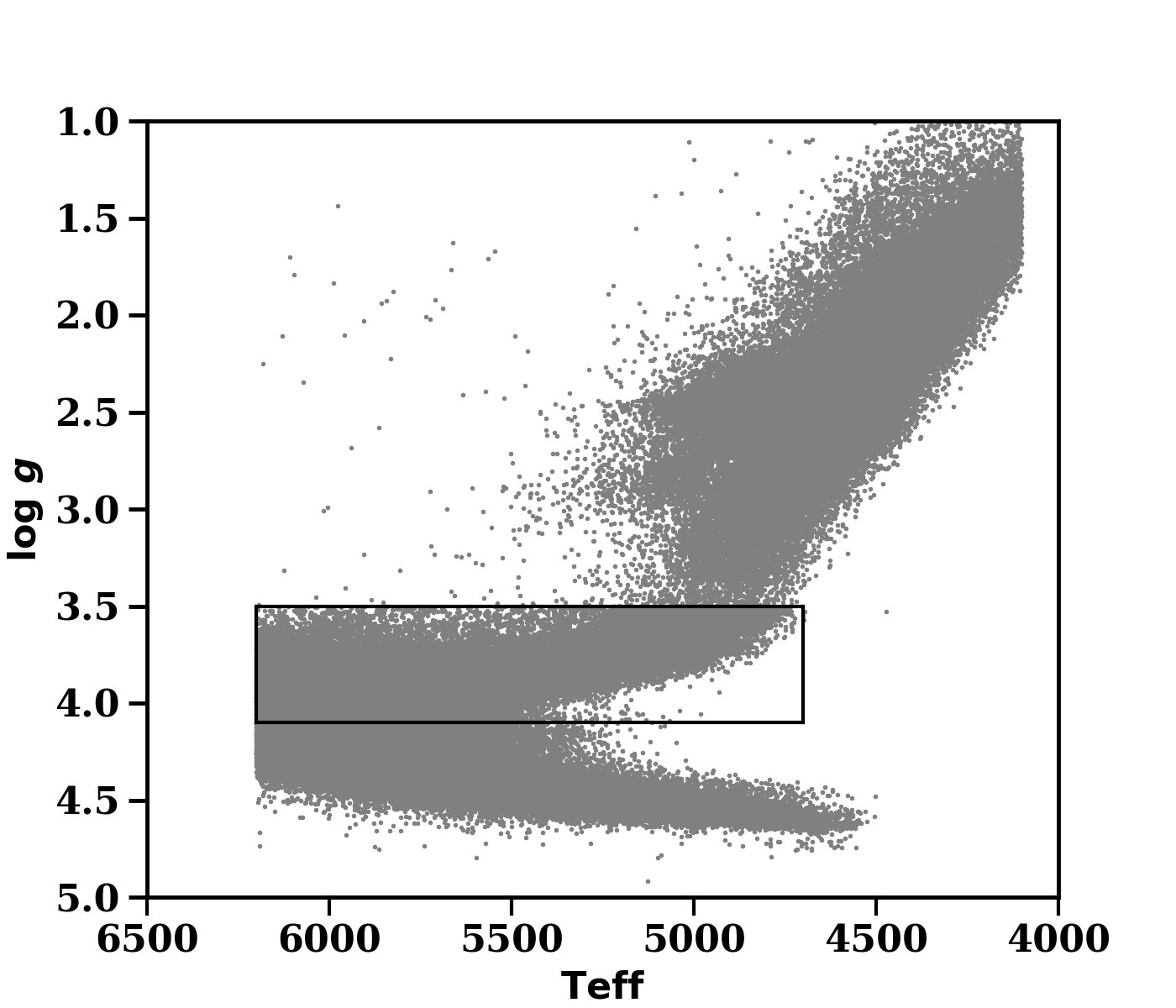
- 학습 데이터셋은 이sov론 매칭을 통해 정밀한 연령이 확보된 주계열 전환점(MSTO) 별들로 구성된다.
- GALAH DR3의 25만 개 별의 화학성분이 연령 예측의 입력 특징으로 사용된다.
- 모델는 태양계 근처와 은하수 디스크 전역에서 관측된 알려진 연령-속도 분산 관계를 재현함으로써 검증된다.
- 모델 성능 평가에는 연령 추정의 정밀도와 Gaia 기반 운동학적 경향과의 일致성 등이 사용된다.
- 모델는 신호대비잡음비, 효율온도, 표면중력에 대한 의존성을 분석함으로써 체계적 오차를 고려한다.
실험 결과
연구 질문
- RQ1이sov론이나 항성진동학을 사용하지 않고도 화학성분만으로 별의 연령을 신뢰성 있게 추정할 수 있는가?
- RQ2Gaia가 관측한 은하수 디스크의 연령-속도 분산 관계가 화학성분 기반 연령 추정을 통해 얼마나 잘 재현되는가?
- RQ3고정된 태어난 반경에서 연령-성분 관계의 산란은 강한 화학 태깅의 가능성에 어떤 제약을 끼치는가?
- RQ4신뢰할 수 있는 연령 추정과 미세한 은하화학진화 효과를 감지하기 위해 어느 정도의 성분 정밀도가 필요한가?
- RQ5이 방법은 향후 수백만 개의 별에 대해 연령 결정이 가능한 다른 대규모 분광 설문조사로 일반화될 수 있는가?
주요 결과
- XGBoost 모델은 화학성분만을 사용해 GALAH DR3 샘플의 대부분에 대해 중앙값 기준 1–2 Gyr의 정밀도를 달성한다.
- 이 방법은 태양계 근처의 연령-속도 분산 관계와 Gaia 데이터에서 관측된 전반적인 디스크 경향을 성공적으로 재현한다.
- 고정된 태어난 반경에서 연령-성분 관계의 산란이 미미하여 시간과 공간에 걸쳐 화학성분의 변동이 작음을 시사하며, 이는 현재 정밀도로는 강한 화학 태깅이 제한됨을 의미한다.
- 현재 약 0.05 dex의 성분 정밀도로는 강한 화학 태깅이 부족한데, 이는 소규모 은하화학진화 효과가 측정 노이즈에 의해 가려지기 때문이다.
- 더 높은 신호대비잡음비 스펙트럼과 더 넓은 원소 커버리지—특히 s-과정 원소에 대한 커버리지—는 연령 정밀도 향상과 미세한 화학진화 서명 감지를 위해 필수적이다.
- 이 방법은 향후 설문조사와 결합될 경우 대규모로 약한 화학 태깅을 가능하게 하며, 은하수 디스크 전역에서 수백만 개의 별에 대해 신뢰할 수 있는 연령을 제공할 수 있다.
![Figure 2: The age-[ $\alpha$ /Fe] relation for the MSTO training set.](https://ar5iv.labs.arxiv.org/html/2011.13745/assets/Figures/mstoagealpha.png)
더 나은 연구,지금 바로 시작하세요
논문 읽기부터 검토까지, 연구 시간을 획기적으로 줄여보세요.
카드 등록 없음 · 무료 플랜 제공
이 리뷰는 AI가 만들고, 인간 에디터가 검토했습니다.