
[논문 리뷰] Toward Robust Corrections for Stellar Contamination in JWST Exoplanet Transmission Spectra
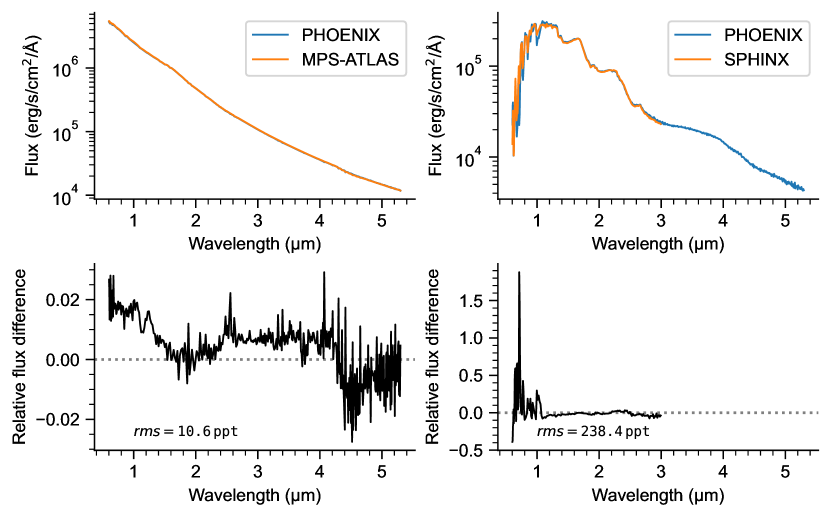
이 논문은 JWST exoplanet 투과 스펙트럼을 오염시키는 광원 표면 이질성(예: spots, faculae)을 보정하기 위한 별 모델의 신뢰성을 조사한다. 복잡한 표면 구조를 가진 별의 경우 모델 간 차이가 노이즈 예산의 주요 기여 요소임을 발견하였지만, 고정밀도 모델을 사용할 경우 별 오염 기여도가 광자 노이즈 이하로 감소함을 확인하였다. 이는 데이터 기반 별 모델링 및 경험적 성분 추론 기법을 통해 강력한 대기 특성 분석을 가능하게 한다고 주장한다.
Transmission spectroscopy is still the preferred characterization technique for exoplanet atmospheres, although it presents unique challenges that translate into characterization bottlenecks when robust mitigation strategies are missing. Stellar contamination is one such challenge that can overpower the planetary signal by up to an order of magnitude, and thus not accounting for it can lead to significant biases in the derived atmospheric properties. Yet this accounting may not be straightforward, as important discrepancies exist between state-of-the-art stellar models and measured spectra and between models themselves. Here we explore the extent to which stellar models can be used to reliably correct for stellar contamination and yield a planet's uncontaminated transmission spectrum. We find that discrepancies between stellar models can significantly contribute to the noise budget of JWST transmission spectra of planets around stars with heterogeneous photospheres, the true number of unique photospheric spectral components and their properties can only be accurately retrieved when the stellar models have sufficient fidelity, and under such optimistic circumstances the contribution of stellar contamination to the noise budget of a transmission spectrum is considerably below that of the photon noise for the standard transit observation setup. Therefore, we advocate for further development of model spectra of stars and their active regions in a data-driven manner, empirical approaches for deriving spectra of photospheric components using the observatories with which the atmospheric explorations are carried out, and analysis techniques accounting for multimodal posterior distributions for photospheric parameters of interest, which will be increasingly revealed by precise JWST measurements.
연구 동기 및 목표
- JWST 투과 스펙트럼에서 별 오염의 도전 과제를 다루며, 이는 대기 추론에 최대 한 계단 정도의 편향을 유발할 수 있다.
- 현재 별 모델이 표면 성분(예: spots, faculae)을 신뢰성 있게 복원하여 오염을 보정할 수 있는지 조사한다.
- 모델 부정확성 또는 데이터 품질이 투과 스펙트럼에서 오염 보정 정밀도에 제한을 둔다는지 평가한다.
- 이론적 모델에 의존하지 않는 경험적 데이터 기반 접근 방식이 표면 성분을 독립적으로 유도할 잠재력을 탐색한다.
- 별 오염이 전체 노이즈 예산에서 광자 노이즈 이하로 떨어지는 조건을 규명한다.
제안 방법
- 이질적인 표면를 가진 별(예: K0 및 M6 스펙트르 유형)의 관측을 시뮬레이션하기 위해 합성 비전행 JWST 스펙트럼을 사용한다.
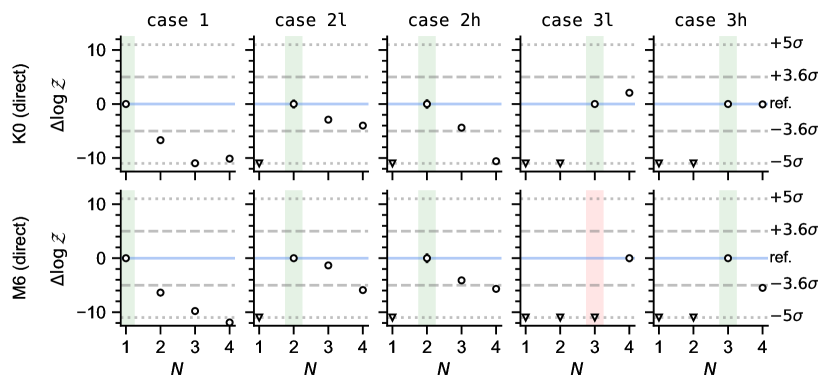
- 직접 추론 기법을 적용하여 시뮬레이션된 비전행 스펙트럼에서 표면 성분 온도 및 점유율을 추론한다.
- 추론된 성분 특성과 진짜 입력 값 간의 비교를 통해 편향과 불확실성을 정량화한다.
- PHOENIX 및 SPHINX 격자망을 사용하여 다양한 별 유형에서 온도 변화에 따른 모델 스펙트럼 민감도를 평가한다.
- 최신이고 더 현실적인 모델을 포함한 여러 별 모델 격자 간 결과 비교를 통해 모델 정밀도의 영향을 평가한다.
- 비전행 대비 전행 관측 시간 비율에 따라 오염 노이즈가 광자 노이즈 대비 어떻게 변화하는지 조사한다.
실험 결과
연구 질문
- RQ1이질적인 표면를 가진 별 주위의 JWST 투과 스펙트럼에서 별 모델 간 차이가 노이즈 예산의 주요 기여 요소가 되는 정도는 어느 정도인가?
- RQ2고정밀도 별 모델을 사용할 경우, 표면 성분 특성(온도, 점유율)을 충분히 정확하게 복원하여 오염 기여도를 광자 노이즈 이하로 낮출 수 있는가?
- RQ3냉각된(M6) 별과 따뜻한(K0) 별 간에 스펙트럼가 온도 변화에 대한 민감도는 어떻게 다를지, 그리고 이는 성분 탐지에 어떤 영향을 미치는가?
- RQ4고신호 대비 노이즈 비율의 비전행 데이터가 있음에도 불구하고, 모델 부정확성이 잘못된 보정을 유도하는 상황는 언제 발생하는가?
- RQ5경험적이고 모델에 의존하지 않는 표면 성분 유도 방법이 현재의 모델 기반 접근 방식을 초월해 오염 보정 정확도를 향상시킬 수 있는가?
주요 결과
- 복잡한 표면를 가진 별, 특히 더 차가우며 활동성이 높은 M6 퇴화성 별의 경우, 별 모델 간 차이가 노이즈 예산의 주요 기여 요소이다.
- K0 유형 별의 경우, 고신호 대비 노이즈 비율의 비전행 스펙트럼을 사용하더라도 모델 부정확성이 편향된 보정을 유도할 수 있다.
- K0 별의 스펙트럼가 온도 변화에 대한 민감도는 2500 K 모델의 약 20% 수준으로, 더 차가운 M6 별보다 현저히 낮아 성분 탐지가 더 어렵다.
- 고정밀도 모델을 사용할 경우, 표준 전행 관측 설정에서 별 오염이 노이즈 예산에 기여하는 정도가 광자 노이즈 이하로 감소한다.
- 1차원 모델이 잘 포착하지 못하는 자석에 의해 유도된 특징(예: faculae)은 스펙트럼 피팅의 과제를 증가시키지만, 이는 이질성 탐지 가능성까지 높인다.
- JWST 데이터에서 경험적으로 표면 성분을 추론하는 접근 방식은 모델 부정확성을 피하고 보정의 강건성을 향상시킬 수 있으며, 특히 활동성이 높은 별의 경우 유용하다.
더 나은 연구,지금 바로 시작하세요
논문 읽기부터 검토까지, 연구 시간을 획기적으로 줄여보세요.
카드 등록 없음 · 무료 플랜 제공
이 리뷰는 AI가 만들고, 인간 에디터가 검토했습니다.