
[Paper Review] A Comprehensive Survey on Affective Computing; Challenges, Trends, Applications, and Future Directions
This comprehensive survey synthesizes state-of-the-art methods in affective computing using machine learning (ML) and mixed reality (XR), focusing on multimodal emotion recognition across textual, audio, visual, and physiological data. It identifies key challenges such as data scarcity, labeling inconsistency, and model interpretability, and proposes future directions including multimodal databases, zero-shot learning, and personalized affective models for intelligent human-computer interaction.
As the name suggests, affective computing aims to recognize human emotions, sentiments, and feelings. There is a wide range of fields that study affective computing, including languages, sociology, psychology, computer science, and physiology. However, no research has ever been done to determine how machine learning (ML) and mixed reality (XR) interact together. This paper discusses the significance of affective computing, as well as its ideas, conceptions, methods, and outcomes. By using approaches of ML and XR, we survey and discuss recent methodologies in affective computing. We survey the state-of-the-art approaches along with current affective data resources. Further, we discuss various applications where affective computing has a significant impact, which will aid future scholars in gaining a better understanding of its significance and practical relevance.
Motivation & Objective
- To provide a holistic review of affective computing methodologies integrating machine learning and mixed reality (XR) technologies.
- To identify and analyze key challenges in emotion recognition, including data scarcity, labeling inconsistency, and model interpretability.
- To survey state-of-the-art datasets, models, and evaluation techniques across unimodal and multimodal affective computing.
- To outline future research directions, including zero-shot learning, personalized emotion modeling, and robust fusion strategies.
- To support the development of emotionally intelligent systems by synthesizing current advances and open problems.
Proposed method
- Systematic survey of affective computing research using machine learning and mixed reality (XR) techniques.
- Categorization of affective computing methods into visual, audio, textual, and physiological emotion recognition (VER, AER/SER, PER).
- Analysis of multimodal fusion strategies, including deep learning and statistical methods, for improved emotion recognition.
- Evaluation of benchmark databases such as RAF-PhD, AffectNet, CREMA-D, and IEMOCAP for training and testing affective models.
- Application of long short-term memory (LSTM) networks in dual-channel architectures to model audio-visual emotional signals.
- Use of frameworks like the Frame of Reference Intermodal Attention for emotion recognition and regulation modeling.
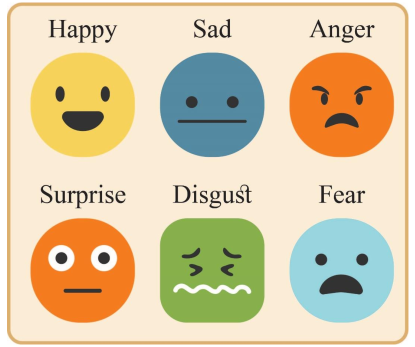
Experimental results
Research questions
- RQ1How can machine learning and mixed reality be effectively integrated to improve affective computing systems?
- RQ2What are the current limitations in affective computing datasets, and how can they be addressed through new data collection and labeling strategies?
- RQ3How can multimodal fusion techniques enhance the accuracy and robustness of emotion recognition in real-world applications?
- RQ4What are the key challenges in achieving interpretable and generalizable emotion recognition models?
- RQ5How can personalized and adaptive emotion recognition models be developed to account for individual differences and dynamic emotional states?
Key findings
- Multimodal affective computing systems using deep learning and fusion techniques achieve higher accuracy than unimodal approaches, particularly in complex emotional states.
- Existing datasets such as AffectNet and RAF-PhD are widely used but suffer from limited diversity and labeling inconsistencies across cultures and individuals.
- LSTM-based dual-channel models effectively process audio and visual emotional signals, improving performance in music and facial emotion recognition tasks.
- The lack of standardized emotion labeling schemes hinders cross-study comparisons and model generalizability across diverse populations.
- Black-box nature of deep neural networks limits trust and fine-tuning, highlighting the need for more interpretable and robust machine learning models in affective computing.
- Future research should prioritize zero-shot and self-supervised learning to improve model stability in low-resource or biased data scenarios.
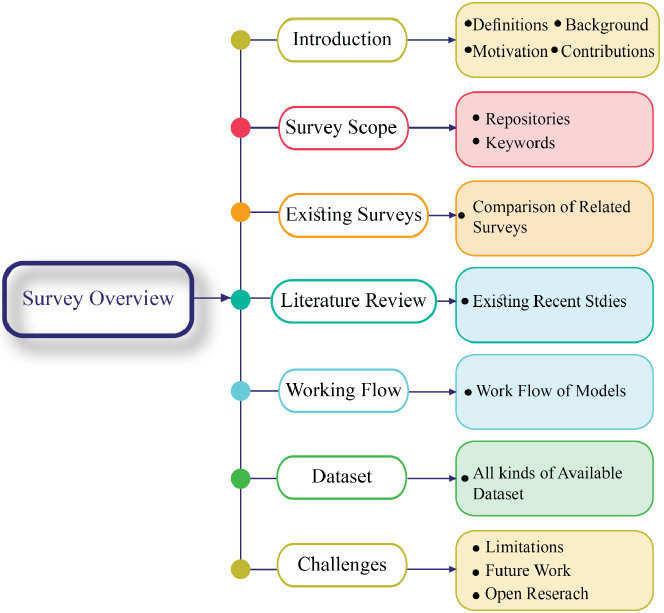
Read this paper
Open the full text in the Nubint reader and ask about any passage as you read.
Read this paper on NubintThis review was generated by AI from the original paper. Please check the paper before citing it.