
[논문 리뷰] A dynamic network model of societal complexity and resilience inspired by Tainter's theory of collapse
이 논문은 Tainter의 사회 붕괴 이론을 영감으로 삼아 동적인 네트워크 모델을 개발한다. 이 모델은 외부 스트레스에 대응해 복잡성이 증가함에 따라 수익 감소와 궁극적 붕괴로 이어지는 복잡계에서 노동자와 관리자를 에이전트로 모델링한다. 모델은 관리자 복잡성 증가가 생산성과 복원력을 떨어뜨리며, 지속적인 스트레스 하에서 복잡성이 통제되지 않으면 붕괴가 피할 수 없음을 보여준다.
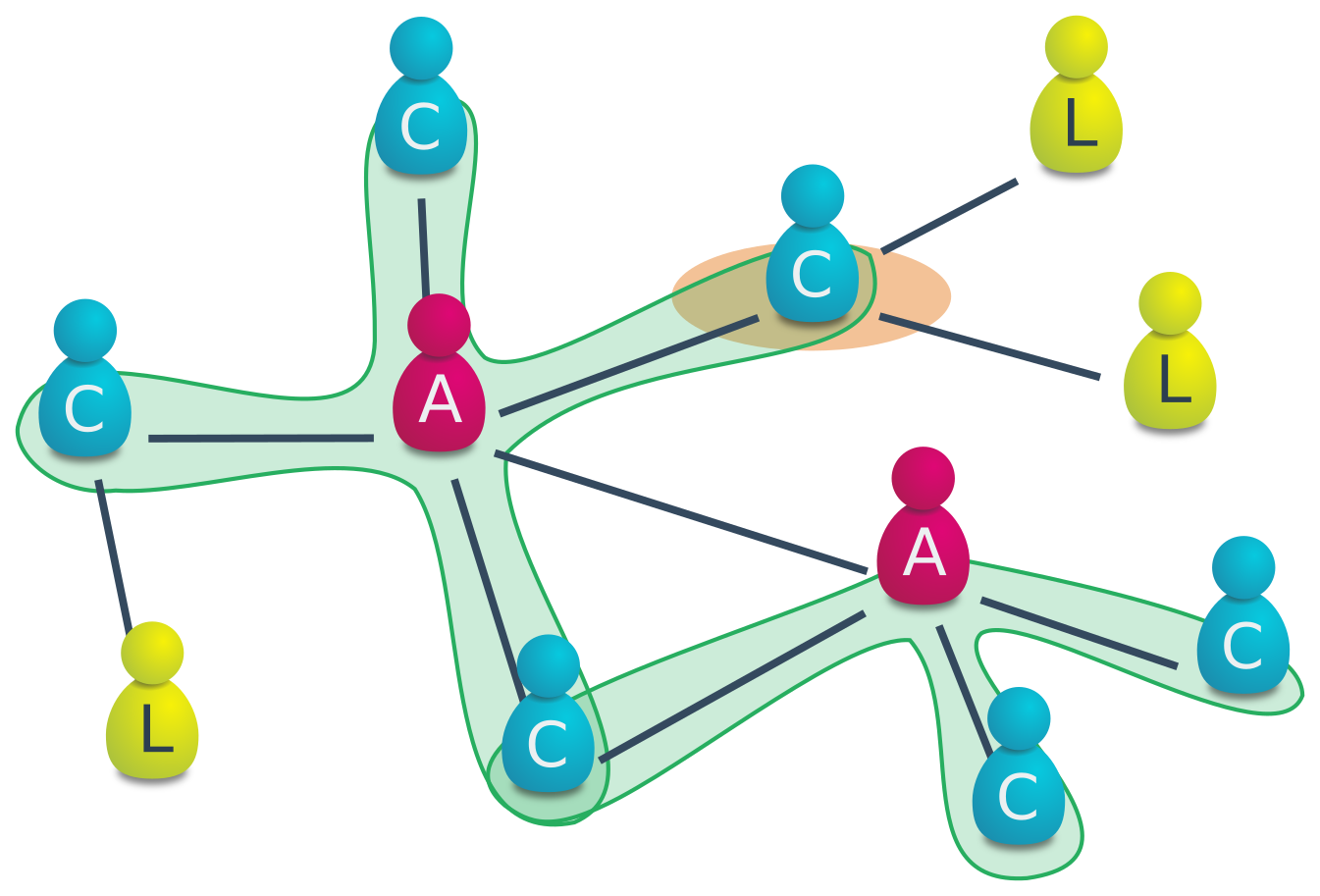
In recent years, several global events have severely disrupted economies and social structures, undermining confidence in the resilience of modern societies. While empirical evidence on the dynamics and drivers of past societal collapse is mounting, a process-based understanding of these dynamics is still in its infancy. Here we aim to identify and illustrate the underlying drivers of such societal instability or even collapse. The inspiration for this work is Joseph Tainter's theory of the "collapse of complex societies", which postulates that the complexity of societies increases as they solve problems, leading to diminishing returns on complexity investments, and ultimately to collapse. In this work we have abstracted this theory into a low-dimensional and stylised model of two classes of networked agents, hereafter referred to as "laborers" and "administrators". We numerically modeled the dynamics of societal complexity, measured as the fraction of "administrators", which is assumed to affect the productivity of connected energy-producing "laborers". We show that collapse becomes increasingly likely as the complexity of the model society continuously increases in response to external stresses that emulate Tainter's abstract notion of problems that societies must solve. We also provide an analytical approximation of the system's dominant dynamics, which matches well with the numerical experiments, and use it to study the influence on network link density, social mobility and productivity. Our work advances the understanding of social-ecological collapse and illustrates its potentially direct link to an ever-increasing societal complexity in response to external shocks or stresses via a self-reinforcing feedback.
연구 동기 및 목표
- Tainter의 붕괴 이론을 영감으로 삼아 사회적 복잡성과 복원력을 단순화하고 저차원적인 네트워크 모델을 개발한다.
- 외부 스트레스에 대응해 증가하는 복잡성이 수익 감소와 궁극적 사회 붕괴로 이어지는 방식을 조사한다.
- 네트워크 구조, 사회 이동성, 생산성의 역할이 복원력과 붕괴 역학에 어떻게 영향을 미치는지 분석한다.
- 수치 시뮬레이션과 일치하는 시스템의 주요 역학을 분석적으로 근사한다.
- 어떤 형태의 복잡성이 붕괴 위험 증가를 피할 수 있는지 탐색하여 더 복원력 있는 시스템 설계 원칙을 도출한다.
제안 방법
- 모델은 노동자(에너지 생산자)와 관리자(복잡성 에이전트) 두 종류의 에이전트를 사용하며, 연결 밀도가 변하는 네트워크로 연결된다.
- 사회적 복잡성은 관리자 비율로 측정되며, 이는 비선형 함수를 통해 노동자의 생산성에 영향을 준다.
- 외부 스트레서는 지속적인 복잡성 증가(관리자 수 증가)를 유도하여 문제 해결 반응을 시뮬레이션한다.
- 생산성은 네트워크 구조와 관리자-노동자 상호작용에 따라 모델링되며, 매개변수 a, b, c, ϱ를 포함하는 두 항의 복합함수로 에너지 입력 E0를 표현한다.
- 에너지 입력 함수의 분석적 근사를 유도하고 수치 시뮬레이션과의 비교를 통해 검증한다.
- 연결 밀도, 사회 이동성, 생산성 매개변수에 대한 민감도 분석을 수행하여 붕괴 가능성에 미치는 영향을 평가한다.
실험 결과
연구 질문
- RQ1외부 스트레스에 대응해 사회적 복잡성이 증가할수록 수익 감소와 궁극적 붕괴로 이어지는 과정은 어떻게 발생하는가?
- RQ2네트워크 구조와 연결 밀도는 복잡성과 복원력 간의 관계를 어떻게 매개하는가?
- RQ3사회 이동성과 생산성 매개변수는 시스템의 안정성과 붕괴 임계점에 어떻게 영향을 미치는가?
- RQ4분석적 근사는 복잡한 에이전트 기반 모델의 주요 역학을 정확히 포착할 수 있는가?
- RQ5어떤 조건에서 복잡성이 붕괴 위험 증가를 초래하지 않을 수 있으며, 어떤 설계 원칙이 더 복원력 있는 시스템을 지원할 수 있는가?
주요 결과
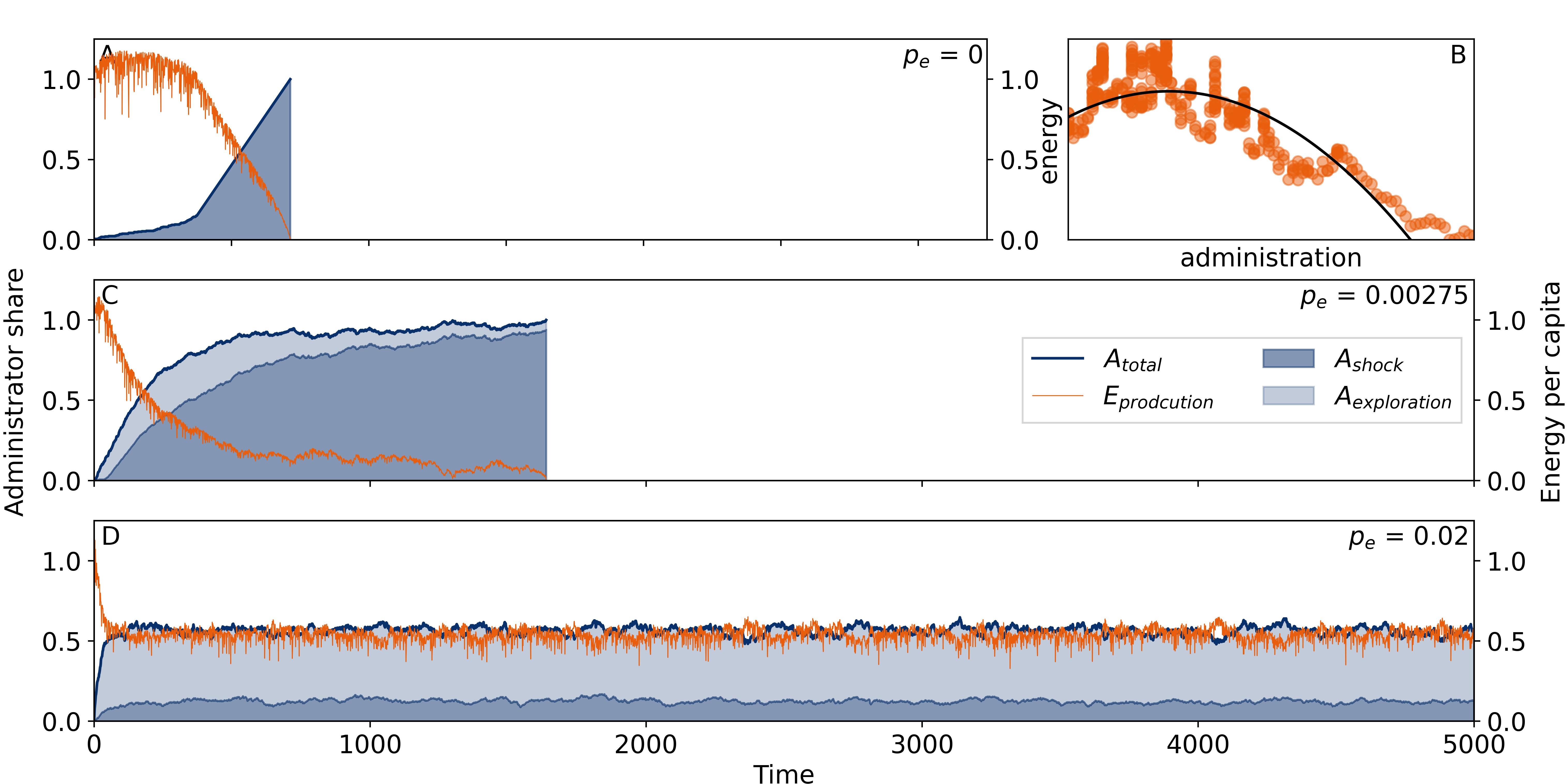
- 모델은 스트레스에 대응해 복잡성이 증가함에 따라 생산성이 처음에는 증가하지만, 수익 감소로 인해 결국 감소하고 붕괴로 이어짐을 보여준다.
- N=400, ϱ=0.02, a=b=0.75, c=1.05일 때 최적의 관리자 수는 약 22명(인구의 6%)이며, 이때 에너지 출력 E≈461로 최대가 된다.
- 에너지 입력 함수의 분석적 근사는 수치 시뮬레이션과 밀도 있게 일치하여 모델의 핵심 역학이 검증된다.
- 높은 네트워크 연결 밀도와 증가한 사회 이동성은 시스템의 복원력에 영향을 미치지만, 정확한 임계점은 매개변수 영역에 따라 달라진다.
- 결과는 복잡성의 비용이 이득을 초월할 경우 복잡성이 자가 파멸적인 경향을 띠며, 이는 직접적으로 사회의 붕괴를 유도한다는 Tainter의 가설을 지지한다.
- 모든 복잡성이 동일한 위험을 지니는 것은 아니며, 특정 구성이 붕괴를 피할 수 있음을 시사하여 더 복원력 있는 시스템 설계를 위한 길을 제시한다.
더 나은 연구,지금 바로 시작하세요
논문 읽기부터 검토까지, 연구 시간을 획기적으로 줄여보세요.
카드 등록 없음 · 무료 플랜 제공
이 리뷰는 AI가 만들고, 인간 에디터가 검토했습니다.