
[Paper Review] A Latent Space Theory for Emergent Abilities in Large Language Models
This paper proposes a latent space theory explaining emergent abilities in large language models (LLMs) as Bayesian inference on the sparse joint distribution of language, where unambiguous or ε-ambiguous languages enable accurate inference. The key contribution is showing that LLMs' capabilities—like in-context learning and chain-of-thought prompting—emerge when models act as universal approximators of marginal distributions, converging to optimal inference as model and data scale.
Languages are not created randomly but rather to communicate information. There is a strong association between languages and their underlying meanings, resulting in a sparse joint distribution that is heavily peaked according to their correlations. Moreover, these peak values happen to match with the marginal distribution of languages due to the sparsity. With the advent of LLMs trained on big data and large models, we can now precisely assess the marginal distribution of languages, providing a convenient means of exploring the sparse structures in the joint distribution for effective inferences. In this paper, we categorize languages as either unambiguous or ε-ambiguous and present quantitative results to demonstrate that the emergent abilities of LLMs, such as language understanding, in-context learning, chain-of-thought prompting, and effective instruction fine-tuning, can all be attributed to Bayesian inference on the sparse joint distribution of languages.
Motivation & Objective
- To explain why emergent abilities in large language models (LLMs) arise only at scale, despite unsupervised pre-training.
- To formalize the role of language structure—specifically sparsity in joint distributions of intentions and messages—in enabling inference.
- To establish a theoretical foundation linking LLM capabilities to Bayesian inference on latent intention spaces.
- To validate the theory through simulations on synthetic languages with varying ambiguity levels.
- To clarify the conditions under which in-context learning and language understanding emerge as model and data scale.
Proposed method
- Categorize languages as unambiguous (Pr(θ|x) = 1) or ε-ambiguous (Pr(θ|x) ≥ 1−ε) based on conditional probability of intent given message.
- Model language generation as a two-stage stochastic process: first sample an intention θ from prior q(θ), then generate message x from q(x|θ).
- Frame LLMs as universal density approximators of the marginal distribution p(x), enabling inference over latent intentions θ.
- Use KL divergence to measure the gap between the model’s conditional distribution p(y|x) and the true conditional q(y|x,θ) on validation sets.
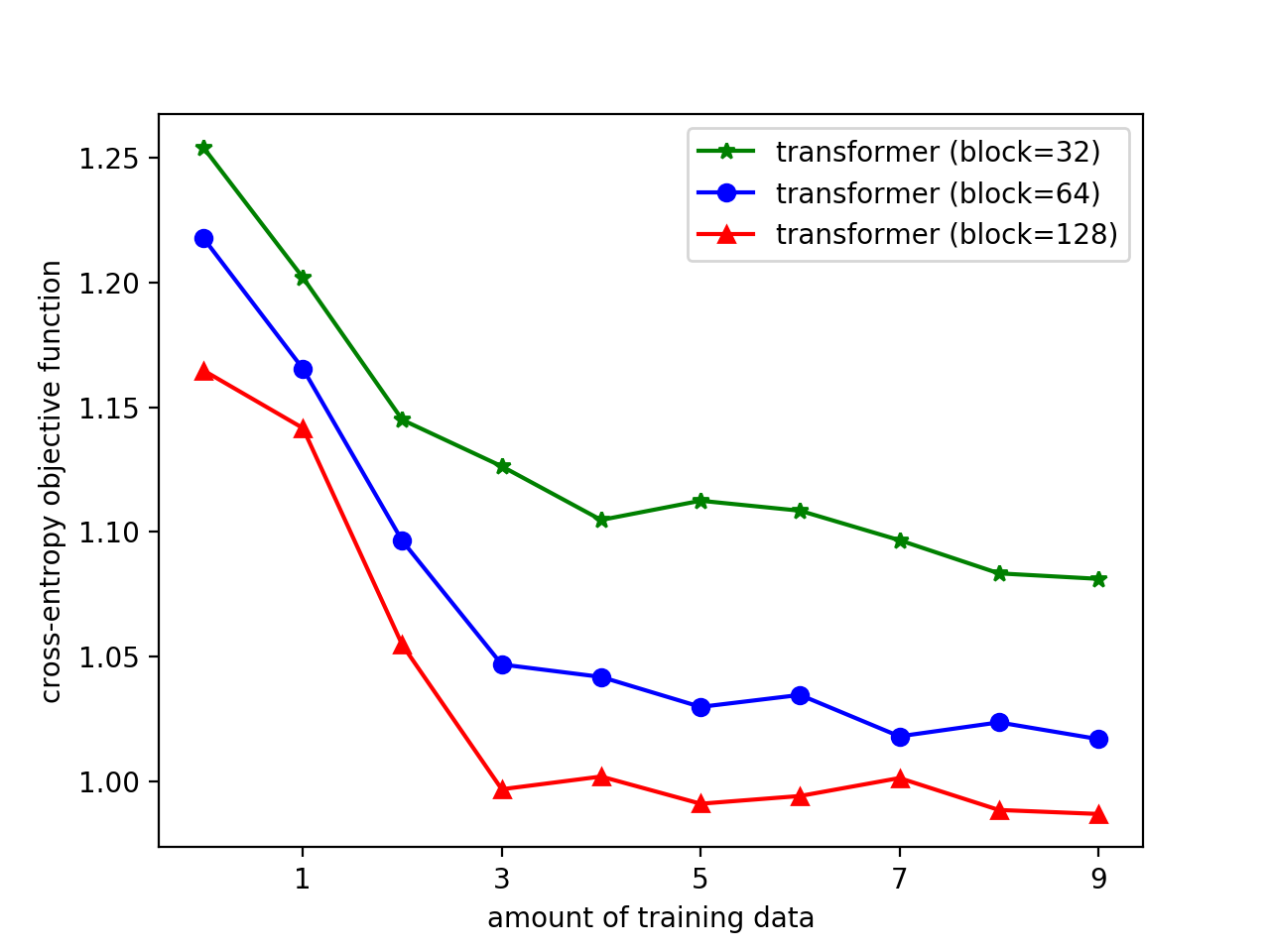
- Apply asymptotic analysis to show that as model capacity and training data increase, p(x) converges to the true marginal, enabling accurate Bayesian inference.
- Simulate synthetic languages with controlled ambiguity levels and evaluate LLMs on language understanding and in-context learning tasks.
Experimental results
Research questions
- RQ1Why do emergent abilities in LLMs only appear at scale, despite being trained via next-token prediction?
- RQ2How does the sparsity of the joint distribution between intentions and messages enable LLMs to perform in-context learning and reasoning?
- RQ3What role does ambiguity (ε) in message-intent mapping play in the emergence of LLM capabilities?
- RQ4Can language understanding and in-context learning be formally explained as Bayesian inference on a latent intention space?
- RQ5How does increasing model size and training data lead to convergence in distribution approximation, enabling emergent abilities?
Key findings
- LLMs achieve accurate language understanding when the underlying language is unambiguous (Pr(θ|x) = 1), with minimal KL divergence between model and true conditional distributions.
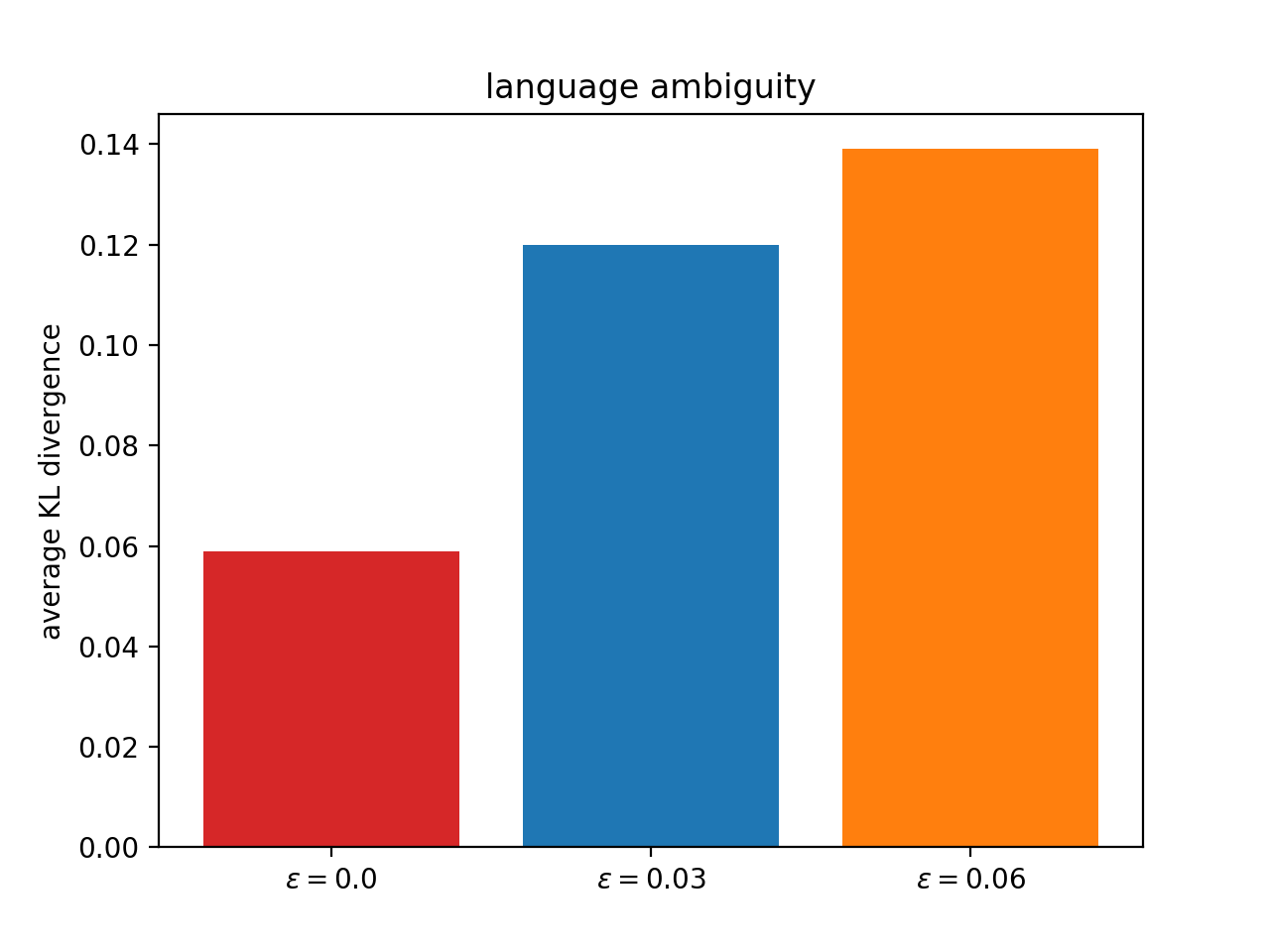
- For ε-ambiguous languages, the KL divergence increases slightly but can be reduced by adding more in-context examples to the prompt.
- In-context learning performance remains stable and low in KL divergence for unambiguous languages, but degrades for ambiguous ones unless more demonstrations are provided.
- As training data and model size increase, the marginal distribution p(x) estimated by the LLM converges to the true distribution q(x), enabling effective Bayesian inference.
- Theoretical analysis shows that emergent abilities emerge asymptotically when the model and data reach a sufficient scale, consistent with observed scaling laws.
- Simulation results confirm that LLMs perform better on synthetic languages with lower ε values, validating the theory’s prediction on ambiguity and inference accuracy.
Read this paper
Open the full text in the Nubint reader and ask about any passage as you read.
Read this paper on NubintThis review was generated by AI from the original paper. Please check the paper before citing it.