
[Paper Review] Advancing the Search Frontier with AI Agents
This paper proposes AI copilots as transformative agents for advancing complex search tasks by integrating natural language understanding, task modeling, and multi-step reasoning. Leveraging generative AI, copilots enable end-to-end support across task hierarchies—macrotasks, subtasks, and actions—improving search completion, especially for ill-defined, multi-session, and cognitively demanding queries.
As many of us in the information retrieval (IR) research community know and appreciate, search is far from being a solved problem. Millions of people struggle with tasks on search engines every day. Often, their struggles relate to the intrinsic complexity of their task and the failure of search systems to fully understand the task and serve relevant results. The task motivates the search, creating the gap/problematic situation that searchers attempt to bridge/resolve and drives search behavior as they work through different task facets. Complex search tasks require more than support for rudimentary fact finding or re-finding. Research on methods to support complex tasks includes work on generating query and website suggestions, personalizing and contextualizing search, and developing new search experiences, including those that span time and space. The recent emergence of generative artificial intelligence (AI) and the arrival of assistive agents, based on this technology, has the potential to offer further assistance to searchers, especially those engaged in complex tasks. There are profound implications from these advances for the design of intelligent systems and for the future of search itself. This article, based on a keynote by the author at the 2023 ACM SIGIR Conference, explores these issues and how AI agents are advancing the frontier of search system capabilities, with a special focus on information interaction and complex task completion.
Motivation & Objective
- Address the persistent challenge of complex search tasks that traditional search engines fail to resolve due to task complexity and poor system understanding.
- Explore how AI copilots can model and support multi-step, ill-defined tasks across time, devices, and applications.
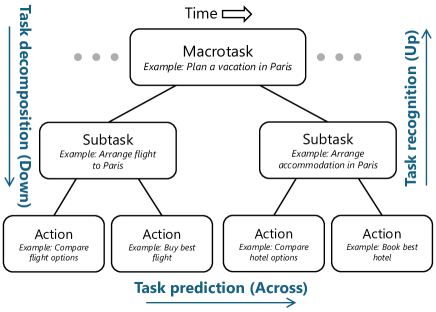
- Develop a task tree framework to represent macrotasks, subtasks, and actions for better system modeling and user support.
- Investigate the integration of copilots into productivity and web ecosystems to enable seamless, context-aware assistance.
- Ensure trust, privacy, and sustainability in AI copilot deployment through verifiability, efficiency, and responsible AI practices.
Proposed method
- Represent complex tasks as hierarchical task trees with macrotasks (high-level goals), subtasks (components), and actions (user steps).
- Use large language models (LLMs) for natural language understanding to interpret user goals and generate task-aware responses.
- Enable copilot interactions through conversational, multi-turn dialogues that track task progression across queries and sessions.
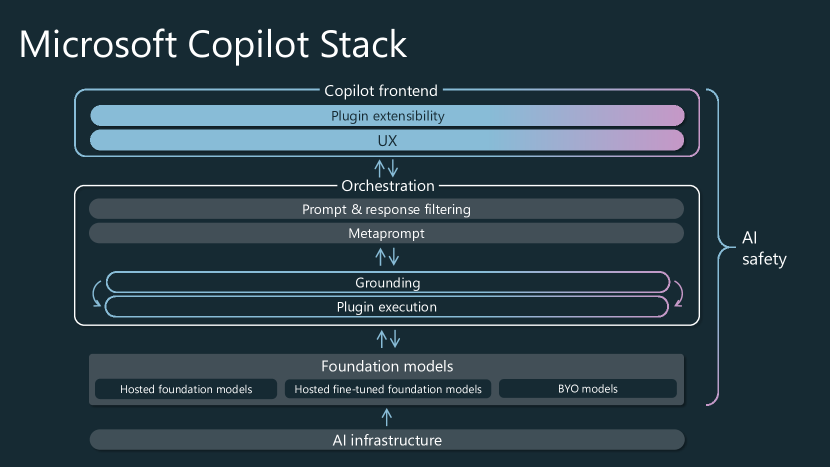
- Integrate copilots into applications (browsers, productivity tools) to leverage contextual awareness and improve relevance.
- Support task prediction, decomposition, and recognition using LLMs to anticipate user needs and suggest next steps.
- Design privacy-preserving and efficient inference pipelines to reduce costs and carbon impact of large model usage.
Experimental results
Research questions
- RQ1How can AI copilots improve the completion of complex, multi-step search tasks that traditional search engines fail to resolve?
- RQ2What role does task modeling (via task trees) play in enabling systems to understand and support complex search behaviors?
- RQ3How can copilots be effectively integrated across applications and devices to support end-to-end task execution?
- RQ4What are the economic and sustainability challenges of deploying large-scale AI copilots, and how can they be mitigated?
- RQ5How can trust, verifiability, and user control be preserved in AI-assisted search without compromising performance?
Key findings
- Half of all web searches remain unanswered, largely due to complex, ill-defined tasks that current search systems fail to support.
- AI copilots significantly extend the task frontier by enabling support for macrotasks and subtasks through natural language understanding and generation.
- Task trees provide a structured framework for modeling complex search tasks, allowing systems to track and assist across multiple queries and sessions.
- Copilot integration into browsers and productivity tools enables context-aware assistance, improving relevance and task completion rates.
- Large model inference is costly and environmentally impactful, necessitating model specialization and adaptive computation for scalability and sustainability.
- Trust and verifiability are critical—users must be able to verify copilot outputs to prevent the 'paradox of reuse' and ensure content quality and creator sustainability.
Read this paper
Open the full text in the Nubint reader and ask about any passage as you read.
Read this paper on NubintThis review was generated by AI from the original paper. Please check the paper before citing it.