
[Paper Review] Are LLMs the Master of All Trades? : Exploring Domain-Agnostic Reasoning Skills of LLMs
This study evaluates the domain-agnostic reasoning capabilities of large language models (LLMs) across analogical, spatial, and moral reasoning tasks using curated datasets and natural language prompts. Results show strong performance in analogical and moral reasoning, but significant struggles in spatial reasoning, indicating LLMs are not universally proficient across all reasoning types.
The potential of large language models (LLMs) to reason like humans has been a highly contested topic in Machine Learning communities. However, the reasoning abilities of humans are multifaceted and can be seen in various forms, including analogical, spatial and moral reasoning, among others. This fact raises the question whether LLMs can perform equally well across all these different domains. This research work aims to investigate the performance of LLMs on different reasoning tasks by conducting experiments that directly use or draw inspirations from existing datasets on analogical and spatial reasoning. Additionally, to evaluate the ability of LLMs to reason like human, their performance is evaluted on more open-ended, natural language questions. My findings indicate that LLMs excel at analogical and moral reasoning, yet struggle to perform as proficiently on spatial reasoning tasks. I believe these experiments are crucial for informing the future development of LLMs, particularly in contexts that require diverse reasoning proficiencies. By shedding light on the reasoning abilities of LLMs, this study aims to push forward our understanding of how they can better emulate the cognitive abilities of humans.
Motivation & Objective
- To investigate whether LLMs can perform equally well across diverse reasoning domains such as analogical, spatial, and moral reasoning.
- To evaluate LLMs on both structured datasets and open-ended, natural language questions to assess human-like reasoning capabilities.
- To identify strengths and weaknesses in LLM reasoning to guide future model development and real-world deployment.
- To construct a controlled spatial reasoning dataset inspired by SpartQA for systematic evaluation of LLMs.
- To compare performance across different LLMs (GPT-3 davinci-003 and ChatGPT) on reasoning tasks using both closed-book and conversational formats.
Proposed method
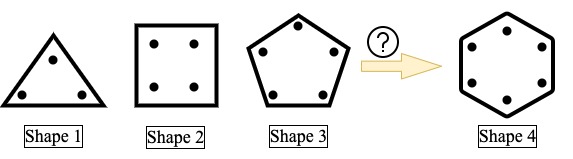
- Used a subset of the BATS dataset focused on lexicographic semantics to create a controlled analogical reasoning benchmark with 200 cloze-style questions.
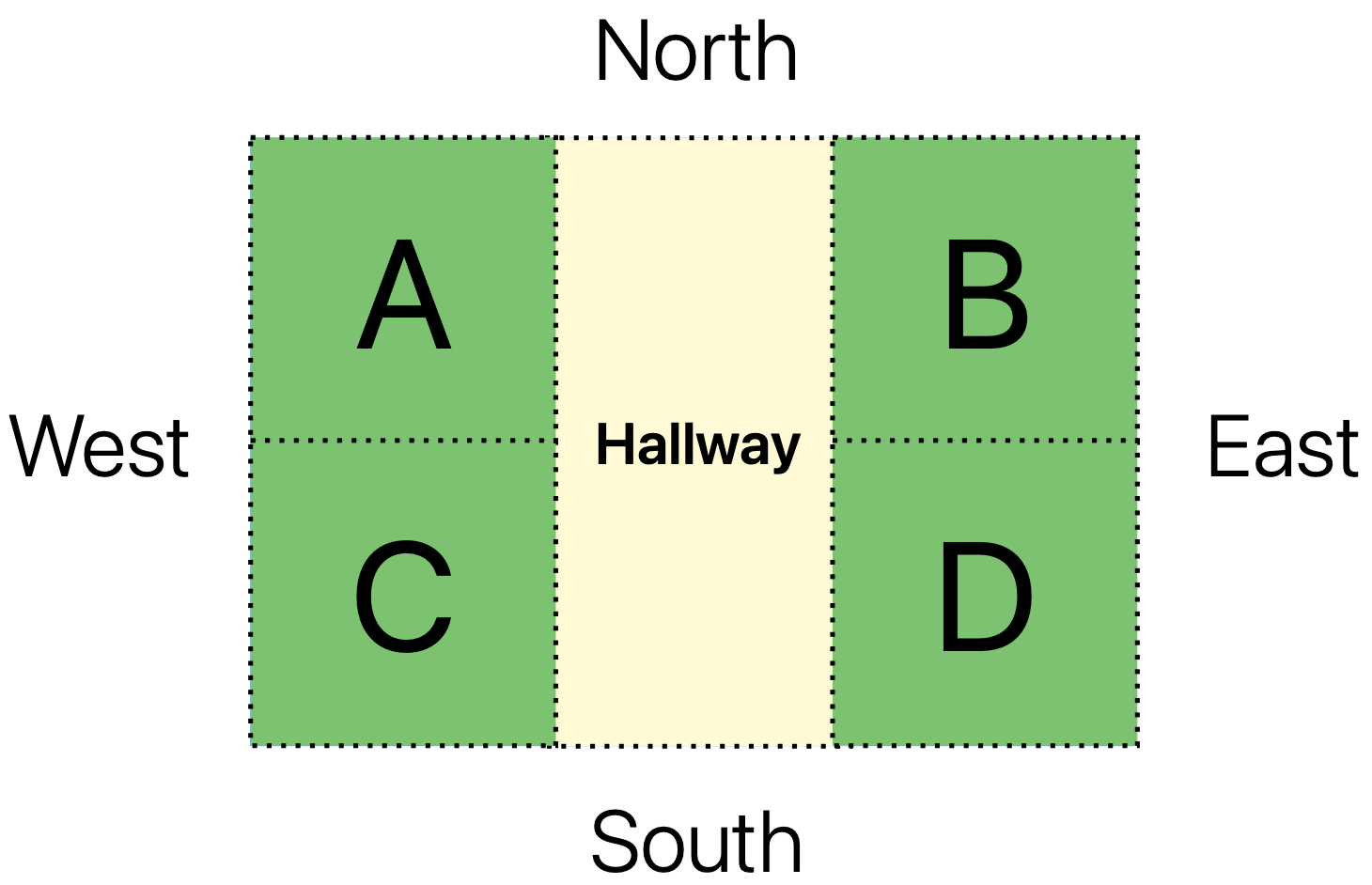
- Constructed an in-house spatial reasoning dataset based on textual descriptions of object arrangements, framed as a textual entailment task with True/False predictions.
- Employed GPT-3 davinci-003 for closed-book, controlled evaluations and ChatGPT for open-ended, conversational reasoning tasks.
- Collected and evaluated free-form natural language questions on analogical and moral reasoning to assess qualitative reasoning ability.
- Evaluated model responses using exact match for closed-ended tasks and qualitative assessment for open-ended prompts.
- Applied a consistent prompt format for all tasks, framing each as a reasoning challenge with clear input-output expectations.
Experimental results
Research questions
- RQ1Can LLMs generalize their reasoning abilities across different reasoning domains such as analogical, spatial, and moral reasoning?
- RQ2How do LLMs perform on structured, closed-ended reasoning tasks compared to open-ended, conversational reasoning prompts?
- RQ3To what extent do LLMs exhibit human-like reasoning in analogical and moral reasoning, and where do they fall short?
- RQ4What are the limitations of current LLMs in spatial reasoning, particularly when relying solely on textual input?
- RQ5Is there a disparity in reasoning proficiency across reasoning types, and if so, what factors might explain it?
Key findings
- LLMs demonstrated strong performance in analogical reasoning, achieving high accuracy on the BATS dataset’s lexicographic semantics subset.
- LLMs showed consistent and coherent reasoning in open-ended, natural language questions, such as explaining complex concepts through analogies.
- LLMs struggled significantly with spatial reasoning tasks, particularly in the controlled dataset where they failed to correctly predict object relationships based on textual descriptions.
- The performance gap between analogical/moral reasoning and spatial reasoning suggests that LLMs lack robust spatial understanding despite strong linguistic generalization.
- In moral reasoning tasks, LLMs provided nuanced, context-aware responses that reflected ethical considerations, though they avoided taking personal stances due to their AI nature.
- The qualitative responses to moral dilemmas revealed that LLMs can reason through complex ethical trade-offs, but their answers were constrained by neutrality and lack of personal values.
Read this paper
Open the full text in the Nubint reader and ask about any passage as you read.
Read this paper on NubintThis review was generated by AI from the original paper. Please check the paper before citing it.