
[Paper Review] Assessing Relational Quantum Mechanics
This paper critically evaluates Relational Quantum Mechanics (RQM), a relational interpretation of quantum theory that replaces absolute states with observer-relative states. The authors argue RQM fails to resolve foundational problems in quantum mechanics, cannot consistently explain observer information exchange, and does not eliminate non-locality in EPR-type correlations, concluding RQM is unsuccessful in providing a coherent understanding of quantum reality.
Relational Quantum Mechanics (RQM) is an interpretation of quantum theory based on the idea of abolishing the notion of absolute states of systems, in favor of states of systems relative to other systems. Such a move is claimed to solve the conceptual problems of standard quantum mechanics. Moreover, RQM has been argued to account for all quantum correlations without invoking non-local effects and, in spite of embracing a fully relational stance, to successfully explain how different observers exchange information. In this work, we carry out a thorough assessment of RQM and its purported achievements. We find that it fails to address the conceptual problems of standard quantum mechanics--related to the lack of clarity in its ontology and the rules that govern its behavior--and that it leads to serious conceptual problems of its own. We also uncover as unwarranted the claims that RQM can correctly explain information exchange among observers, and that it accommodates all quantum correlations without invoking non-local influences. We conclude that RQM is unsuccessful in its attempt to provide a satisfactory understanding of the quantum world.
Motivation & Objective
- To evaluate whether RQM successfully resolves the conceptual problems of standard quantum mechanics, particularly the measurement problem and ontological vagueness.
- To examine whether RQM can consistently account for information exchange between observers without relying on privileged observers or classical communication.
- To test the claim that RQM explains all quantum correlations without invoking non-local influences, especially in EPR-type scenarios.
- To assess whether RQM's relational beables and locality definition are coherent and sufficient to maintain locality in entangled systems.
- To determine whether RQM avoids creating new conceptual problems while attempting to solve those of standard quantum mechanics.
Proposed method
- Analyzing RQM through a reconstruction of its core principles, including the relational nature of states, the absence of absolute states, and the universal applicability of quantum mechanics to all systems.
- Applying RQM to the Wigner's friend thought experiment to assess its treatment of observer-dependent descriptions and consistency across perspectives.
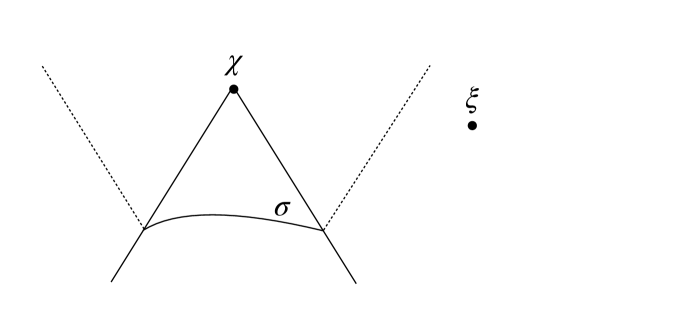
- Evaluating the claim that RQM avoids non-locality by analyzing the EPR-Bell scenario using Rovelli and Smerlak’s definition of relational locality.
- Challenging the assertion that common-cause explanations (deterministic or indeterministic) can account for EPR correlations within RQM’s framework.
- Assessing the role of relational beables and their compatibility with Bell’s criterion of locality, particularly in space-like separated measurements.
- Engaging with prior literature on RQM, including critiques and defenses, to contextualize the paper’s arguments within ongoing debates in quantum foundations.
Experimental results
Research questions
- RQ1Can RQM genuinely resolve the measurement problem and other foundational issues in standard quantum mechanics without introducing new conceptual inconsistencies?
- RQ2To what extent can RQM consistently describe information exchange between observers, especially in scenarios involving multiple observers with differing perspectives?
- RQ3Does RQM successfully account for quantum correlations in EPR-type experiments without appealing to non-local influences, as claimed by its proponents?
- RQ4Is the relational definition of locality in RQM compatible with Bell’s criterion of locality, particularly in indeterministic contexts?
- RQ5Do the relational beables in RQM provide a well-defined, local, and objective basis for explaining physical correlations, or do they lead to incoherence or non-locality?
Key findings
- RQM fails to resolve the foundational problems of standard quantum mechanics, particularly the lack of ontological clarity and the ambiguity in the rules governing state evolution.
- The relational framework does not eliminate the problem of observer dependence; instead, it introduces new conceptual issues, such as the incoherence of comparing descriptions across observers.
- The claim that RQM allows for consistent information exchange between observers is unwarranted, as no mechanism is provided for reconciling differing observer descriptions in a coherent, observer-independent way.
- RQM does not successfully avoid non-locality in EPR correlations; even under its own definition of locality, the correlations remain inexplicable by local common causes, contradicting the claim of locality.
- The argument that non-locality can be reduced to indeterminism within RQM is invalid, as Bell’s theorem rules out local common causes—even indeterministic ones—in explaining EPR-type correlations.
- RQM’s relational beables are not sufficient to maintain locality, and the theory ultimately fails to provide a fully local account of quantum entanglement, contradicting its central claim.
Read this paper
Open the full text in the Nubint reader and ask about any passage as you read.
Read this paper on NubintThis review was generated by AI from the original paper. Please check the paper before citing it.