
[Paper Review] Assessing the Usability of GutGPT: A Simulation Study of an AI Clinical Decision Support System for Gastrointestinal Bleeding Risk
This study evaluates GutGPT, an LLM-powered clinical decision support system for gastrointestinal bleeding risk, through a simulation-based trial with physicians and students. It demonstrates that GutGPT improves content mastery and perceived ease of use, though its impact on trust and acceptance is mixed, highlighting the need for optimized human-AI interaction in clinical settings.
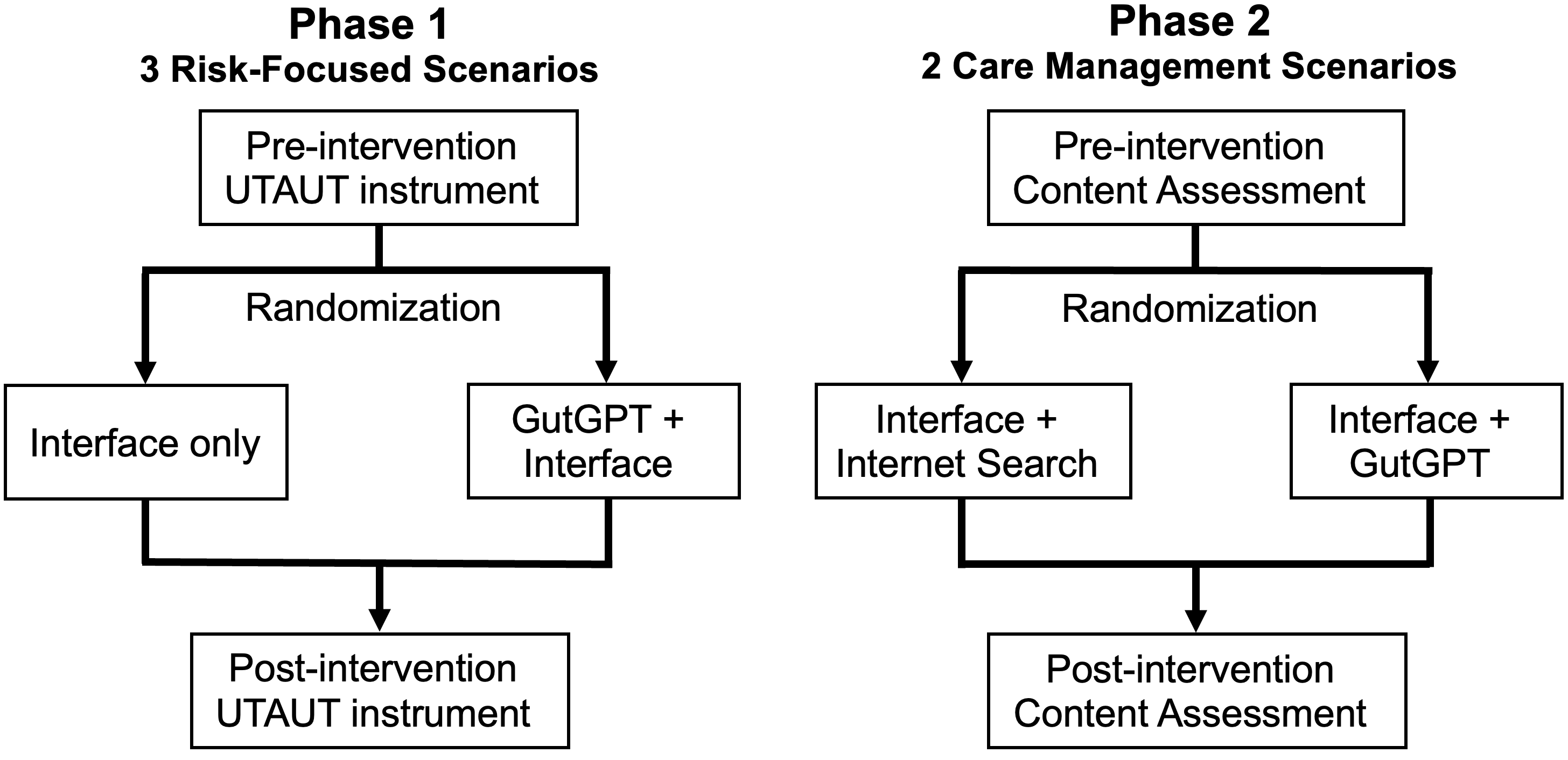
Applications of large language models (LLMs) like ChatGPT have potential to enhance clinical decision support through conversational interfaces. However, challenges of human-algorithmic interaction and clinician trust are poorly understood. GutGPT, a LLM for gastrointestinal (GI) bleeding risk prediction and management guidance, was deployed in clinical simulation scenarios alongside the electronic health record (EHR) with emergency medicine physicians, internal medicine physicians, and medical students to evaluate its effect on physician acceptance and trust in AI clinical decision support systems (AI-CDSS). GutGPT provides risk predictions from a validated machine learning model and evidence-based answers by querying extracted clinical guidelines. Participants were randomized to GutGPT and an interactive dashboard, or the interactive dashboard and a search engine. Surveys and educational assessments taken before and after measured technology acceptance and content mastery. Preliminary results showed mixed effects on acceptance after using GutGPT compared to the dashboard or search engine but appeared to improve content mastery based on simulation performance. Overall, this study demonstrates LLMs like GutGPT could enhance effective AI-CDSS if implemented optimally and paired with interactive interfaces.
Motivation & Objective
- To evaluate clinician trust, acceptance, and usability of GutGPT, an LLM-based clinical decision support system for gastrointestinal bleeding risk.
- To compare GutGPT’s impact on clinical decision-making and knowledge acquisition against a traditional interactive dashboard and internet search.
- To investigate how conversational AI interfaces influence clinician perception, effort expectancy, and intention to use AI-CDSS in simulated clinical scenarios.
- To assess the educational value of GutGPT in improving mastery of upper GI bleeding management guidelines.
Proposed method
- Conducted a simulation-based study with 55 participants, including emergency medicine physicians, internal medicine physicians, and medical students.
- Randomized participants into three arms: GutGPT with EHR dashboard, interactive dashboard only, and internet search with EHR dashboard.
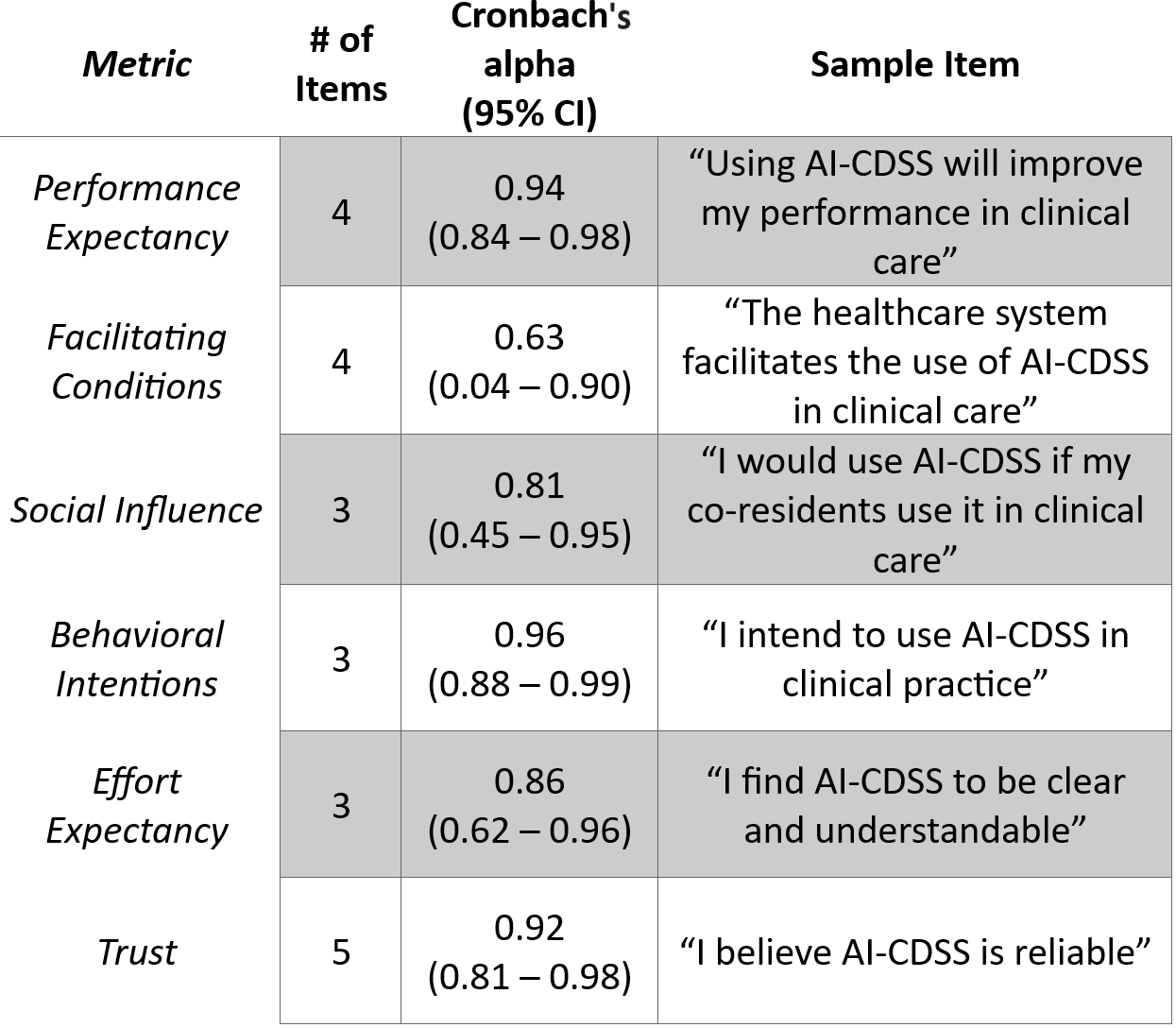
- Used pre- and post-simulation surveys based on the UTAUT model to measure trust, acceptance, effort expectancy, and intention to use.
- Collected and analyzed screen and video recordings alongside qualitative debrief feedback to evaluate interface usability.
- Integrated GutGPT with a validated machine learning model for GI bleeding risk prediction and with evidence-based clinical guidelines for management recommendations.
- Measured content mastery via educational assessments before and after simulation to evaluate learning outcomes.
Experimental results
Research questions
- RQ1How does exposure to GutGPT affect clinician trust in AI-based clinical decision support systems compared to traditional dashboards or search engines?
- RQ2To what extent does GutGPT improve content mastery in upper gastrointestinal bleeding management compared to alternative information sources?
- RQ3What is the impact of GutGPT on perceived ease of use (effort expectancy) and intention to use among clinicians in a simulated clinical environment?
- RQ4How do clinicians perceive the limitations of LLM-based systems in capturing clinical nuances such as social, emotional, and physical factors in decision-making?
- RQ5Can simulation studies effectively evaluate the usability and educational impact of LLM-based CDSS before real-world deployment?
Key findings
- Participants using GutGPT showed a notable increase in perceived effort expectancy, indicating improved perception of ease of use compared to the dashboard or search group.
- Both the GutGPT and dashboard arms demonstrated improved content mastery, with higher percentages of correct answers on educational assessments post-simulation.
- Trust in AI-CDSS increased in both the GutGPT and dashboard groups after simulation, though the effect was not significantly stronger in the GutGPT group.
- The survey instrument demonstrated high internal reliability, with Cronbach’s alpha values exceeding 0.8 for most UTAUT metrics.
- Clinicians in both arms expressed concerns that AI systems fail to account for social, emotional, and physical nuances in clinical decision-making.
- The study remains ongoing, with 55 participants enrolled so far, and no formal statistical testing was conducted due to small sample size and incomplete recruitment.
Read this paper
Open the full text in the Nubint reader and ask about any passage as you read.
Read this paper on NubintThis review was generated by AI from the original paper. Please check the paper before citing it.