
[Paper Review] Constrained Deep Networks: Lagrangian Optimization via Log-Barrier Extensions
This paper proposes log-barrier extensions to approximate Lagrangian optimization in constrained deep CNNs without requiring an initial feasible solution, enabling stable, accurate training via implicit dual variables. It outperforms penalty and explicit Lagrangian methods in accuracy, constraint satisfaction, and training stability—especially under high constraint loads.
This study investigates imposing hard inequality constraints on the outputs of convolutional neural networks (CNN) during training. Several recent works showed that the theoretical and practical advantages of Lagrangian optimization over simple penalties do not materialize in practice when dealing with modern CNNs involving millions of parameters. Therefore, constrained CNNs are typically handled with penalties. We propose *log-barrier extensions*, which approximate Lagrangian optimization of constrained-CNN problems with a sequence of unconstrained losses. Unlike standard interior-point and log-barrier methods, our formulation does not need an initial feasible solution. The proposed extension yields an upper bound on the duality gap -- generalizing the result of standard log-barriers -- and yielding sub-optimality certificates for feasible solutions. While sub-optimality is not guaranteed for non-convex problems, this result shows that log-barrier extensions are a principled way to approximate Lagrangian optimization for constrained CNNs via implicit dual variables. We report weakly supervised image segmentation experiments, with various constraints, showing that our formulation outperforms substantially the existing constrained-CNN methods, in terms of accuracy, constraint satisfaction and training stability, more so when dealing with a large number of constraints.
Motivation & Objective
- Address the challenge of imposing hard inequality constraints on deep CNN outputs during training, especially in weakly supervised learning.
- Overcome the limitations of penalty methods, which suffer from high gradients and poor constraint satisfaction.
- Eliminate the need for explicit dual variable updates in Lagrangian optimization, which is computationally costly and unstable in deep networks.
- Provide a principled, unconstrained optimization framework for constrained CNNs using implicit dual variables via log-barrier extensions.
- Enable stable training and accurate constraint satisfaction, particularly when dealing with a large number of competing constraints.
Proposed method
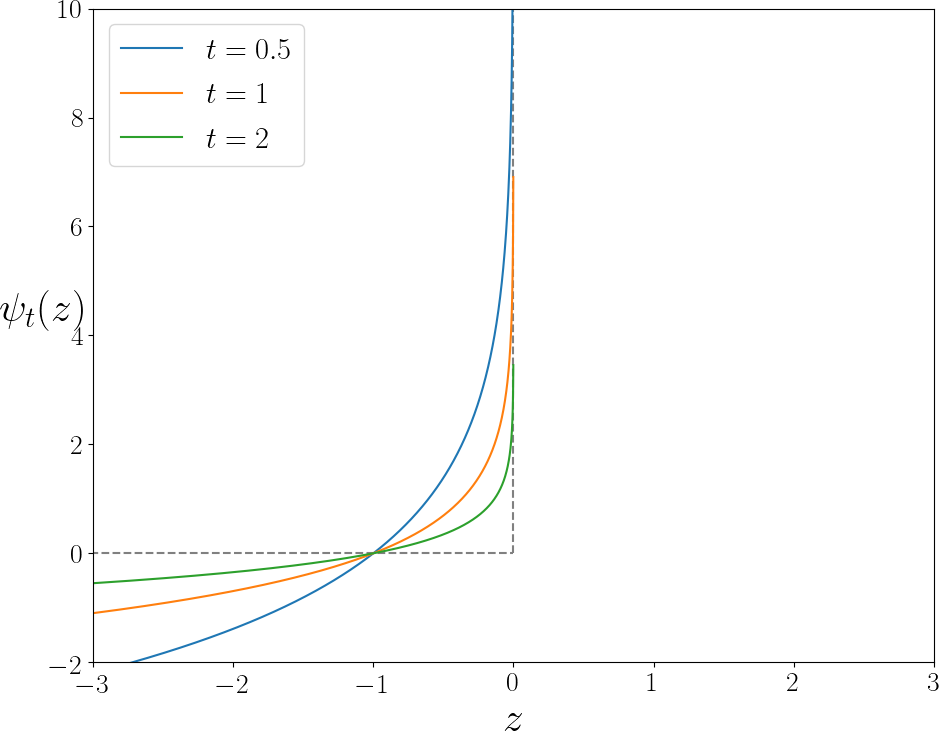
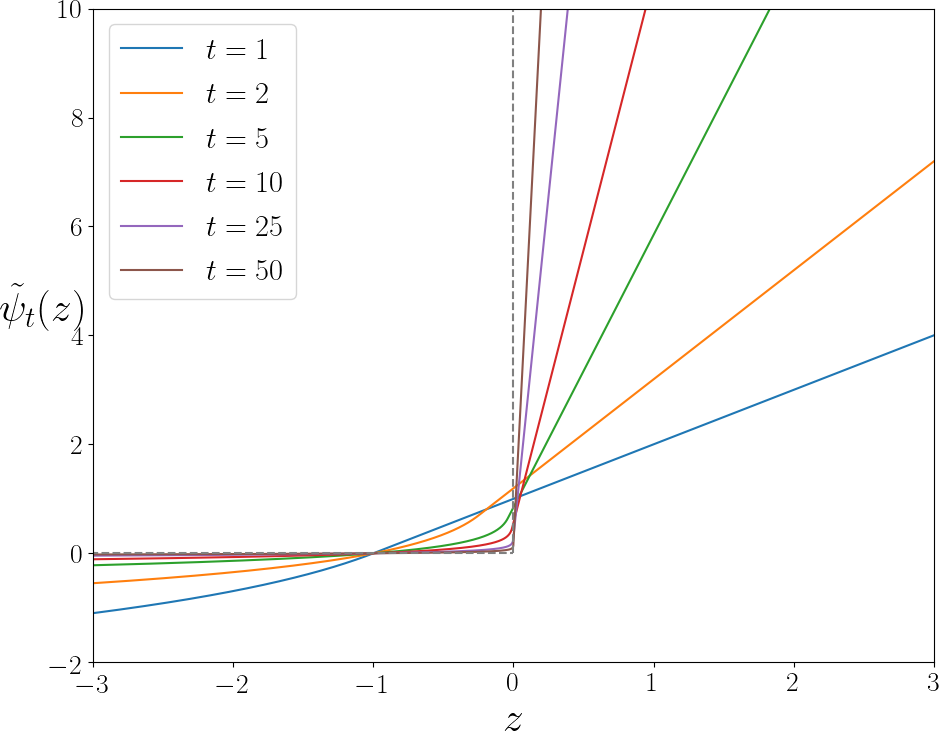
- Introduce log-barrier extensions that approximate Lagrangian optimization through a sequence of unconstrained losses, avoiding explicit dual updates.
- Formulate the constrained CNN problem using a log-barrier penalty that penalizes constraint violations with a logarithmic barrier function.
- Derive an upper bound on the duality gap, generalizing standard log-barrier duality results and enabling sub-optimality certificates for feasible solutions.
- Use stochastic gradient descent (SGD) to optimize the extended loss, making the method compatible with standard deep learning training pipelines.
- Integrate the log-barrier formulation directly into the loss function, allowing end-to-end training without additional optimization loops.
- Eliminate the need for an initial feasible solution by embedding the barrier function in the loss, unlike classical interior-point methods.
Experimental results
Research questions
- RQ1Can log-barrier extensions effectively approximate Lagrangian optimization in deep CNNs without explicit dual updates or initial feasibility?
- RQ2How does the proposed method compare to penalty-based and explicit Lagrangian methods in terms of constraint satisfaction and training stability?
- RQ3Does the method maintain performance and stability when handling a large number of competing constraints?
- RQ4Can the duality gap bound provided by the log-barrier extension serve as a sub-optimality certificate in constrained CNN training?
- RQ5In what scenarios does the log-barrier extension outperform existing constrained CNN approaches, especially in weakly supervised segmentation?
Key findings
- The proposed log-barrier extensions achieved a mean DSC of 0.945 ± 0.001 on the synthetic dataset, significantly outperforming standard Lagrangian (0.005 ± 0.014) and ReLU Lagrangian (0.798 ± 0.006).
- On the PROMISE12 medical image segmentation dataset, the method achieved a DSC of 0.813 ± 0.024, while all other methods (including penalty and ReLU Lagrangian) achieved 0.000 ± 0.000.
- The method was the only one to produce non-empty segmentations on the medical task, demonstrating robustness under high constraint complexity.
- Training with log-barrier extensions showed superior stability in both performance and constraint satisfaction over training epochs, as visualized in Fig. 4.
- The method incurred only up to a 5% computational overhead, compared to a 25% slowdown for standard and ReLU Lagrangian methods due to dual variable updates.
- The upper bound on the duality gap provides a theoretical justification for the method’s effectiveness, generalizing standard log-barrier duality results to constrained CNNs.
Read this paper
Open the full text in the Nubint reader and ask about any passage as you read.
Read this paper on NubintThis review was generated by AI from the original paper. Please check the paper before citing it.