
[Paper Review] Constraining the major merger history of $z \sim 3-9$ galaxies using JADES: dominant in-situ star formation
The study analyzes close-pair fractions and major-merger rates for $z\sim 3-9$ galaxies using JADES data, finding mergers contribute ~5-14% of mass growth, with in-situ star formation dominating.
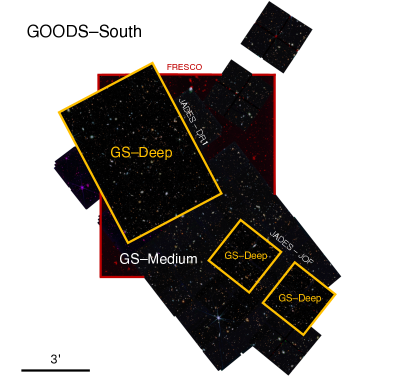
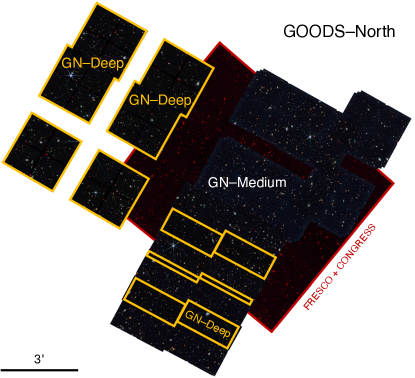
We present a comprehensive analysis of galaxy close-pair fractions and major merger rates to evaluate the importance of mergers in the hierarchical growth of galaxies over cosmic time. This study focuses on the previously poorly understood redshift range of $z \approx 3-9$ using JADES observations. Our mass-complete sample includes primary galaxies with stellar masses of ${ m log}(M_\star/{ m M_\odot}) = [8, 10]$, having major companions (mass ratio $\geq 1/4$) selected by $5-30$ pkpc projected separation and redshift proximity criteria. Pair fractions are measured using a statistically robust method incorporating photometric redshift posteriors and available spectroscopic data. The pair fraction evolves with redshift and shows dependence on the stellar mass: at ${ m log}(M_\star/{ m M_\odot}) = [8.0, 8.5]$ there is an increase up to $z\sim5-6$, followed by a turnover; while at higher stellar masses there is a flattening and weak decline with increasing redshift. Similarly, the derived galaxy major merger rate increases and flattens beyond $z \sim 6$ to $2-8~{ m Gyr^{-1}}$ per galaxy, showing a weak scaling with stellar mass, driven by the evolution of the galaxy stellar mass function. A comparison between the cumulative mass accretion from major mergers and the mass assembled through star formation indicates that major mergers contribute approximately $3-13\%$ to the total mass growth over the studied redshift range, which is in agreement with the ex-situ mass fraction estimated from our simple numerical model. These results highlight that major mergers contribute little to the direct stellar mass growth compared to in-situ star formation but could still play an indirect role by driving star formation itself.
Motivation & Objective
- Assess the role of major mergers in the mass growth of galaxies from $z\sim 3$ to $z\sim 9$ using deep JWST/JADES data.
- Quantify how close-pair fractions and major merger rates evolve with redshift and stellar mass.
- Compare merger-driven mass accretion to in-situ star formation along cosmic time.
- Evaluate the ex-situ mass fraction implied by major mergers with a simple numerical model.
Proposed method
- Use a mass-complete primary galaxy sample with ${\log}(M_{\star}/M_{\odot})=[8,10]$ and major companions (mass ratio ≥ 1/4).
- Apply a probabilistic close-pair analysis that propagates full photometric redshift posteriors (and spectroscopic data) to compute pair fractions.
- Derive/or estimate galaxy major merger rates from observed pair fractions by adopting a merger observability timescale.
- Compute stellar masses with two independent SED-fitting approaches: Prospector (Bayesian, non-parametric SFH) and eazy-py (fast template fitting).
- Assess stellar-mass completeness via 5σ point-source depths in F444W and a Pozzetti (2010)–style completeness analysis.
- Compare cumulative mass growth from major mergers to that from star formation using a simple mass-growth framework.
Experimental results
Research questions
- RQ1What is the redshift evolution of the close-pair (major-merger) fraction for $z\sim 3-9$ galaxies?
- RQ2How does the major-merger rate depend on redshift and primary stellar mass within the studied range?
- RQ3What fraction of total stellar-mass growth is contributed by major mergers versus in-situ star formation?
- RQ4How does the ex-situ mass fraction implied by major mergers compare with simple numerical-model expectations?
Key findings
- The close-pair fraction rises and peaks at $z\approx 5-6$, then turns over at higher redshift and shifts with primary stellar mass.
- The major-merger rate increases and then flattens beyond $z\approx 6$, reaching $2-10\ \mathrm{Gyr^{-1}}$ per galaxy and showing weak mass dependence.
- Major mergers contribute about 5-14% of the total mass growth over $z\sim 3-9$, consistent with the ex-situ mass fraction from a simple model.
- Mergers are not the dominant channel for direct stellar mass growth; in-situ star formation dominates, though mergers may influence star formation indirectly.
Read this paper
Open the full text in the Nubint reader and ask about any passage as you read.
Read this paper on NubintThis review was generated by AI from the original paper. Please check the paper before citing it.