
[논문 리뷰] Decentralized Zero-Trust Framework for Digital Twin-based 6G
이 논문은 Digital Twin-enabled 6G 네트워크를 위한 분산 제로 트러스트 보안 프레임워크를 제안하고, 물리적 기기와 그 디지털 트윈을 모두 보호하기 위해 blockchain, AI, 및 distributed learning을 통합한다.
The Sixth Generation (6G) network is a platform for the fusion of the physical and virtual worlds. It will integrate processing, communication, intelligence, sensing, and storage of things. All devices and their virtual counterparts will become part of the service-provisioning process. In essence, 6G is a purposefully cooperative network that heavily depends on the capabilities of edge and end-devices. Digital Twin (DT) will become an essential part of 6G, not only in terms of providing a virtual representation of the physical elements and their dynamics and functionalities but rather DT will become a catalyst in the realization of the cooperative 6G environment. DT will play a main role in realizing the full potential of the 6G network by utilizing the collected data at the cyber twin and then implementing using the physical twin to ensure optimal levels of accuracy and efficiency. With that said, such a cooperative non-conventional network infrastructure cannot rely on conventional centralized intrusion detection and prevention systems. Zero-trust is a new security framework that aims at protecting distributed data, devices, components and users. This article presents a new framework that integrates the zero-trust architecture in DT-enabled 6G networks. Unlike conventional zero-trust solutions, the proposed framework adapts a decentralized mechanism to ensure the security, privacy and authenticity of both the physical devices and their DT counterparts. Blockchain plays an integral part in the authentication of DTs and the communicated data. Artificial Intelligence (AI) is integrated into all cooperating nodes using meta, generalized and federated learning solutions. The article also discusses current solutions and future outlooks, with challenges and some technology enablers.
연구 동기 및 목표
- 분산적이고 신뢰 제로 환경에서 물리적 장치와 그들의 Digital Twins (DTs)를 보호함으로써 6G의 안전하고 확장 가능한 채택을 촉진한다.
- DT 상호작용과 메타버스 통신을 보호하기 위해 전통적인 IDS/IPS를 넘어서는 분산 제로 트러스트 아키텍처를 제안한다.
- 핵심 기둥으로 위협 인텔리전스, 분산 인증, 그리고 blockchain-enabled 신뢰 메커니즘을 탐구한다.
- DT-enabled 6G에서 분산 제로 트러스트를 실현하기 위한 도전과제, 촉진 요인, 그리고 향후 방향을 식별한다.
제안 방법
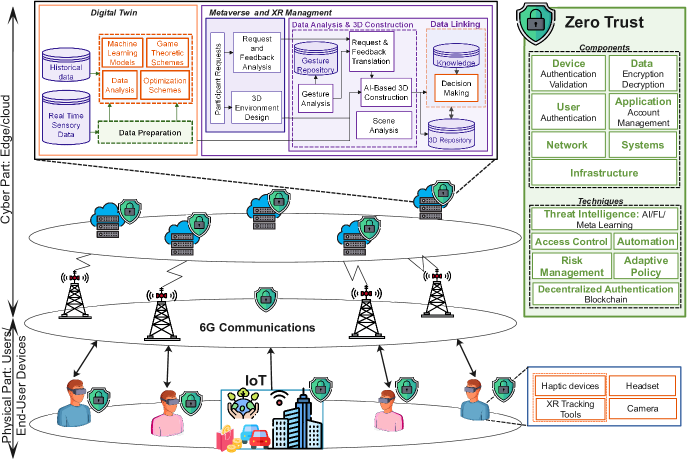
- 제로 트스트 개념을 Digital Twin-enabled 6G와 통합하여 물리적 계층과 가상 계층에 걸친 장치, DT, 데이터 상호 작용을 보호한다.
- 확장 가능한 방식으로 신원 및 접근 관리를 위해 blockchain을 활용한 분산 인증을 제안한다.
- 분산 노드 전반에 걸친 연속적인 신뢰 평가 메커니즘으로 위협 인텔리전스를 통합한다.
- 에지 및 엔드 디바이스 전반에 걸쳐 분산되고 프라이버시 보장 보안을 가능하게 하기 위한 AI 기반 솔루션(meta-learning, federated learning)를 탐구한다.
- 계층적이고 분산화된 학습 접근법(예: FL, meta-learning, PnP-AI)을 논의하여 중앙 집중식 병목현상 없이 확장 가능한 보안을 지원한다.
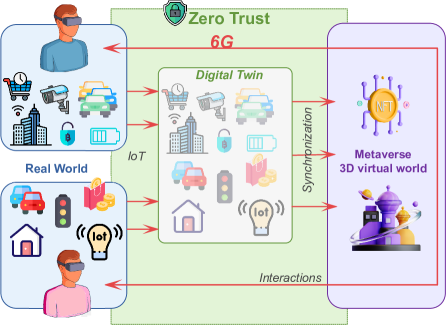
실험 결과
연구 질문
- RQ1제로 트러스트 원칙을 장치, DT 및 데이터 상호 작용 계층에서 DT-enabled 6G 네트워크를 효과적으로 분산화하려면 어떻게 할 수 있는가?
- RQ2블록체인과 위협 인텔리전스가 6G DT 생태계의 분산 인증 및 신뢰 관리에서 어떤 역할을 하는가?
- RQ3분산형 AI(예: meta-learning, federated learning)가 중앙 권한 없이 DT-enabled 6G에 대해 확장 가능하고 프라이버시를 보장하는 보안을 제공할 수 있는가?
주요 결과
- 이 프레임워크는 DT-enabled 6G에서 분산 제로 트러스트의 핵심 촉진요소로 위협 인텔리전스와 분산 인증의 필요성을 강조한다.
- 블록체인은 DT들 및 네트워크 계층 간의 분산 인증 및 안전한 데이터 교환의 핵심 구성 요소로 위치한다.
- 분산 학습 패러다임(예: meta-learning, federated learning)은 에지 및 엔드 디바이스 전반에서 적응적이고 프라이버시를 보장하는 보안을 가능하게 하는 메커니즘으로 논의된다.
- 본 논문은 현재 추세와 잠재적 솔루션을 조사하고, 분산 제로 트러스트 아키텍처에서 지능형 블록체인과 하이브리드 학습의 통합을 위한 향후 방향을 제시한다.
- 문서에 실증적 결과나 정량적 평가가 제시되지 않으며, 기여는 개념적 프레임워크와 전망이다.
더 나은 연구,지금 바로 시작하세요
연구 설계부터 논문 작성까지, 연구 시간을 획기적으로 줄여보세요.
카드 등록 없음 · 무료 플랜 제공
이 리뷰는 AI가 만들고, 인간 에디터가 검토했습니다.