
[Paper Review] Effect of religious rules on time of conception in Romania from 1905 to 2001
This study investigates how religious fasting periods—particularly Lent and Nativity fasts—affected the timing of conception in Romania from 1905 to 2001 using a 97-year daily birth record dataset (24.9 million births). Using econometric models with religious affiliation, fasting periods, rurality, day length, weekends, and trend, it finds that Lent fast has a stronger negative impact on conception than Nativity fast, especially in rural Eastern Orthodox populations, indicating religion as a key driver of non-uniform conception patterns beyond seasonal effects.
Population growth (or decay) in a country can be due to various f socio-economic constraints, as demonstrated in this paper. For example, sexual intercourse is banned in various religions, during Nativity and Lent fasting periods. Data consisting of registered daily birth records for very long (35,429 points) time series and many (24,947,061) babies in Romania between 1905 and 2001 (97 years) is analyzed. The data was obtained from the 1992 and 2002 censuses, thus on persons alive at that time. We grouped the population into two categories (Eastern Orthodox and Non-Orthodox) in order to distinguish religious constraints and performed extensive data analysis in a comparative manner for both groups. From such a long time series data analysis, it seems that the Lent fast has a more drastic effect than the Nativity fast over baby conception within the Eastern Orthodox population, thereby differently increasing the population ratio. Thereafter, we developed and tested econometric models where the dependent variable is the baby conception deduced day, while the independent variables are: (i) religious affiliation; (ii) Nativity and Lent fast time intervals; (iii) rurality; (iv) day length; (v) weekend, and (vi) a trend background. Our findings are concordant with other papers, proving differences between religious groups on conception, - although reaching different conclusions regarding the influence of weather on fertility. The approach seems a useful hint for developing econometric-like models in other sociophysics prone cases.
Motivation & Objective
- To analyze the impact of religious fasting periods—Lent and Nativity fasts—on the seasonality of conception in Romania over the 20th century.
- To test whether religious constraints, particularly abstinence from sexual intercourse during fasts, significantly alter conception patterns.
- To compare conception trends between Eastern Orthodox (EOx) and non-Orthodox (NOx) populations, isolating religious influence from other socio-economic and environmental factors.
- To develop and validate econometric models incorporating religious affiliation, fasting periods, rurality, day length, weekends, and secular trends to quantify their effects on conception timing.
Proposed method
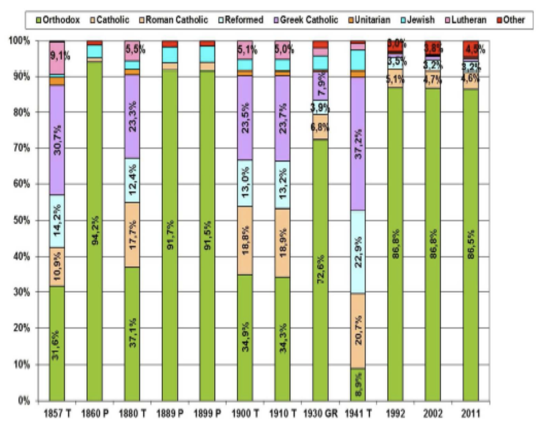
- Data was extracted from 1992 and 2002 Romanian censuses, covering 24,947,061 births and 35,429 daily time points from 1905 to 2001.
- The population was dichotomized into Eastern Orthodox (EOx) and non-Orthodox (NOx) groups to isolate religious influence.
- Econometric models were constructed with conception day as the dependent variable, and independent variables including: religious affiliation, Lent and Nativity fast intervals, rurality, day length, weekend indicators, and a secular trend.
- Multicollinearity was addressed by excluding highly correlated variables such as temperature and household duties, retaining day length as a proxy for photoperiodicity.
- Model performance was evaluated using R-squared and t-tests, with standardized coefficients used to compare relative impact of predictors.
- The analysis was segmented into sub-periods (e.g., 1948–1966) to detect shifts in patterns, particularly linked to political events like Ceaușescu’s decree.
Experimental results
Research questions
- RQ1Does the prohibition of sexual intercourse during Lent and Nativity fasts in the Eastern Orthodox tradition significantly affect the timing of conception in Romania?
- RQ2How do the durations and intensities of Lent and Nativity fasts compare in their impact on conception rates?
- RQ3To what extent does rural residence amplify the influence of religious fasting on conception patterns compared to urban areas?
- RQ4How do non-Orthodox populations, who lack these specific fasts, differ in conception seasonality compared to Orthodox populations?
- RQ5What is the relative contribution of photoperiodicity (day length), weekends, and other socio-cultural factors in shaping conception seasonality, independent of religious rules?
Key findings
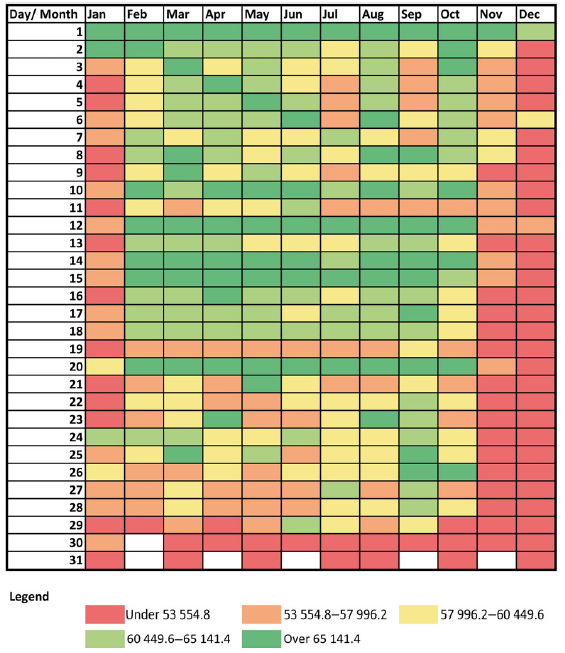
- The Lent fast has a significantly stronger negative impact on conception rates than the Nativity fast, particularly among rural Eastern Orthodox populations.
- The standardized coefficient for the Lent fast effect is the largest in absolute value among all predictors, indicating its dominant role in shaping conception seasonality.
- Rurality (rEOx) shows a strong positive association with seasonal conception patterns, suggesting rural lifestyles are more sensitive to religious and environmental cycles.
- Weekends have a positive effect on conception for both EOx and NOx populations until 1966, but turn negative afterward, possibly due to socio-political changes.
- The proportion of illuminated moon disc was statistically insignificant, rejecting lunar phase as a driver of conception timing.
- The econometric model for the non-Orthodox population is weaker overall, confirming that religious fasting is a key differentiator in conception patterns.
Read this paper
Open the full text in the Nubint reader and ask about any passage as you read.
Read this paper on NubintThis review was generated by AI from the original paper. Please check the paper before citing it.