
[Paper Review] Exploration noise for learning linear-quadratic mean field games
This paper demonstrates that common noise in linear-quadratic mean field games (MFGs) can act as an exploration mechanism to stabilize and accelerate convergence in fictitious play learning algorithms. By introducing a tilted fictitious play variant with a geometric weighting scheme (controlled by parameter $π$), the method ensures convergence to the global equilibrium even in non-monotone, non-potential settings, with numerical results showing rapid selection of the correct equilibrium in as few as five iterations under optimal noise conditions.
The goal of this paper is to demonstrate that common noise may serve as an exploration noise for learning the solution of a mean field game. This concept is here exemplified through a toy linear-quadratic model, for which a suitable form of common noise has already been proven to restore existence and uniqueness. We here go one step further and prove that the same form of common noise may force the convergence of the learning algorithm called `fictitious play', and this without any further potential or monotone structure. Several numerical examples are provided in order to support our theoretical analysis.
Motivation & Objective
- To investigate whether common noise can serve as an exploration mechanism in mean field game learning, particularly in non-monotone or non-potential settings where standard learning fails.
- To develop and analyze a modified learning algorithm—'tilted fictitious play'—that leverages common noise to improve convergence properties.
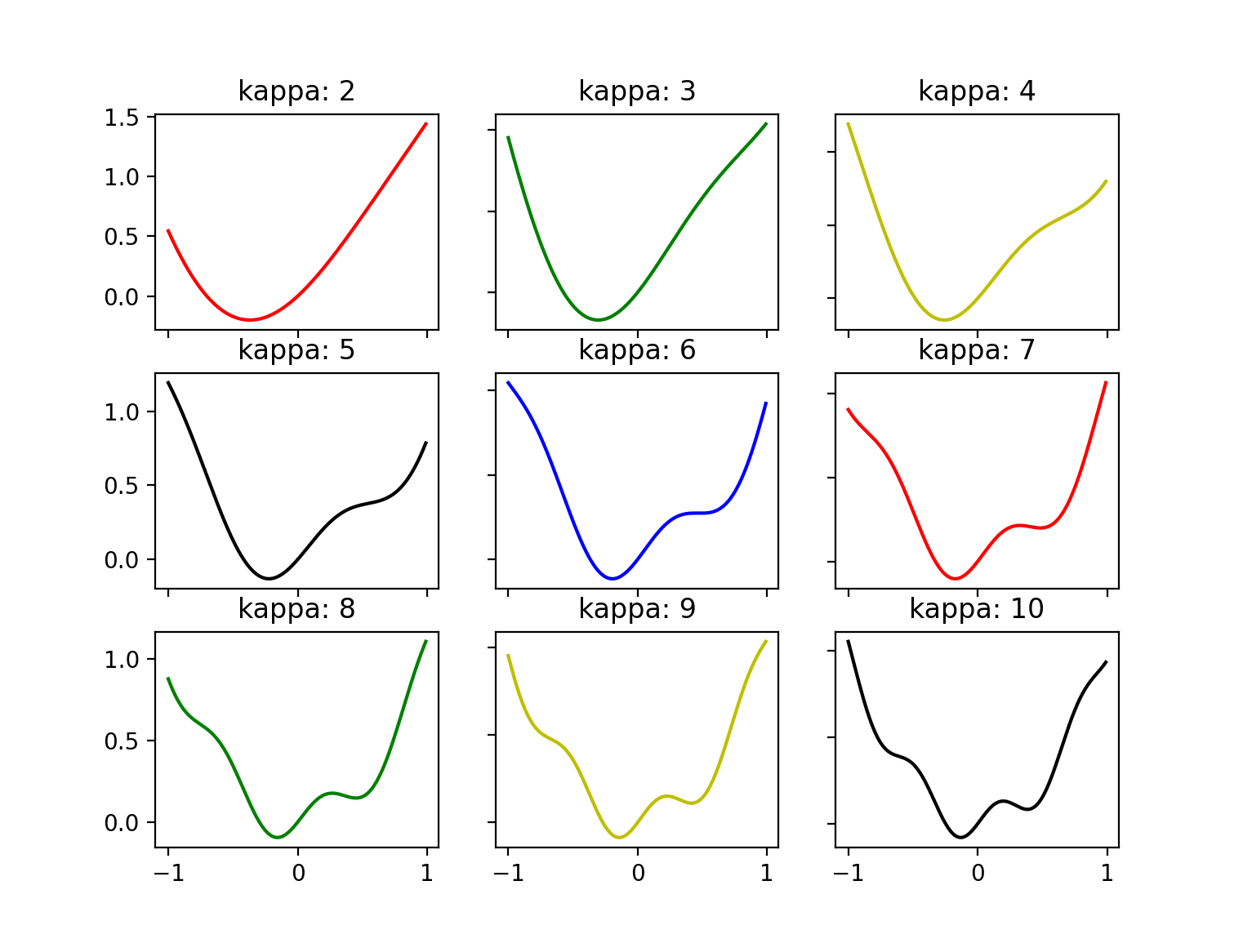
- To demonstrate numerically that the tilted fictitious play can select the global minimizer over local equilibria in a 1D linear-quadratic MFG with non-convex potential.
- To bridge theoretical MFG analysis with practical reinforcement learning by showing that common noise enhances learning stability and exploration.
Proposed method
- Introduces a 'tilted fictitious play' algorithm that modifies the standard fictitious play by incorporating a Girsanov-type change of measure driven by a time-dependent drift $\varpi \mathbf{h}^n$.
- Applies a geometric weighting scheme to the learning update, with $\varpi \in (1, \sqrt{2}]$, to enhance exploration and convergence to the global equilibrium.
- Uses a Girsanov transformation to tilt the probability measure, effectively making the learning process more sensitive to rare but informative trajectories.
- Employs Monte Carlo simulations with $M = 2 \times 10^4$ paths and Hermite polynomial regression up to degree 6 to estimate the conditional mean under the tilted measure.
- Implements a common noise structure proven to restore uniqueness in linear-quadratic MFGs, leveraging its smoothing effect on the solution space.
- Adapts the algorithm to statistical learning by using the common noise as an intrinsic exploration noise, avoiding external perturbations.
Experimental results
Research questions
- RQ1Can common noise in linear-quadratic MFGs serve as an effective exploration mechanism for learning algorithms?
- RQ2Does the tilted fictitious play algorithm converge to the global equilibrium in non-monotone or non-potential MFGs where standard fictitious play may fail?
- RQ3How does the choice of the geometric weighting parameter $\varpi$ affect convergence speed and accuracy in selecting the correct equilibrium?
- RQ4Can the Girsanov-based tilting of the measure improve the learning process by enhancing sampling of rare but informative states?
- RQ5What is the impact of noise intensity $\varepsilon$ on the variance and stability of the learning algorithm?
Key findings
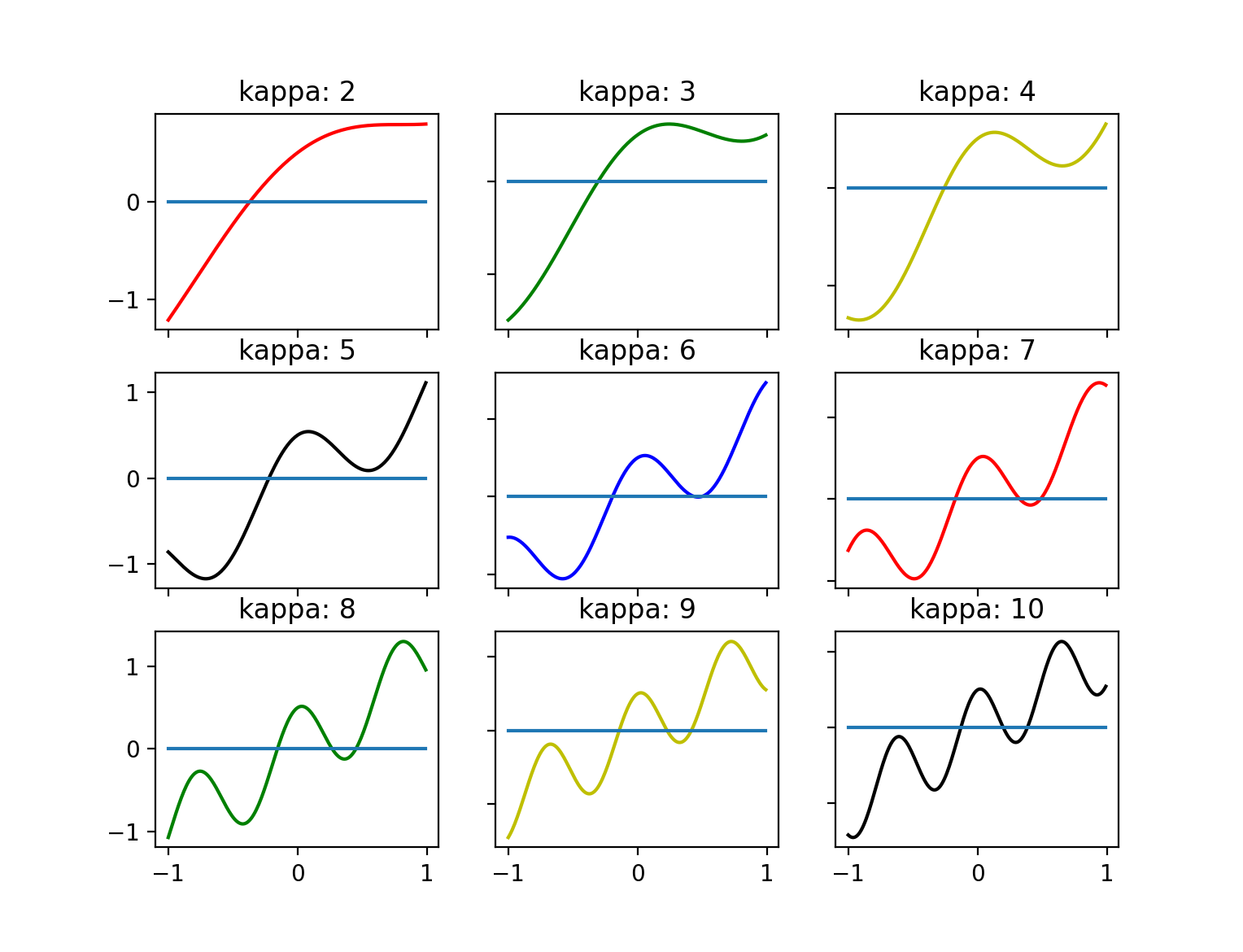
- The tilted fictitious play with $\varpi = 4$ achieved convergence to the global equilibrium in just five iterations, despite $\varpi$ being outside the theoretical range $ (1, \sqrt{2}] $.
- With $\varpi = 1.5$, convergence occurred in ten iterations, showing a clear trade-off between speed and stability.
- For $\varpi = 1$, convergence required over fifteen iterations and exhibited residual variance, indicating less robust selection of the global minimizer.
- The algorithm successfully selected the global minimizer at $x \approx -0.5$ over the local minimizer at $x = 0$, even when initialized at the local equilibrium.
- Numerical results show that decreasing $\varepsilon$ to 0.1 worsened performance due to increased variance in the Girsanov transformation, suggesting a trade-off between noise intensity and stability.
- The use of common noise as exploration noise enabled the algorithm to escape local minima and converge to the global solution, validating its role in improving learning robustness.
Read this paper
Open the full text in the Nubint reader and ask about any passage as you read.
Read this paper on NubintThis review was generated by AI from the original paper. Please check the paper before citing it.